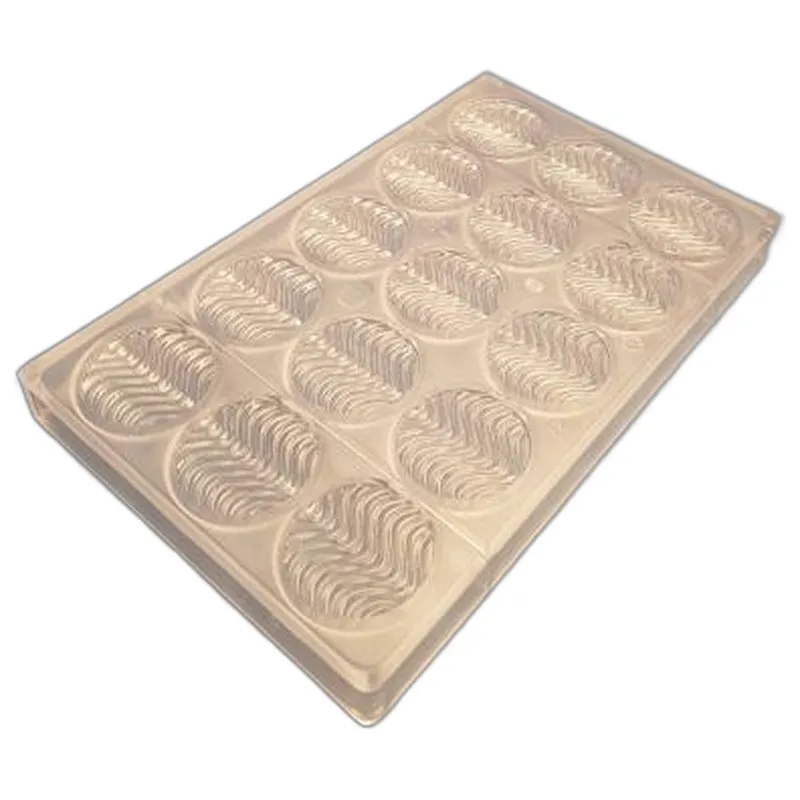
Chocolate bar mold Florentine Ø 4.8 cm, 15 pieces
Florentine – a confectionery classic
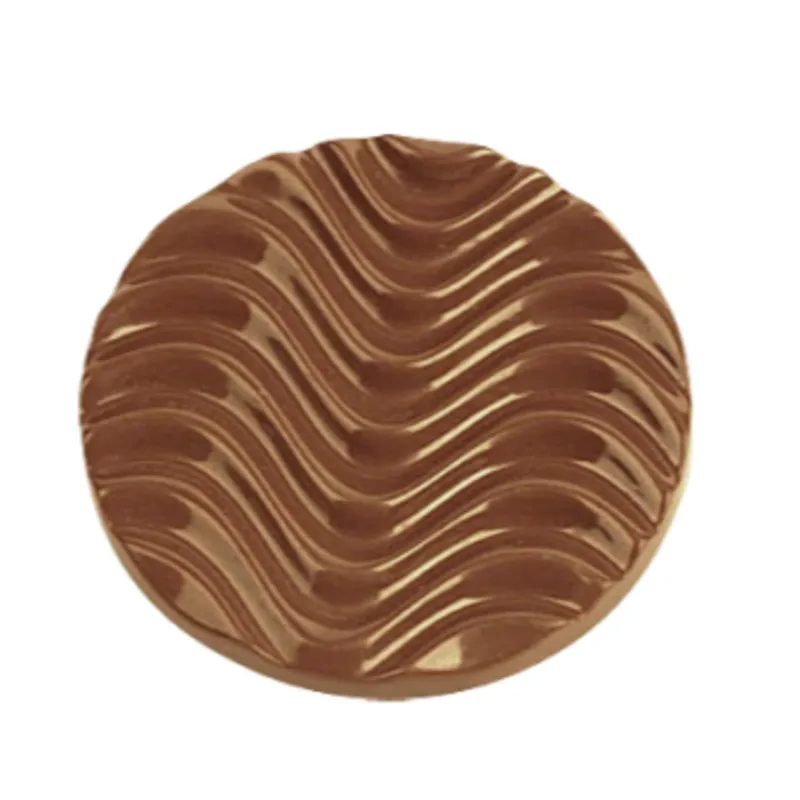
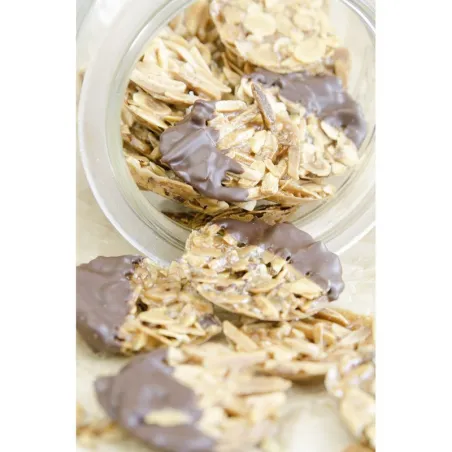
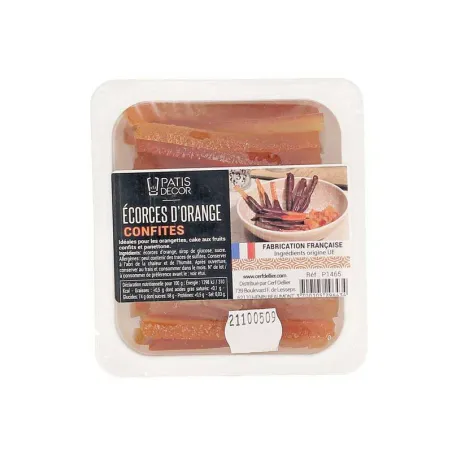
Florentines are among the great classics of European confectionery tradition – a pastry that has been made in konditoreis and confiseries for centuries and has lost none of its fascination to this day. Their origin is disputed: some trace it to the Florentine cuisine of the Renaissance, others to the French patisserie of the 17th century. What is beyond dispute: the Florentine has established itself as a traditional pastry worldwide – in confiseries from Vienna to Paris to Zurich it is a staple display item, and anyone who has made one by hand understands why. What makes the Florentine so special is its combination of contrasts – the crispy, caramelised brittle layer of almonds, candied fruit and caramelised sugar meets the smooth, melt-in-the-mouth chocolate disc on the underside. This union of crunch and creaminess, of sweet caramel and bold couverture, makes the Florentine an experience unlike any other pastry. And the characteristic wave pattern on the chocolate underside is its unmistakable hallmark – recognisable at first glance, unforgettable at first bite.
The typical structure of a Florentine
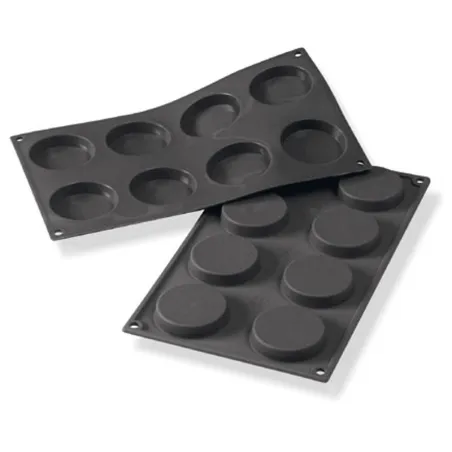
A Florentine consists of two clearly distinct components that become an inseparable whole during production. The base is the chocolate disc: a round, flat piece of tempered couverture – glossy, with the characteristic wave pattern and stable enough to support the brittle layer. The second component is the brittle disc: a caramelised mixture of shaved almonds, candied fruit, sugar, cream and butter, baked and crisped into a matching round shape. For production, the brittle disc is prepared first: the mixture is baked in a suitable metal or silicone mould and allowed to cool completely – it must be finished and ready by the time the couverture is poured. Matching moulds for the brittle disc are also available in our online shop. Then this Florentine Chocolate bar mold made of Polycarbonate comes into play: the tempered couverture is poured into the 15 cavities of Ø 4.8 cm each, and the finished brittle disc is immediately placed on the still-liquid chocolate and pressed down gently. As the couverture sets and solidifies, it bonds firmly and permanently with the brittle. The result is a Florentine in which chocolate and brittle form a perfect, lasting union.
Why Polycarbonate – the material that makes the difference
If you wonder why professional confectioners and chocolatiers have relied on Polycarbonate moulds for decades rather than silicone or metal, the answer lies in the unique properties of this material. Polycarbonate is a high-quality, food-safe plastic that is unrivalled for making chocolate and confectionery moulds – for several reasons. Polycarbonate conducts heat particularly evenly and efficiently – this is crucial for the crystallisation of the couverture. When couverture is poured into a Polycarbonate mould, it cools evenly, the cocoa butter crystals arrange themselves uniformly, and the result is a chocolate with perfect texture, the characteristic snap when broken, and a gloss that no other mould produces as reliably. Furthermore, Polycarbonate has an exceptionally smooth, hard surface – smoother than silicone and smoother than most metals. This smoothness is what allows tempered couverture to slide cleanly and effortlessly out of the mould once set, without sticking, tearing or leaving residue. At the same time, the smooth surface transfers the full gloss of the tempered couverture to the chocolate – producing the characteristic mirror shine that distinguishes professional chocolate work. Polycarbonate is also extremely dimensionally stable: it does not warp, does not swell, and retains its shape and precision even after hundreds of uses and cleaning cycles. A high-quality Polycarbonate mould is an investment that pays off with every single use – delivering reliably consistent, professional results for many years.
The two decisive steps: tempering and polishing
Two steps determine whether homemade Florentines look like they came from a confiserie – or not. The first is tempering the couverture. Tempering means bringing the couverture to a specific temperature, cooling it in a controlled manner, and then warming it slightly again. This process ensures that the cocoa butter crystals arrange themselves in the correct, stable form – with far-reaching effects on the final product. Correctly tempered couverture flows evenly into the mould, sets quickly and uniformly, develops the characteristic snap when broken, and releases effortlessly from the Polycarbonate mould once set. Untempered or incorrectly tempered couverture, by contrast, sets soft, sticks to the mould, shows a dull, blotchy sheen, and can only be removed with difficulty – and often with damage. In short: tempering is not optional; it is the fundamental prerequisite for a professional result. The second decisive step is polishing the mould. Before pouring the couverture into the Chocolate bar mold, polish each cavity carefully with a soft piece of kitchen paper – by hand, with light pressure, until the Polycarbonate surface shines. This step takes only a few seconds per cavity, but makes all the difference: only a perfectly polished mould transfers the full mirror gloss of the tempered couverture to the chocolate disc. Even the tiniest dust particles, grease residues or water marks on the mould surface leave visible dull patches and marks on the finished chocolate – polishing before each use is the simplest and most effective professional trick from the confiserie, and one that anyone can apply at home.
Making a Florentine – step by step
Step 1 – Prepare the brittle discs: Bake the brittle mixture of shaved almonds, candied fruit, caramelised sugar, cream and butter in a suitable mould and leave to cool completely. The finished brittle discs must be ready by the time the couverture is poured – as they need to be placed on quickly.
Step 2 – Polish the mould: Polish each cavity of the Chocolate bar mold carefully with a soft piece of kitchen paper until the surface shines. This step is essential for the later mirror gloss of the chocolate discs.
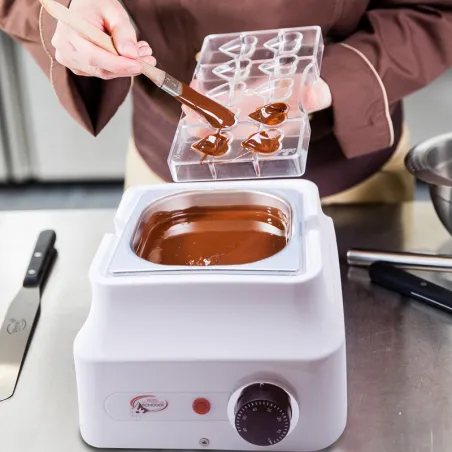
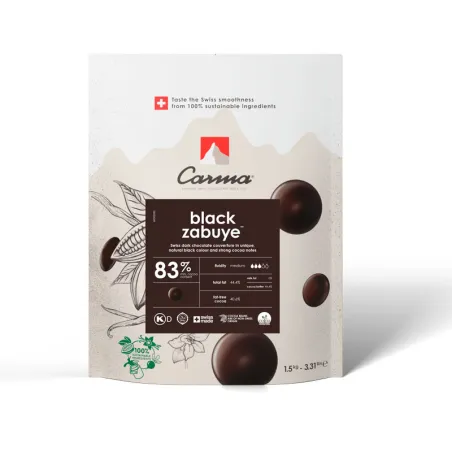
Step 3 – Temper the couverture: Bring the couverture carefully to the correct temperature – typically around 31–32 °C for dark couverture, and 29–30 °C for milk couverture. Correctly tempered couverture is fluid and glossy, and sets evenly within minutes when tested on a cool surface.
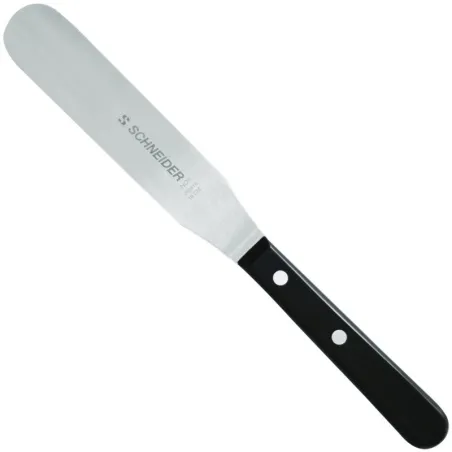
Step 4 – Fill the Chocolate bar mold: Pour the tempered couverture into the 15 cavities of Ø 4.8 cm each, distribute evenly, and then scrape off the excess chocolate with a Scraper.
Step 5 – Place the brittle disc immediately: While the couverture is still liquid, place the prepared brittle discs onto each cavity and press down gently. Work quickly – the couverture sets fast and bonds firmly and permanently with the brittle as it solidifies. This moment determines the quality of the bond between the chocolate disc and the brittle layer.
Step 6 – Leave to set and release: Allow the filled mould to set completely at room temperature or briefly in the fridge. Once the chocolate is firm and glossy, turn the mould over – thanks to the smooth Polycarbonate surface and the correctly tempered couverture, the Florentines slide out effortlessly, with the characteristic snap, perfect mirror gloss and the distinctive wave pattern on the chocolate side.
Care and storage
After each use, wash the Chocolate bar mold carefully by hand under warm water – do not use a dishwasher, as heat and aggressive cleaning agents will dull the Polycarbonate surface and shorten the lifespan of the mould. Do not use sharp or abrasive cleaning agents or tools – these damage the sensitive surface and impair the gloss of subsequent chocolate work. After cleaning, leave to dry thoroughly and store in a dry, light-protected place so that the Polycarbonate retains its clarity and surface quality permanently.
Florentines like from a confiserie – easily made at home
The right mould, the right tempering, a quick polish with kitchen paper – and you'll have Florentines that not only taste delicious but also look as though they came straight from a confiserie. This Chocolate bar mold gives every chocolate disc a uniform round shape, the characteristic wave pattern and the perfect chocolate gloss – the ideal base for a confectionery classic that you'll be proud to give as a gift, serve at celebrations, or simply enjoy yourself.