
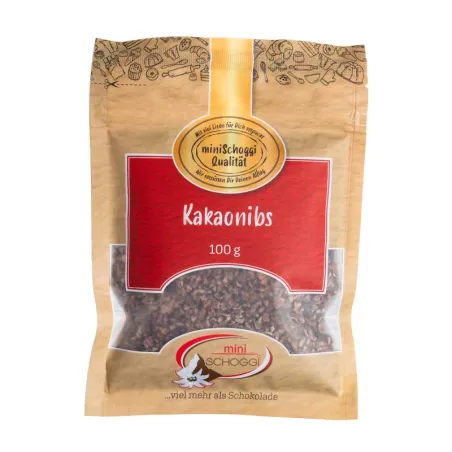
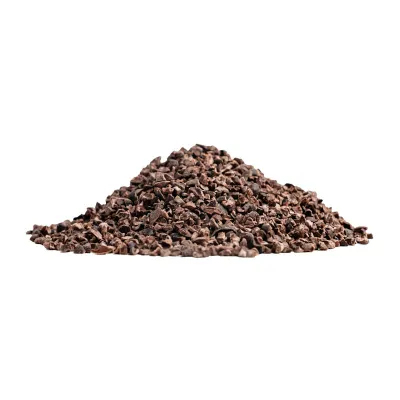
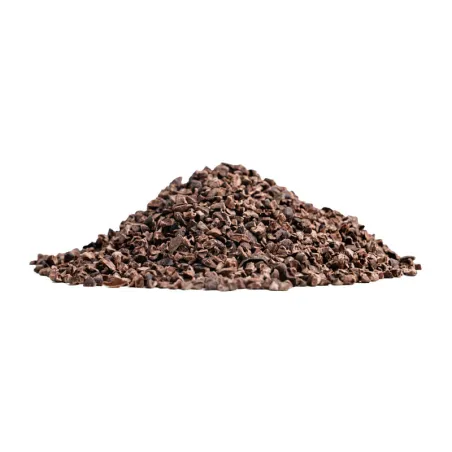
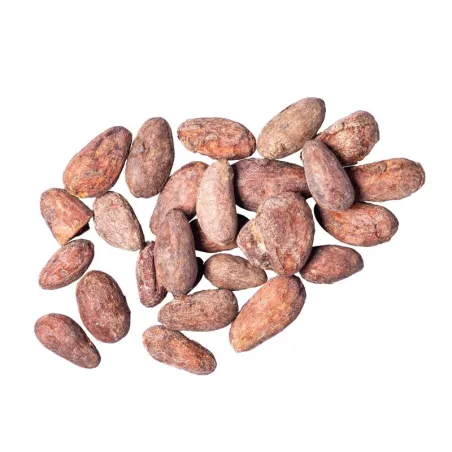
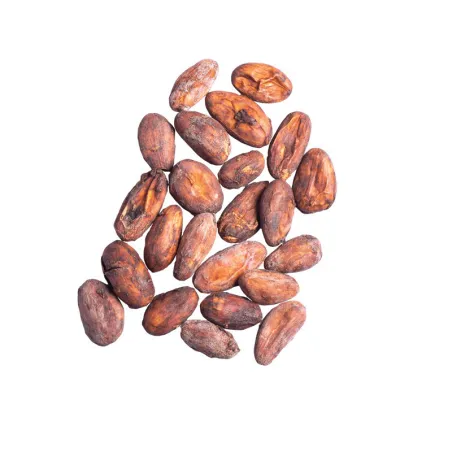
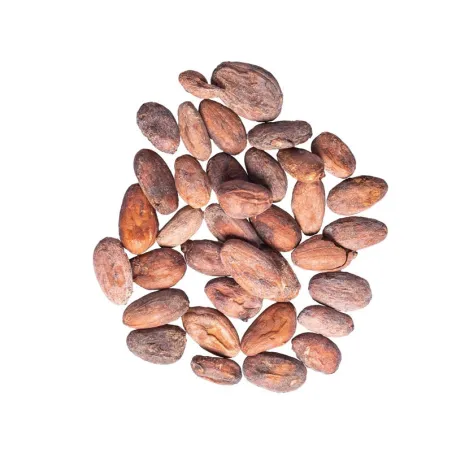
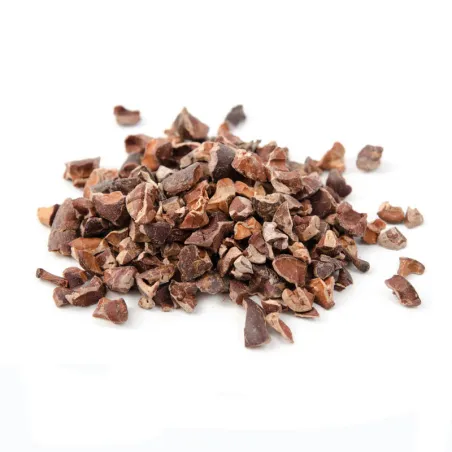
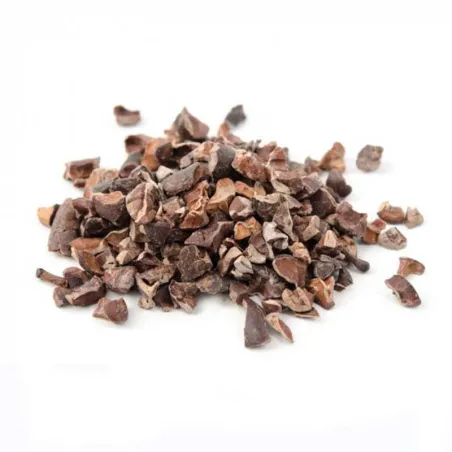
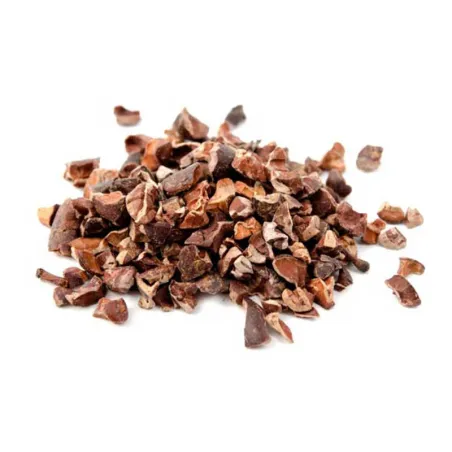
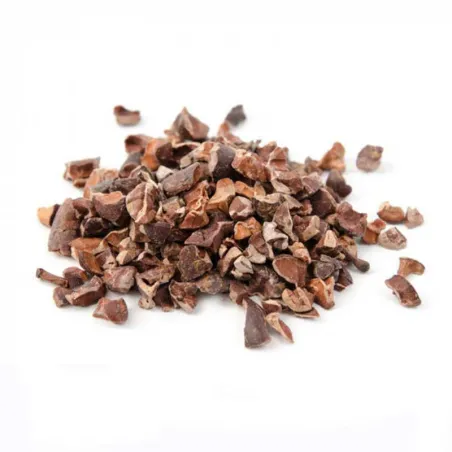
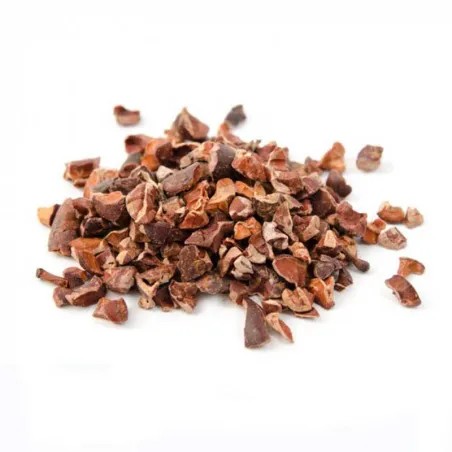
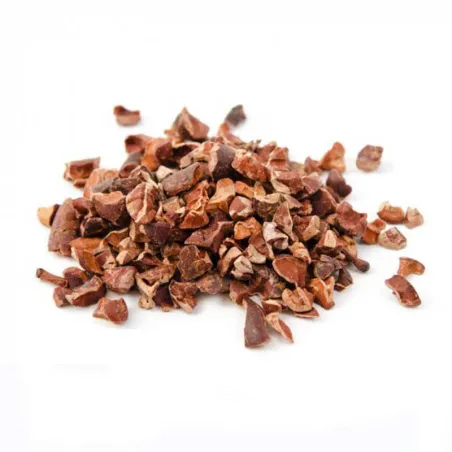
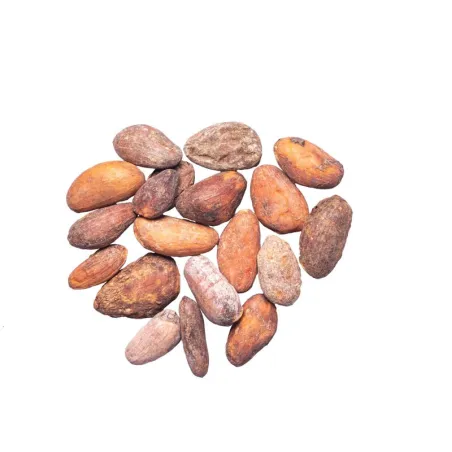
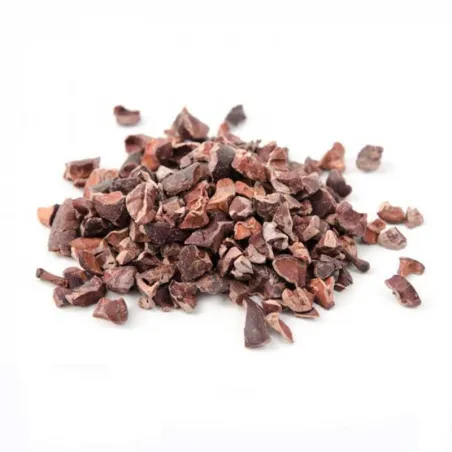
Here you will find cocoa beans and cocoa nibs by origin: the starting point for your own bean to bar chocolate and a crunchy extra for baking. Whole beans come from Bali, West Papua, Colombia and Nicaragua, nibs from seven growing countries, so you can compare different origins side by side.
A cocoa bean is the fermented and dried seed of the cocoa pod, still in its shell. Our whole cocoa beans are raw, not yet roasted: you roast them yourself in the oven, then crack and winnow them, so the roast is your choice. Cocoa nibs, on the other hand, are pieces of bean that have already been cracked and shelled. With them you skip cracking and winnowing and get to grinding much sooner.
For bean to bar you grind the nibs into cocoa mass and refine it with sugar and other bean to bar ingredients. In baking, nibs add bite and a bitter cocoa note to biscuits, bread and cakes. In muesli or on yoghurt they add crunch, and as decoration you can scatter them over chocolates, bars or the edge of a cake.
The flavour depends heavily on origin, variety, fermentation and roast: some cocoas taste fruity and tangy, others nutty, earthy or bitter. Our tip: taste two or three origins side by side, on their own. It is the quickest way to find out which direction you prefer.
Tightly sealed, somewhere cool, dry and dark, away from strong-smelling foods. Cocoa picks up other odours quickly.
For smooth chocolate you need a melangeur that grinds the mass finely enough. With a blender or mortar it stays gritty. You will find suitable machines under bean to bar equipment.
In the Bean to Bar course in Adliswil we show you the way from bean to bar. Everything on the subject is in the Bean to Bar category.