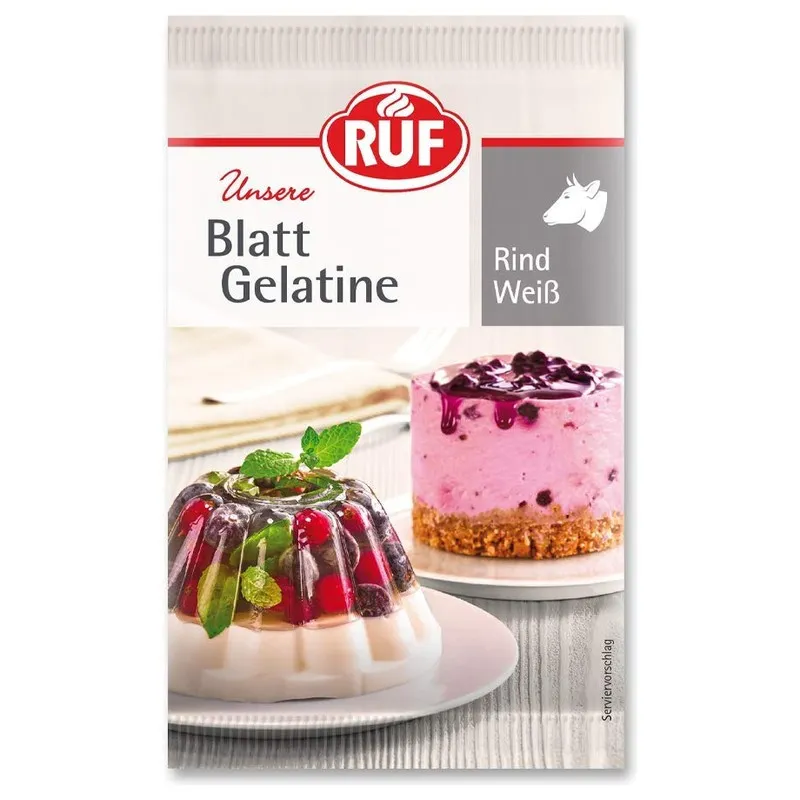
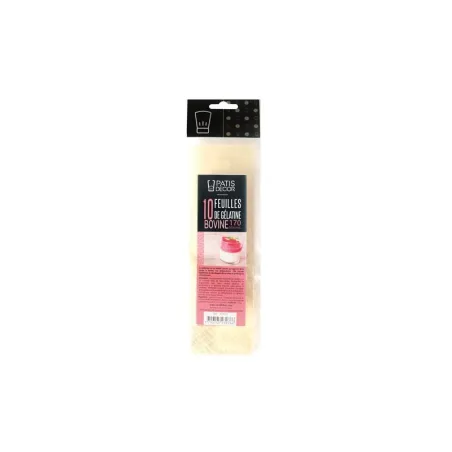
RUF Beef Gelatine Leaves, 12 pieces
Beef gelatine – the same quality, a different base
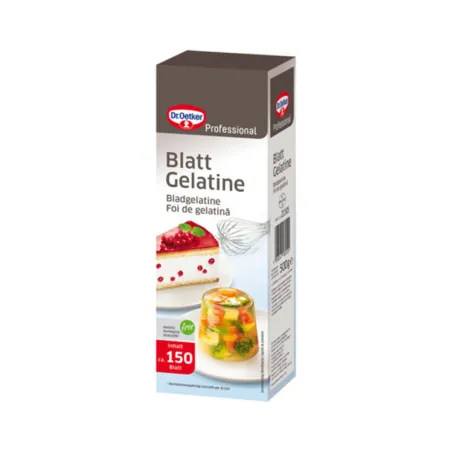
For many people, pork gelatine is not an option – for religious reasons, ethical conviction, or personal preference. This Leaf gelatine from RUF has been developed precisely for these cases: it consists exclusively of edible beef gelatine, is halal-certified, and can be used as a direct substitute for pork gelatine in any recipe that calls for gelatine – without adjusting the quantity and without any difference in the result. In terms of gelling power, handling, and quality, it is equivalent to classic Leaf gelatine and delivers the same reliable results. As it is odourless and flavour-neutral, it does not affect the natural taste of the ingredients and blends invisibly into any cream, Jelly, or dessert. Leaf gelatine has a decisive advantage over powdered gelatine: one leaf is a clearly defined quantity that does not need to be weighed and swells evenly when soaked. It can be squeezed out cleanly and dissolved, and it combines evenly with the mixture when stirred in – no lumps, no guesswork. This makes handling easier and the result more reliable than with powdered gelatine.
From cake filling to aspic – wherever firmness matters
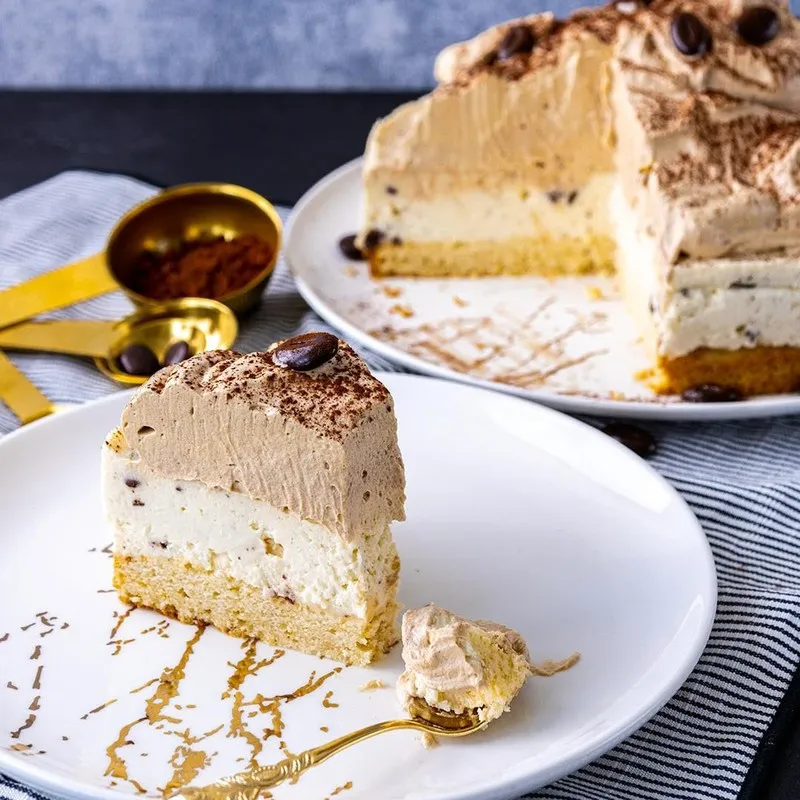
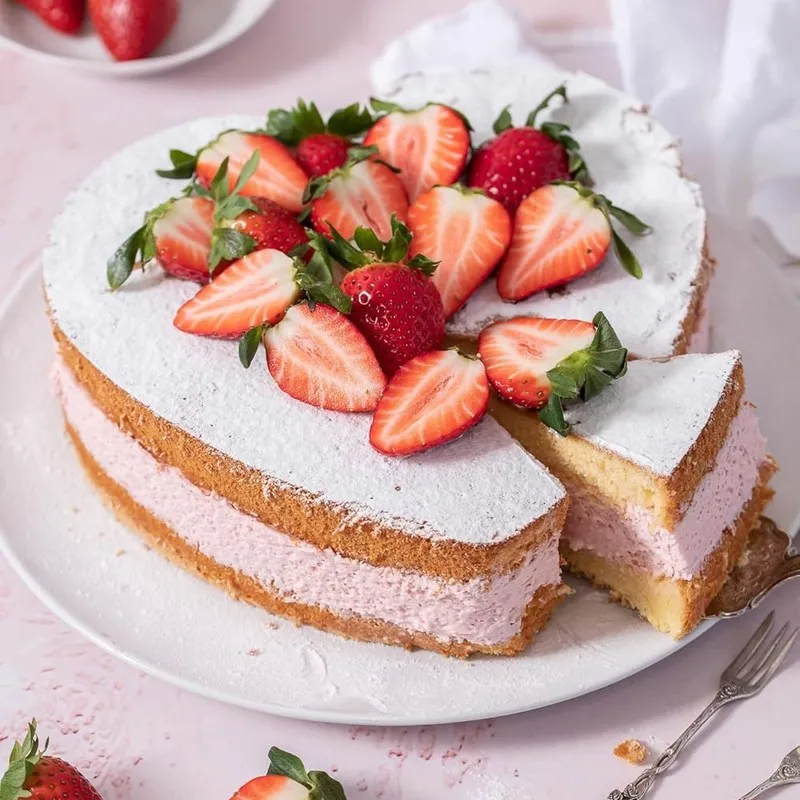
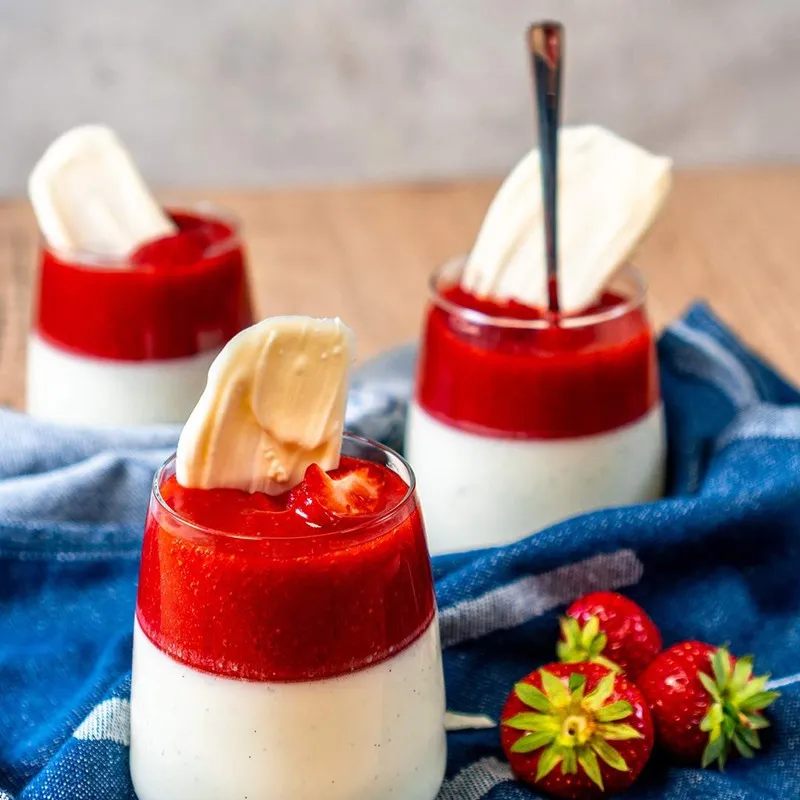
Beef Leaf gelatine is suitable for all dishes and desserts where a mixture, cream, or liquid needs to achieve a certain firmness. In cake creams and fillings, it ensures that the cream holds its shape when cut and the cake keeps its structure – this is especially important for multi-layered cakes that are transported or left at room temperature for longer. Without a stable cream, no cake holds together when sliced, and the difference between a successful and a failed cake often comes down to the right amount of gelatine. In Panna Cotta, Beef gelatine produces the characteristic, velvety texture that, depending on the quantity used, is suitable both for serving directly in the glass and for turning out onto a plate. In fruit jellies and Cake glaze, it delivers a clear, glossy result that keeps fruit, berries, and other toppings on the cake fresh and presents them beautifully. In mousses and foam desserts, it gives the light mixture just enough stability to hold its shape when served, without losing the light, creamy texture. It is also perfectly suited to savoury applications such as vegetable aspic and delivers a clear, appetising result.
The right quantity – and the result is spot on
The amount of gelatine needed for a dish depends on how firm the finished mixture should be and how it is served. As a rule of thumb: for jellies and cake fillings that need to hold their shape when cut, 6 leaves per 500 ml of liquid is recommended. For tall or multi-layered cakes, this quantity is especially important to prevent the filling from collapsing. For creamy desserts such as Panna Cotta or Bavaroise that are served directly in the glass or mould and should have a soft, velvety texture, 4 leaves per 500 ml is sufficient. If these desserts are to be turned out – i.e. unmoulded onto a plate – 6 leaves per 500 ml is recommended so that the mixture reliably holds its shape. In summer or in warm kitchens, increase the quantity by 1 to 2 leaves per litre, as gelatine is heat-sensitive and softens more quickly at high room temperatures. When following a recipe, always use the quantities stated there.
Soaking, dissolving, tempering – how to get it right every time
Working with Leaf gelatine is straightforward if you follow the steps in the right order. First, place the required number of leaves individually in a bowl of cold water and soak for approx. 5 minutes until completely soft and pliable. Then gently squeeze out the leaves to remove excess water and dissolve them over low heat in a small saucepan. It is important not to let the gelatine boil, as too high a temperature causes it to lose its gelling power and the result will be too soft or liquid.
For cold mixtures – such as cake fillings with whipped cream or mousse – do not pour the dissolved gelatine directly into the entire mixture, as the temperature difference will cause the gelatine to clump immediately or form strands. Instead, first stir two to three tablespoons of the cold mixture into the dissolved gelatine, then add a little more, and only then fold the tempered mixture into the remaining mass. This step ensures that the temperatures adjust gradually and the gelatine distributes evenly throughout the mixture. For warm mixtures – such as fruit jellies or Cake glaze – stir the dissolved gelatine directly into the warm liquid while stirring. One important note: gelatine reduces the perception of sugar, salt, acids, and spices in the finished dish. The dish should therefore always be tasted and seasoned after adding the gelatine, so that the result really tastes the way it should. Store RUF Beef Leaf gelatine in a dry, cool place with the packaging well sealed, as gelatine easily absorbs moisture and foreign odours from its surroundings, which can impair its quality. After opening, close the packaging carefully and use promptly.
The Gelling agent that holds – halal-certified and impressive
RUF Beef Leaf gelatine is the conscious choice for everyone who avoids pork gelatine – and at the same time the reliable choice for everyone who wants no compromises when it comes to results. Halal-certified, made from pure Beef gelatine, odourless and flavour-neutral, and identical to classic Leaf gelatine in gelling power and handling, it delivers a convincing result every time in cake creams, Panna Cotta, fruit jellies, and mousses – exactly what a good bakery deserves. Anyone who has used it once knows: a conscious choice and a convincing result are not mutually exclusive – they go hand in hand.