
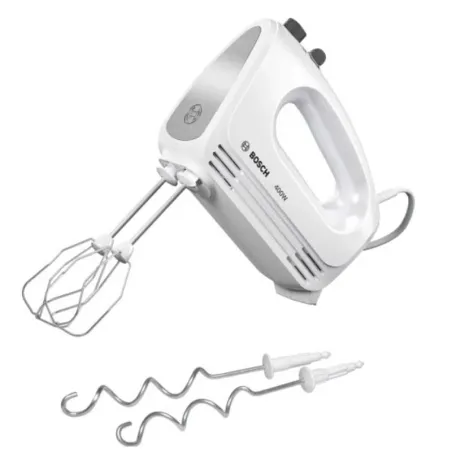
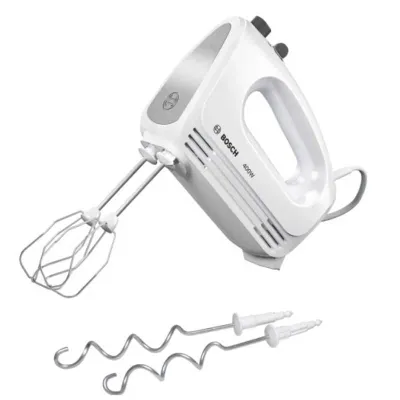
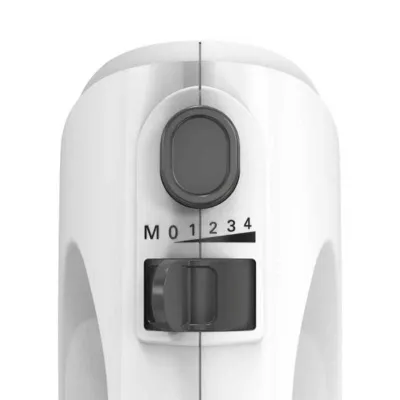
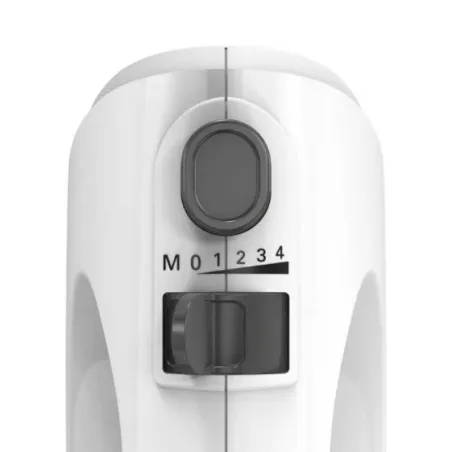

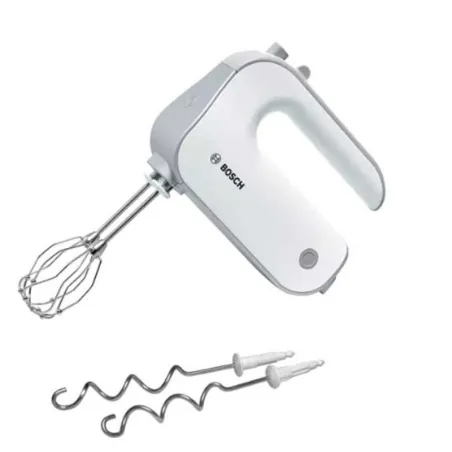
Robert Bosch was not an inventor in the classical sense. He was someone who improved an existing product – the magneto ignition for gas engines – so thoroughly that Bosch became the world's leading supplier to car manufacturers within a few years. This attitude – never accepting a product as it is when it could be better – emerged in 1886 in a Stuttgart backyard workshop and has carried the company through two world wars, dozens of crises and a century of technological change. Today Robert Bosch GmbH is one of the largest private companies in the world: €90.5 billion in revenue, 417,900 employees, over 450 locations in 60 countries, around 86,800 employees in research and development alone. 94 per cent of the company belongs to the Robert Bosch Stiftung – which gives Bosch the independence to think long-term rather than quarterly. The range extends from automotive components through industrial technology to home appliances and power tools. Selected Bosch products are available at miniSchoggi.
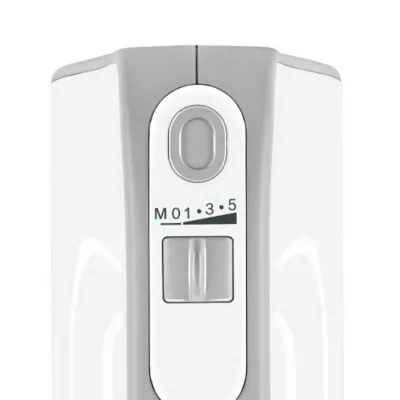
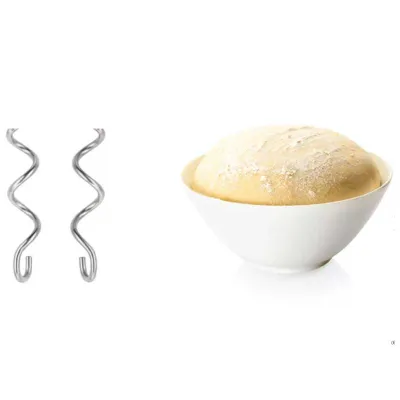
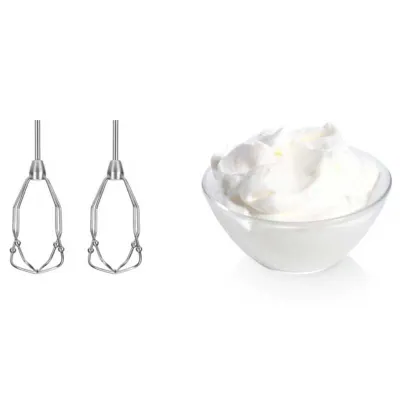
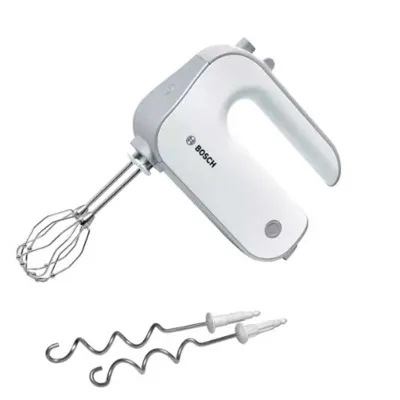
Stuttgart, 15 November 1886. Robert Bosch opens a 'Workshop for Precision Mechanics and Electrical Engineering' in a backyard in Stuttgart-West. He is 25 years old, self-trained, without financial reserves. The first ten years are, in his own words, 'a wretched struggle' – small orders, tight conditions, constant uncertainty about whether the business will survive. Bell repairs, individual components, micro-orders. What sustains Bosch is less a product idea than a working attitude: everything he touches should be better than what it replaces.
The decisive commission comes in the mid-1890s: a magneto ignition device to specification – a product that already exists, but which Bosch thoroughly improves. More reliable, more robust, more reproducible. The ignition for gas engines of 1887 and the first magneto ignition for automobiles of 1897 establish the reputation that makes Bosch the world's leading automotive supplier. With growing demand the company expands rapidly – new factory, new production lines, new employees. In 1904 the first Bosch products arrive in Switzerland. England follows as the first location outside Germany, then Europe, America, South America, Africa, Australia, China, Japan. A company from a Stuttgart backyard becomes a global network.
Robert Bosch was in one respect decades ahead of his time: in the conviction that good working conditions produce better results. He introduced the eight-hour working day – at a time when twelve to fourteen hours were standard and when this demand was still considered radical. He paid above-average wages in the conviction that satisfied employees perform better and stay longer. He recognised abilities and promoted them regardless of background or educational path, and filled the most promising positions with the most capable people. These were not acts of charity – they were a business conviction that showed in the results.
That 94 per cent of Robert Bosch GmbH today belongs to the Robert Bosch Stiftung is no coincidence. Robert Bosch bequeathed his company during his lifetime to a charitable foundation, so that it would not end up in the hands of individuals or shareholders who might place short-term profit above long-term quality. The foundation uses the proceeds to finance charitable projects in education, health and international understanding. Bosch is thus one of the largest private-law companies in the world – and at the same time structurally independent of the quarterly expectations of the stock market. This ownership structure has direct consequences: Bosch can make decisions that will only pay off in ten or twenty years, without having to justify them to shareholders.
The history of Bosch is also a history of two wars that almost destroyed the company. In the First World War: production converted to armaments, patents expropriated, worldwide locations lost, most of the workforce conscripted. Women took over production – many stayed on afterwards, many men never returned. In the Second World War the same scenario, with more severe consequences: large parts of the factory destroyed, all patents had to be disclosed after the war's end. The Allies wanted to prevent the renewed rise of German heavy industry – Bosch did not have to downsize, but lost the patent advantage it had built up.
What is also remarkable: during the Second World War, Bosch specifically hired Jews to protect them from deportation, and supported persecuted individuals financially to enable them to flee. This was no small risk for a company producing armaments under direct state observation. It was an attitude that went far beyond what was commercially necessary. After the Second World War Bosch began producing rustic goods from the rubble – pots from steel helmets, bowls from sheet metal – that employees could sell or barter. The restart happened pragmatically, without pathos – and that characterises the later recovery too.
The reconstruction was followed by the greatest growth surge in the company's history. Assembly line work and mass production made Bosch products affordable for the general public: kitchen appliances, drills, refrigerators, later washing machines, dishwashers, security systems and most recently networked household technology. The modern household was made possible to a considerable extent by the reduction in cost of devices that Bosch produced for mass consumption.
Today Bosch operates in four business sectors: mobility solutions for the automotive industry – the historical core, still over 60 per cent of revenue. Industrial technology. Consumer goods, which include home appliances and power tools – through the subsidiary BSH Hausgeräte, with €15.3 billion in revenue and 57,000 employees one of the largest home appliance manufacturers in Europe. And energy and building technology. 86,800 employees work exclusively in research and development. These are complemented by clearly formulated, publicly communicated corporate values: future orientation, sustainability, self-initiative, fairness – and an internal code of conduct that applies equally to all 450 locations in 60 countries.
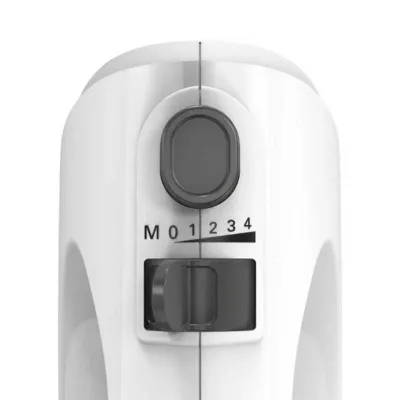
What distinguishes Bosch in the home appliance sector is the same fundamental attitude that made the magneto ignition better than everything else in 1897: consistent engineering work that genuinely makes the end product more reliable. A Bosch kitchen appliance is not a kitchen appliance because it bears that name – it is the result of development work that treats motor performance, noise generation, grip ergonomics, ease of cleaning and longevity as interconnected requirements, not separate checkboxes. Bosch home appliances are developed and produced through BSH Hausgeräte – a subsidiary exclusively specialised in household technology that has been one of the best-selling brands in Europe for decades.
What this means specifically for the bakery: appliances that do not deteriorate even with regular intensive use. Motors that do not overheat under load. Controls that work exactly the same after a hundred uses as on the first. That is not a promise on the packaging – it is the result of 86,800 people at Bosch doing nothing else but making products better. miniSchoggi carries selected Bosch products because tools in the bakery are in daily use and must hold up daily. The range is continuously expanded.
1886. Stuttgart. One workshop, one principle: it can be better. Robert Bosch.