Baking Poppy Seeds, 200 g
An ingredient with a history
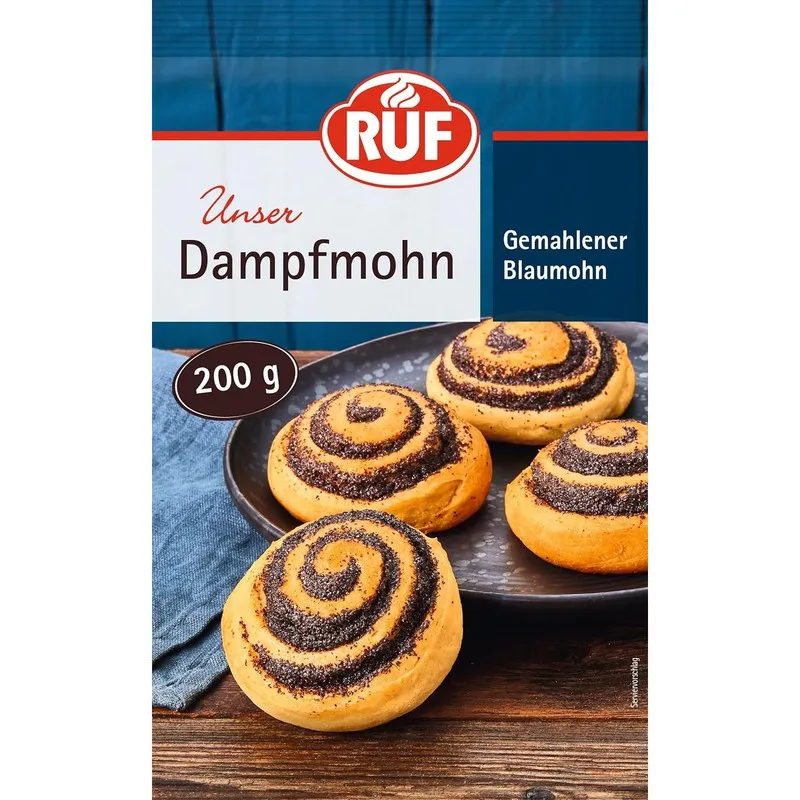
Few baking ingredients are as deeply rooted in European culinary tradition as blue poppy seeds. Already in the Neolithic period, the poppy plant was cultivated in the Mediterranean region — first as a medicinal plant, later as a prized ingredient in kitchens and bakeries. Over the centuries it found its way into Austrian, Bohemian and Eastern European cuisine, where to this day it is inseparable from classics such as poppy seed strudel, poppy seed dumplings and poppy seed cake. The small, blue-grey seeds of the poppy plant — botanically Papaver somniferum — impress with a mild, slightly nutty flavour, a naturally high fat content and binding properties that make them particularly valuable for fillings and doughs. In the past, working with poppy seeds was laborious and time-consuming: grinding, soaking, pre-treating. Today, the ready-to-use baking poppy seeds from RUF take care of that step — making a millennia-old baking tradition more accessible than ever.
What sets baking poppy seeds apart from ordinary poppy seeds
The key difference between raw blue poppy seeds and baking poppy seeds lies in the processing method and its effect on flavour and handling. Raw blue poppy seeds contain natural bitter compounds that impair the aroma and complicate processing — they have to be ground, soaked and often pre-cooked for hours before they are ready for baking. With baking poppy seeds, the blue poppy seeds are gently ground, heated, steamed and stabilised without any chemical additives. The steam heating specifically breaks down the bitter compounds without destroying valuable aromatic substances, and gives the poppy seeds a free-flowing, uniform consistency that can be used directly. The result is a blue-grey, finely ground poppy seed with a deep, mild and slightly nutty Liquid aroma that impresses in the bakery straight away.
Versatile in the kitchen and bakery
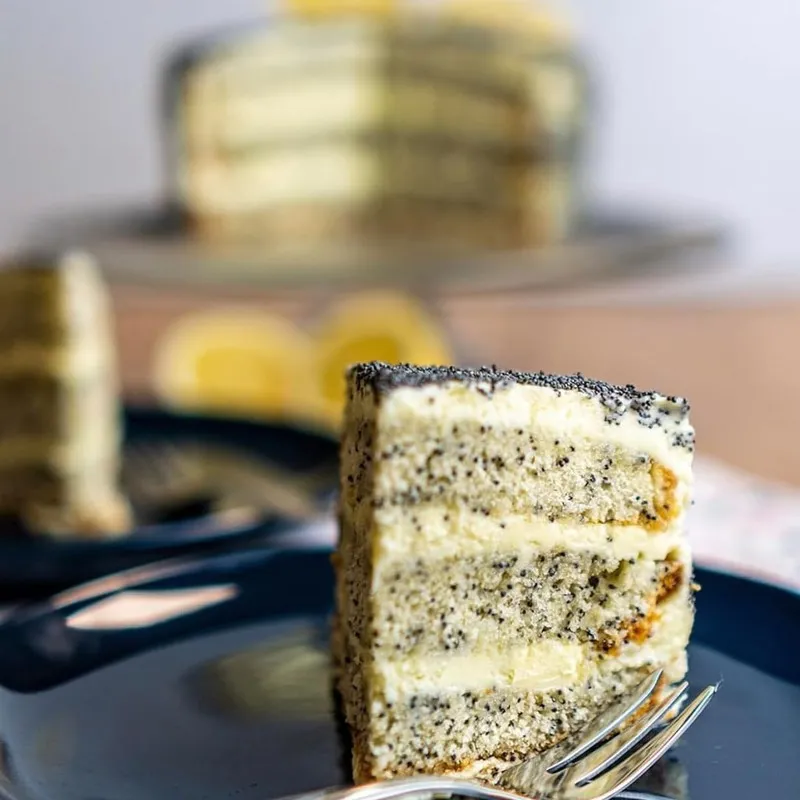
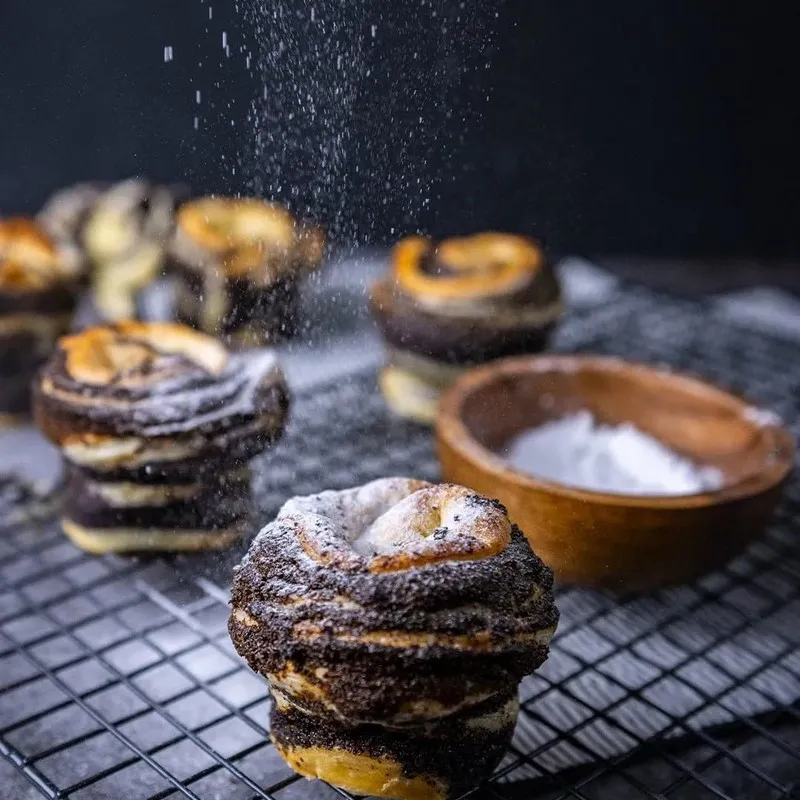
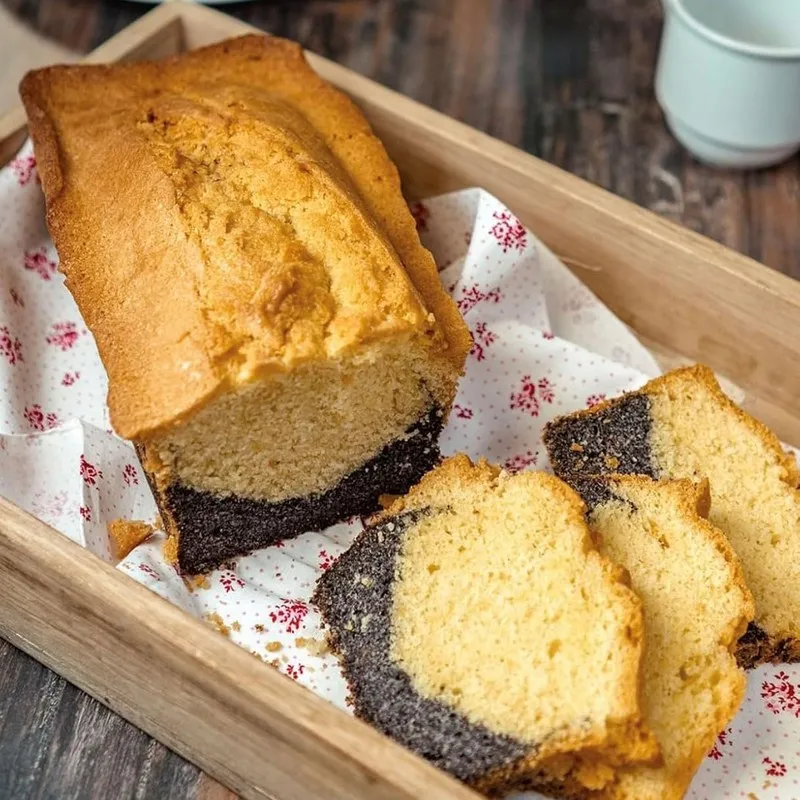
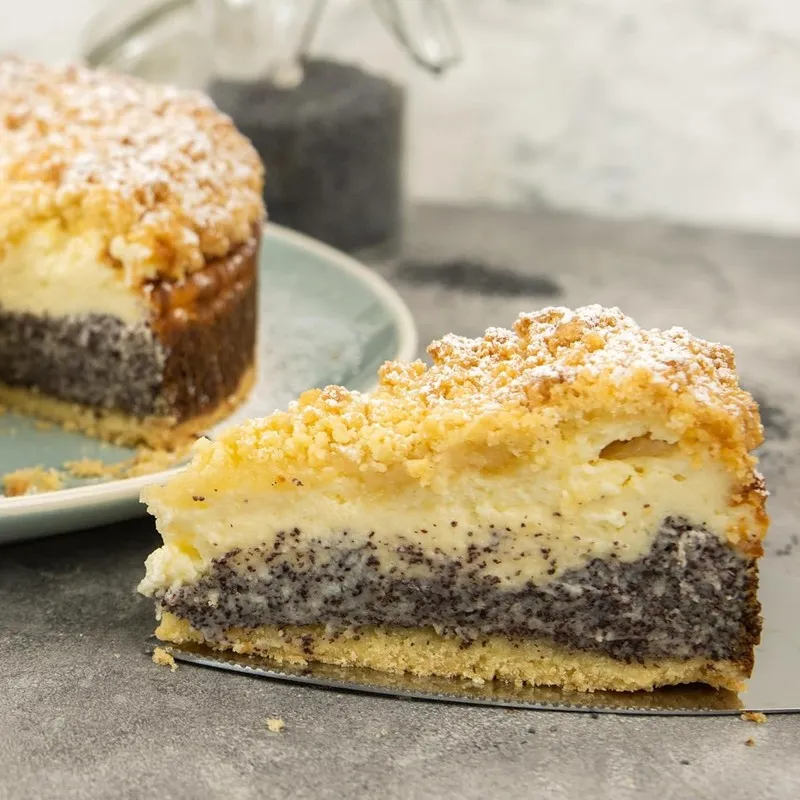
RUF baking poppy seeds can be used in a wide variety of recipes, each time bringing their characteristic, unmistakable Liquid aroma. For a classic poppy seed filling, they are brought to the boil with milk, sugar, a little butter and, if desired, vanilla or lemon zest until a spreadable, aromatic mass forms that can be spread effortlessly over rolled-out dough — ideal for poppy seed cake, poppy seed rolls and poppy seed plaits. In poppy seed dumplings, this filling is the flavour core that turns the soft dough shell into a truly delicious treat. In poppy seed yeast wreaths, the cooked baking poppy seeds are spread evenly over the dough, rolled up and baked into a fragrant, aromatic wreath that, when sliced, immediately builds anticipation through its characteristic poppy seed marbling. Sprinkled as Sprinkles on bread rolls, Lye sticks or savoury baked goods, the baking poppy seeds give the surface a decorative, aromatic touch that convinces both visually and in terms of flavour. Stirred into poppy seed creams, mousses and desserts, they add a mild, nutty note that pairs wonderfully with vanilla, cinnamon and citrus flavours. And anyone who wants to work the baking poppy seeds directly and dry into a sponge batter can simply mix them with the other ingredients without any pre-treatment — the moisture in the batter provides the necessary swelling during baking.
Things to keep in mind
Baking poppy seeds absorb liquid when brought to the boil and swell slightly, which means the finished filling becomes firmer after cooling than it is straight after cooking. If you want a particularly soft, creamy consistency, add a little more milk or cream and let the mixture swell over a low heat without reducing it too much. Since baking poppy seeds have a naturally high fat content, they should not be heated for too long or at too high a temperature, so that the Liquid aroma is preserved and the mixture does not dry out. Store the baking poppy seeds after opening in a cool, dry and well-sealed place, as the naturally high fat content of the poppy seeds can cause them to turn rancid and lose their Liquid aroma when exposed to warmth and moisture. Store unopened at room temperature, protected from direct sunlight, and use quickly after opening so that the quality and delicate poppy seed Liquid aroma are fully preserved.
The poppy seed flavour you won't forget
Poppy seed bakes carry something within them that goes beyond pure flavour — a warmth, a depth, a hint of childhood and cosiness that few other baked goods evoke so immediately. That flavour starts with the right poppy seeds, and these baking poppy seeds from RUF deliver exactly that: a mild, full-bodied Liquid aroma with no bitter compounds, no fuss and no compromises. Whether in a moist poppy seed cake, a fragrant yeast wreath or a soft poppy seed dumpling — every bite tells of a baking tradition that has won people over for generations and that succeeds more effortlessly than ever with these baking poppy seeds.