
Ready-to-ship quantity: more than 20 pieces20+ in stock
Price:CHF6.90

No two pieces of wood look the same. The grain of a walnut tells of dry and wet years, of fast and slow growth, of summer and winter. An olive wood carries the marks of a life in the heat; a purple heart its luminous violet from the tropical rainforest. Jochen Hauer reads these stories – and turns them into baker's knives that you do not simply use but reach for gladly. Schnitt-Holz is Jochen Hauer's small company from Bad Hall in Upper Austria. Every baker's knife – known in the French baking world as a lame de boulanger – is made by him personally by hand: selecting the wood, planing, sanding, polishing, oiling, waxing, sawing the slot, setting the screws. No piece leaves the workshop that he has not held in his own hands. The range at miniSchoggi includes various baker's knives from Schnitt-Holz.
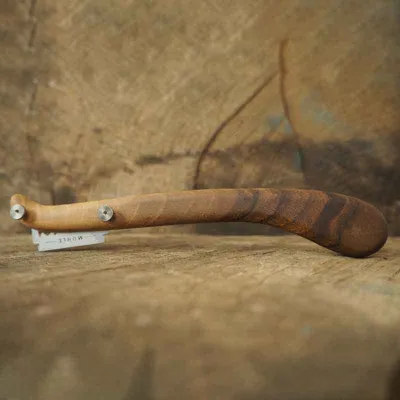
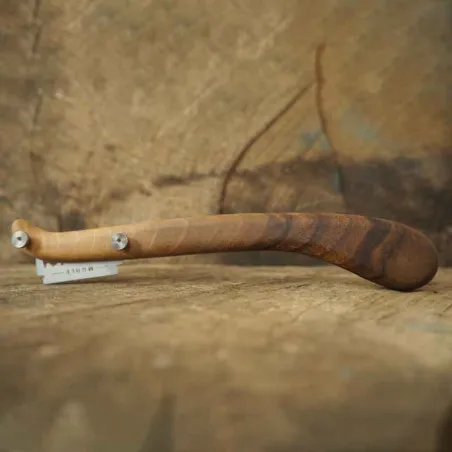
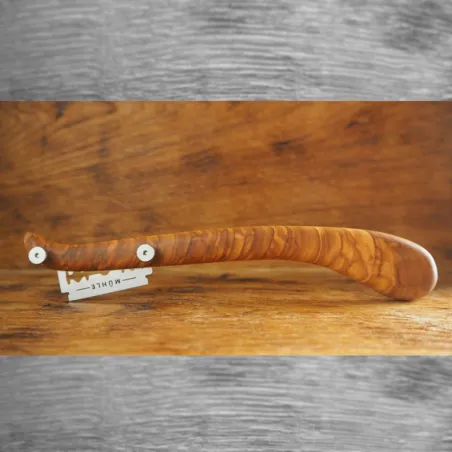
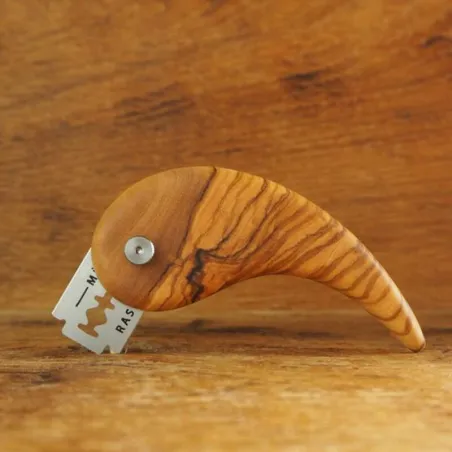
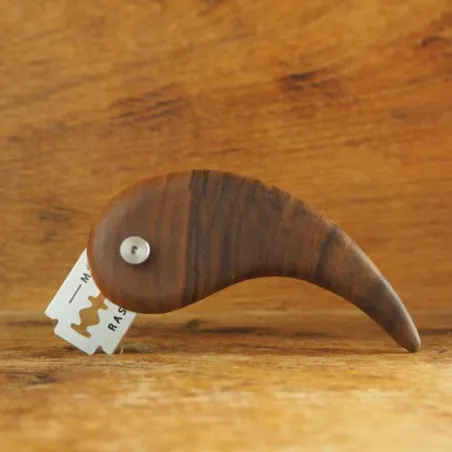
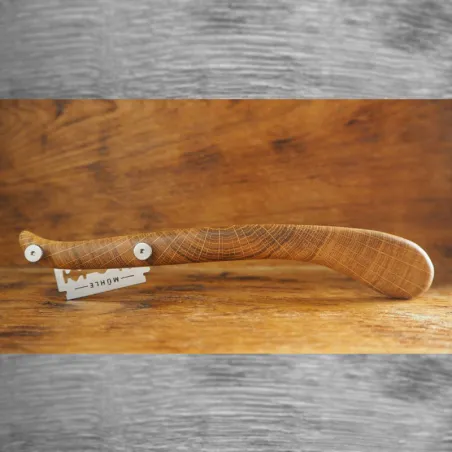
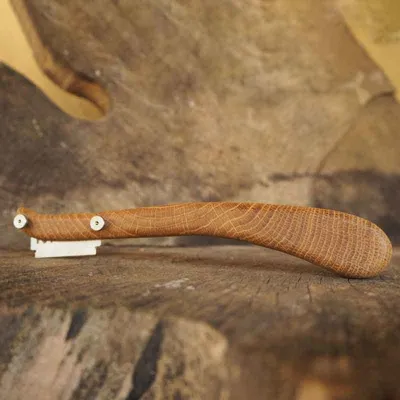
Jochen Hauer is a social worker by profession. That is not a footnote – it explains why Schnitt-Holz is what it is: not a company oriented towards efficiency and scaling, but a craft that grew from genuine passion and therefore takes no shortcuts. Someone who works with wood out of passion rather than commercial calculation chooses differently: he takes the piece of wood with the most beautiful grain, not the one that processes fastest. He spends more time sanding than strictly necessary, because he knows you can feel the difference. He discards a piece that does not meet his standards, even if it would work.
Hauer began in his own kitchen – not with baker's knives, but with wooden objects for everyday use. Bowls. Chopping boards. Blade holders. Things he wanted to make from the wood he loved so much. What fascinates him about wood is precisely describable: the smell when working it – every species smells different, walnut different from olive, olive different from purple heart –, the different feel depending on the density and texture of the wood, the warmth that a well-sanded and oiled wooden handle generates in the hand. And the fact that every piece carries its own story. The growth rings of a walnut are not decoration but biography: a nutrient-rich year, a dry summer, a harsh winter. A good piece of wood is never anonymous. That is the difference from a plastic handle: not just a quality difference, but a difference of character.
The baker's knife – in French lame de boulanger, literally 'baker's blade' – is a tool with a long history. Professional bakers have used it for centuries to score bread dough before baking. Scoring is not decorative embellishment but craft necessity: a bread dough rising in the oven must be able to give somewhere. Without controlled cuts it tears uncontrollably – where the dough is weakest, not where the baker intended. With targeted cuts one controls how the bread rises, what volume it develops, how the crust breaks and what pattern is visible after baking. A single long cut along the side creates a large, crunchy ear. A cross on top allows even expansion. A spiral or leaf pattern turns a simple loaf into a work of art.
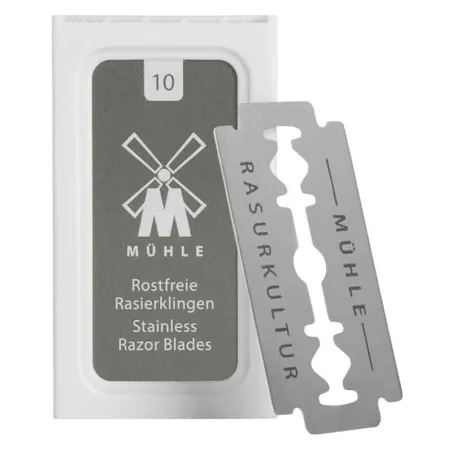
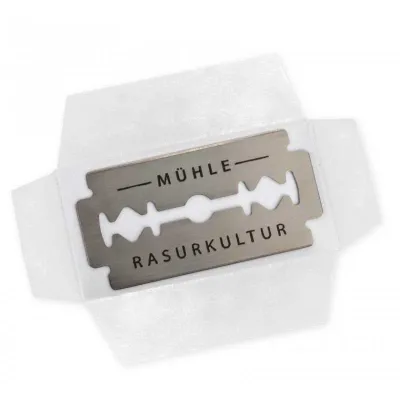
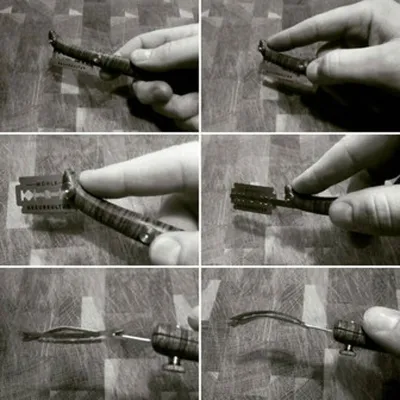
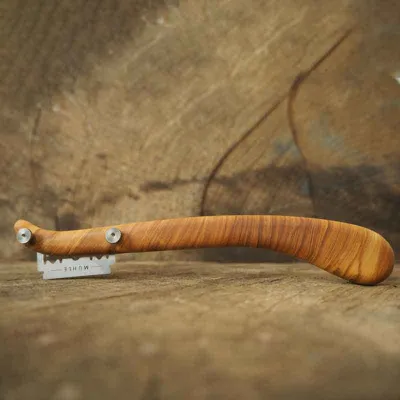
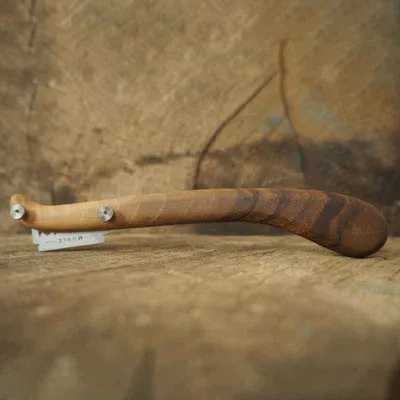
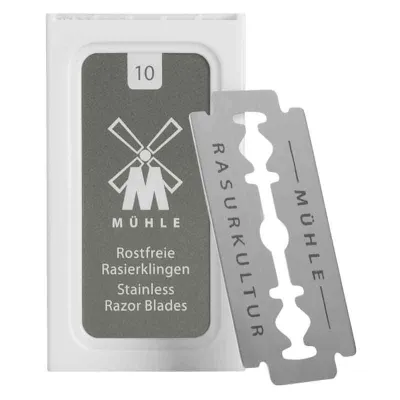
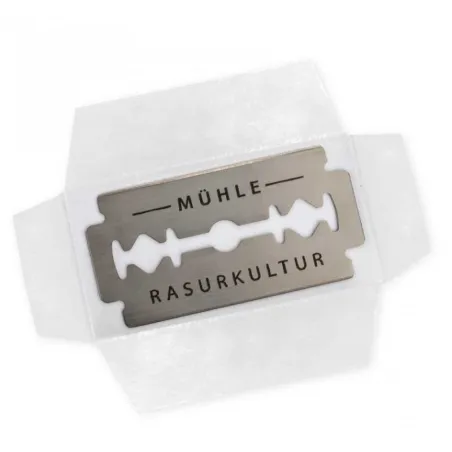
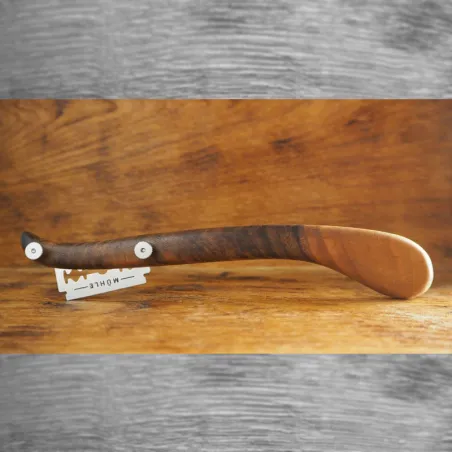
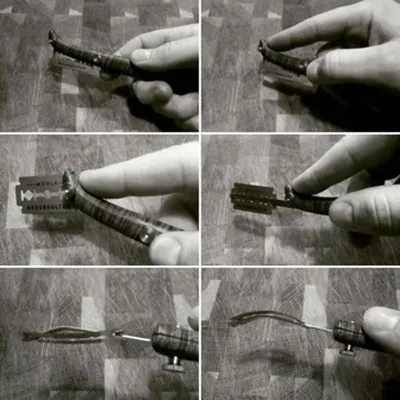
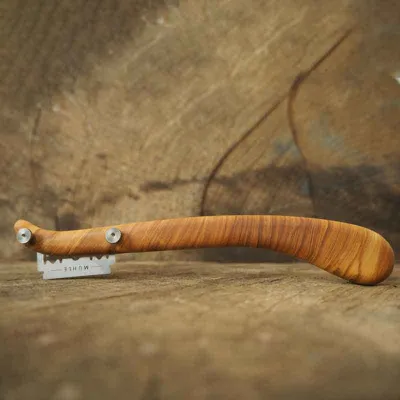
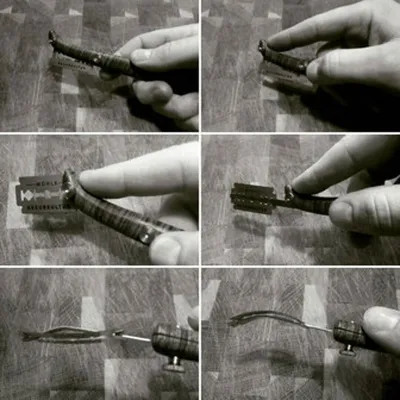
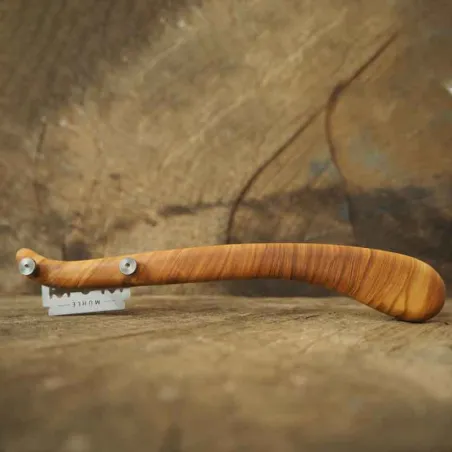
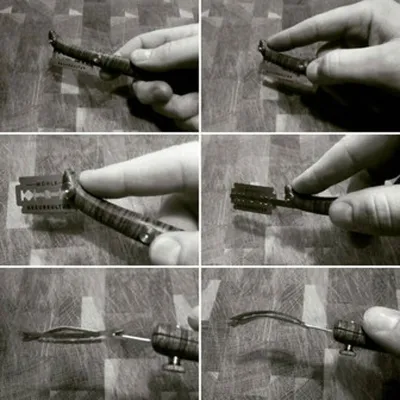
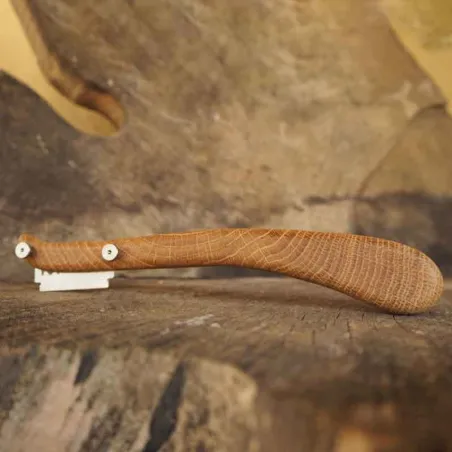
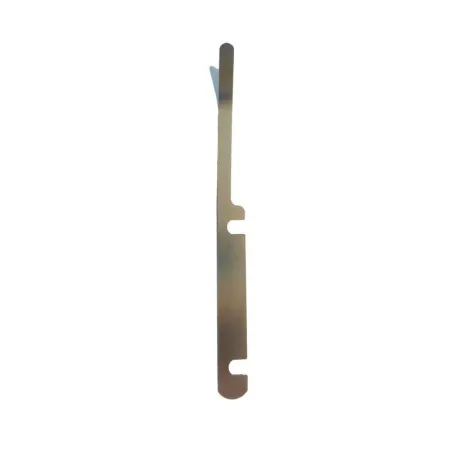
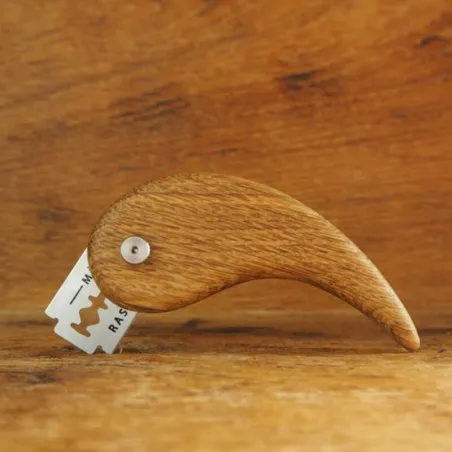
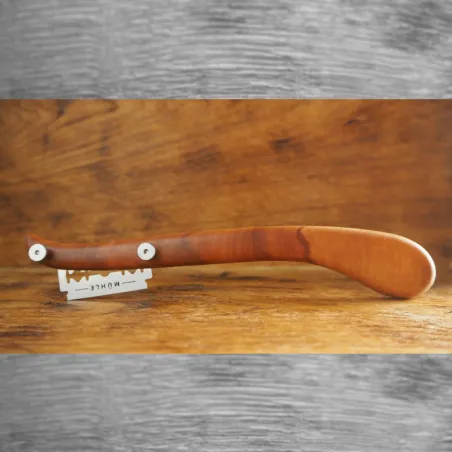
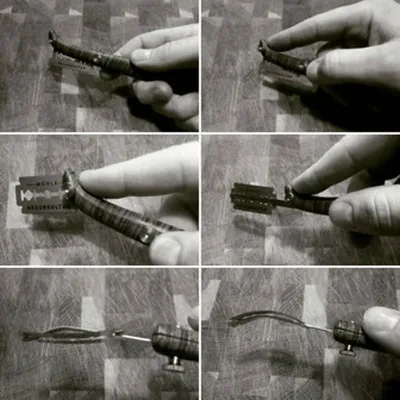
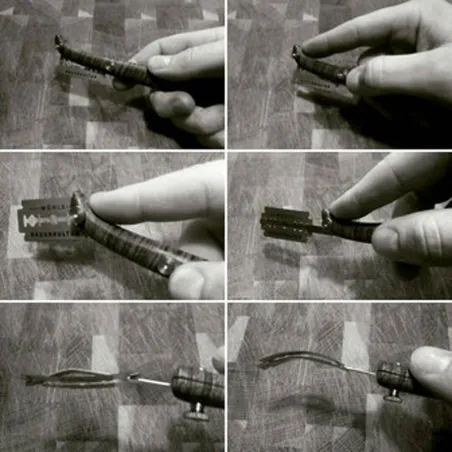
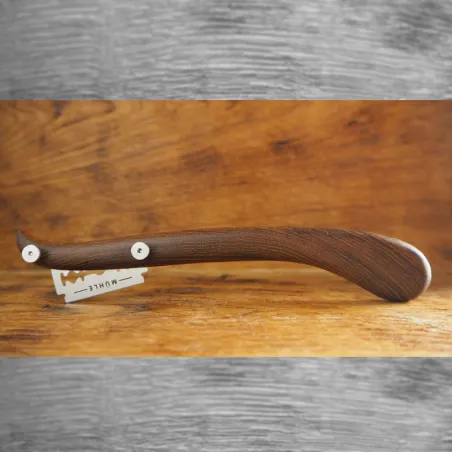
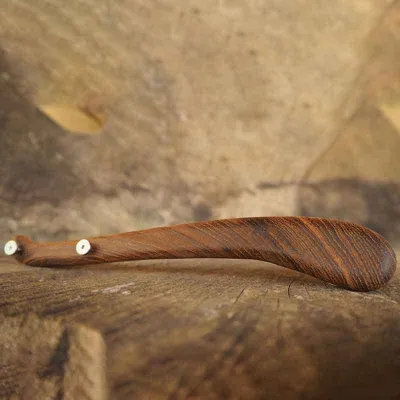
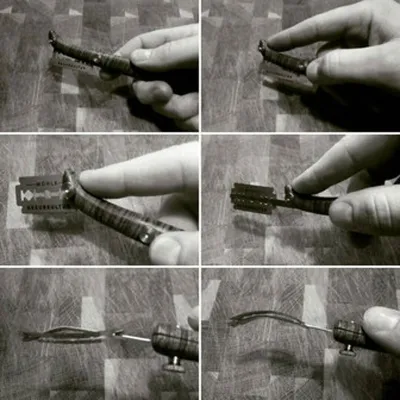
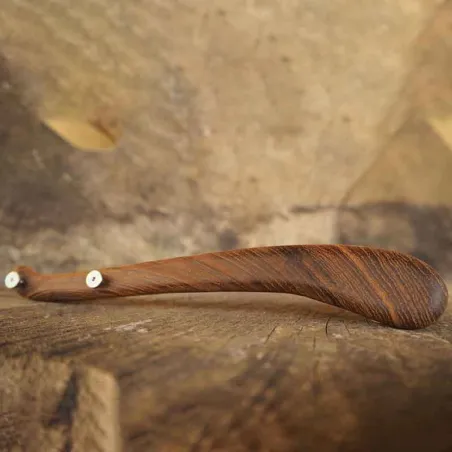
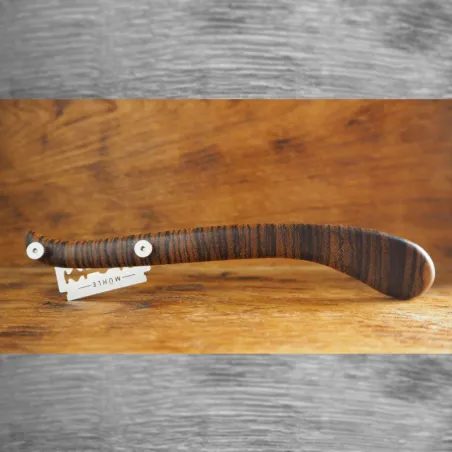
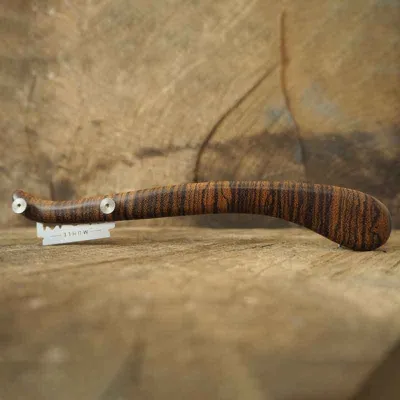
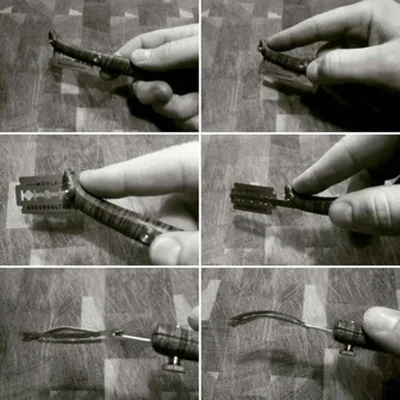
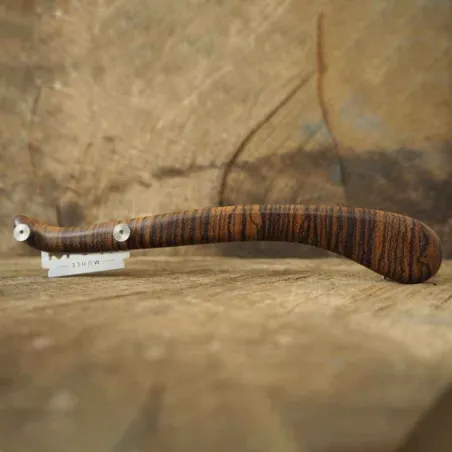
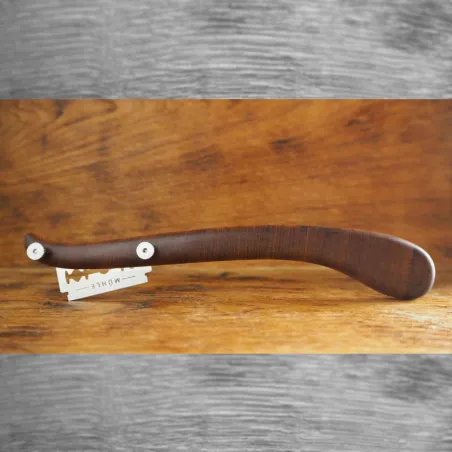
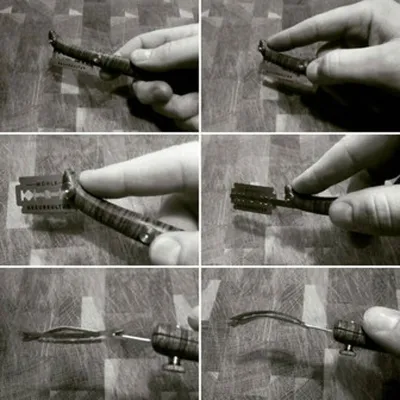
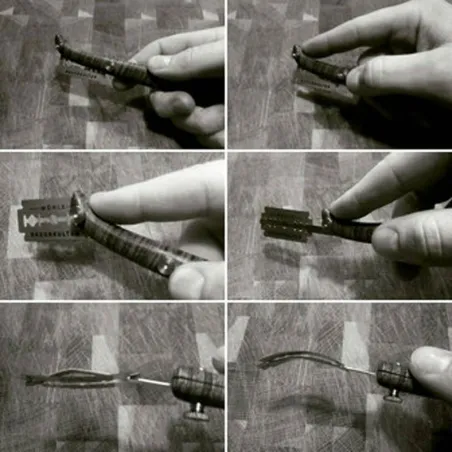
The Schnitt-Holz baker's knife came at the end of a long development process. Hauer tinkered, tested, discarded, improved – until form and function were right. The result: a handle shaped to sit securely and comfortably in the hand, with a narrow slot at the upper end into which a razor blade is clamped. Two small screws fix the blade and allow the protrusion to be set precisely – depending on the desired cut depth and scoring technique. The handle is neither too heavy nor too light, neither too wide nor too narrow – the result of numerous iterations until it felt right. Not according to a drawing, but according to the feel in the hand. The razor blade is replaceable, which is not just practical but necessary: a blunt blade tears the dough instead of cutting it and prevents the score from opening cleanly. With the optional baguette blade insert the blade can be gently curved – for the typical shallow, diagonal cuts that create the characteristic baguette crust.
Every Schnitt-Holz baker's knife goes through the same process, and Hauer carries out every step himself. He begins with wood selection: he does not buy anonymous timber blanks but selects each piece personally – by grain, by quality, by the character of the individual piece. Not every piece of walnut is the same. A piece with a particularly dramatic grain becomes a handle that catches the eye. A piece with a calmer pattern becomes a handle that convinces through its simplicity.
Then comes planing – the shaping. The handle gets its oval form, which rests comfortably in the palm and enables secure guidance when scoring. Sanding follows in several stages, from coarse to fine, until the surface is as smooth as polished glass. Oiling protects the wood from within: the oil penetrates the wood fibres and prevents the wood from drying out, cracking or warping. Waxing seals the surface and gives the wood its sheen. At the end the slot for the blade is sawn and fitted with two small screws. The result is a tool that Jochen Hauer vouches for with his name.
Schnitt-Holz works with various hardwoods, and each species brings its own properties, its own appearance and its own feel. Walnut is perhaps the best-known and most popular wood for kitchen utensils: dark brown to almost black, with a grain that can shift between calm and dramatic, warm in the hand, outstandingly durable and pleasantly dense. No two pieces of walnut look alike – the range from almost straight-grained to wildly sweeping is wide.
Olive is lighter, creamy white to honey yellow, with an irregular, lively grain that tells the story of a tree that often stood under stress – drought, wind, sparse soil. Olive wood is extraordinarily hard and dense, smells aromatic when worked and develops a growing patina over time. Making two identical handles from olive wood is practically impossible – every piece is so individual that the question 'Can I get the same again?' must be answered with 'No'. Purple heart comes from Central and South America – Brazil, Surinam, Guyana – and rightly bears its name: the wood is violet, not as an applied colour but as a natural property of the wood itself, caused by the oxidation of the tree's sap in the air. Freshly cut it is light violet; over time it darkens to a deep purple. Hauer also works with further woods depending on availability and quality – always with the principle of using only hardwood with the necessary density and resilience for a daily kitchen tool.
A factory baker's knife fulfils its purpose. A Schnitt-Holz baker's knife fulfils its purpose – and leaves a feeling that you cannot get from a plastic handle. The wood sits differently in the hand. The grain is different from every other piece in the world. The smell when first opening the packaging is different. These are not functional arguments, but they count: a tool one reaches for gladly is used more often, cared for better, valued more. And anyone scoring their bread with a baker's knife they chose themselves – the grain that appealed to them, the wood they find beautiful – bakes with a different awareness.
miniSchoggi carries Schnitt-Holz baker's knives because handcrafted quality born of genuine passion belongs in the bakery – alongside the best ingredients, the right tool to work with gladly. The range includes various baker's knives from Schnitt-Holz and is continuously expanded.
Bad Hall, Upper Austria. One piece of wood, one blade, two screws. Handmade. Jochen Hauer.