
Ready-to-ship quantity: more than 20 pieces20+ in stock
Price:CHF38.90
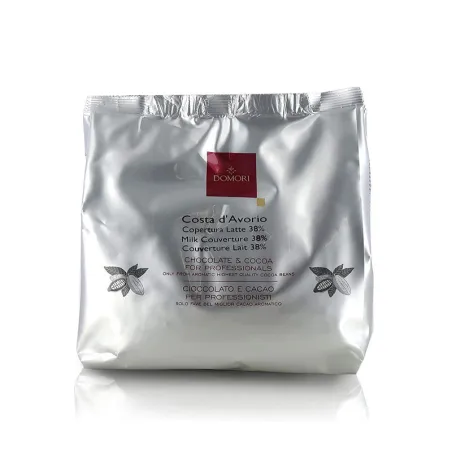
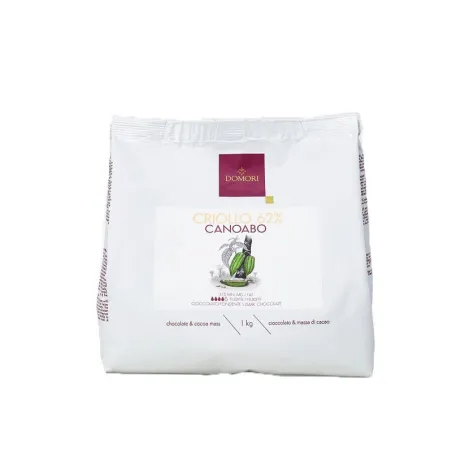
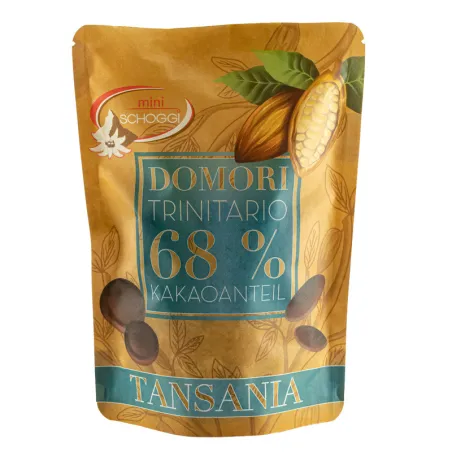
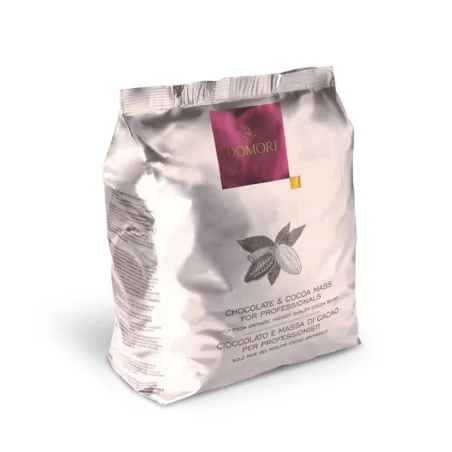
Venezuela, 1990. A young economics student finishes his degree and comes into contact with something that will change his life: cocoa. Not as a raw material, not as a mass commodity – but as a plant, as a carrier of flavour, as a threatened cultural heritage. Gianluca Franzoni spends three years in the fields, learns cultivation from the ground up, and finds in the Criollo bean a passion that never lets him go. What is rare, what stands close to disappearing and yet tastes so extraordinary as almost no other cocoa in the world – that deserves attention. And a company. In 1993, Franzoni founds Domori, named after the two statues on the clock tower of St Mark's Square in Venice – that city which for him stands for trade, adventure and openness to the world. Today the company is headquartered in None on the outskirts of Turin, sources its cocoa from carefully selected plantations in South and Central America and is among the few chocolate manufacturers worldwide that consistently work with fine cocoa varieties: Criollo, Trinitario and Nacional. The couvertures are made without soya lecithin, mostly with little more than cocoa mass and cane sugar. What results has received multiple international awards. At miniSchoggi, a selection of Domori couvertures is available.
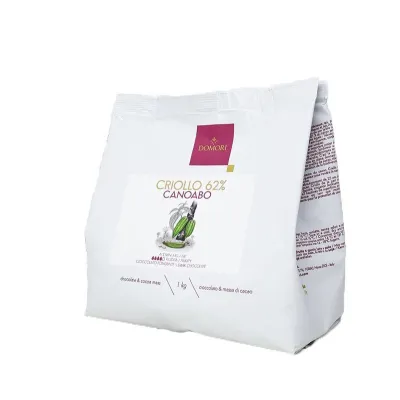
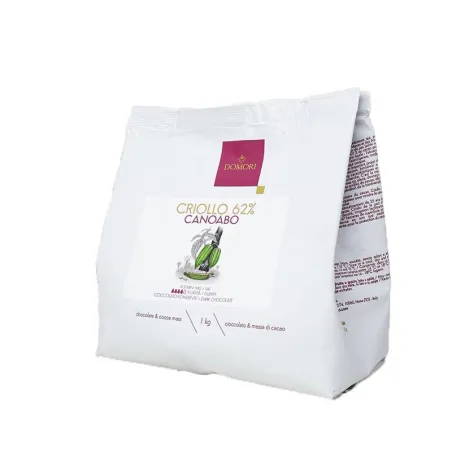
There are companies that arise from market gaps. And there are companies that arise from conviction – so deeply held that they cannot be founded before one has worked the earth oneself. Domori is the second kind. Gianluca Franzoni worked on cocoa fields in Venezuela for three years before founding his company. Three years in which he learned what makes good cocoa – and recognised that the most valuable thing of all was in the process of disappearing.
What Franzoni found in Venezuela was not a business idea. It was an encounter. The cocoa plant had cast its spell over him in a way that cannot be planned. He studied fermentation – the process that determines whether a cocoa bean becomes an aromatic foundation or a flat mass. He learned what matters in drying, how storage conditions influence the subsequent chocolate, which varieties carry which flavour profiles. And he recognised that the most precious variety of all – Criollo – was disappearing from the world. This realisation never left him.
The name Domori, which Franzoni chose for his company in 1993, is no chance invention. On St Mark's Square in Venice, two statues stand on the top of the clock tower – 'Due Mori', two Moors, who strike the bell each hour. In Franzoni's eyes they symbolise cocoa and coffee, those two cultural goods that shaped Venice as a trading power in the 17th century. The name is homage and programme in one: a love for Venice, which for him stands for trade, adventure and openness to the world – and a commitment to cocoa, which he wished to re-anchor symbolically in that city.
Criollo cocoa is not simply a variety. It is the oldest cultivated cocoa plant in the world, grown by Mayas and Aztecs, brought to Europe by colonisers – and today so rare that it accounts for less than 0.001% of the world cocoa harvest. The reason lies in its nature: Criollo trees are susceptible to fungal infections and pests, require partial shade, bear fewer fruits than more robust varieties and demand careful tending. Those wishing to grow cocoa on a large scale have for centuries chosen more productive alternatives. Criollo was displaced.
What sets Criollo apart regardless is the flavour. No tannins – meaning no bitterness, no furry sensation on the tongue. Instead: sweetness, creaminess, an aromatic complexity that other varieties cannot reach. Franzoni began early to seek out and document lost Criollo sub-varieties. At Hacienda San José in Venezuela, together with the Franceschi family, he started a propagation project: Criollo cocoa trees were raised in nurseries, combined with shade-giving plants and cultivated on plantations. Seven Criollo varieties were thus brought back to life; today more than ten sub-varieties have been identified.
Domori's headquarters is in None, a small town on the outskirts of Turin. Turin is no incidental backdrop: the city is regarded as one of the cradles of European chocolate culture – here the first Italian chocolate manufactories arose in the 17th century, here Gianduia chocolate was invented. Domori is part of this tradition – and continues it by other means.
The cocoa beans come from carefully selected plantations in Venezuela, Ecuador, Peru and further growing regions. Franzoni selected the suppliers personally. The collaboration is long-term: jointly agreed prices free of world market fluctuations, training programmes for plantation workers, promotion of local biodiversity. Before every delivery, Domori tests two kilograms of cocoa beans as a sample: laboratory analysis, cutting open the beans to assess the degree of fermentation, sensory evaluation by experts. Only deliveries in which at least 70% of the beans show an optimal degree of fermentation are accepted.
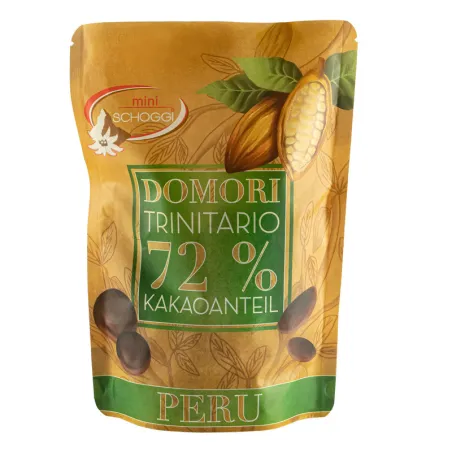
Domori works exclusively with fine cocoa varieties. Criollo is the rarest and most aromatic: no tannins, no bitterness, a creamy sweetness and an aromatic complexity that almost no other variety achieves. Domori is one of the few companies worldwide that processes Criollo beans in pure form. Trinitario arose as a natural cross between Criollo and Forastero, combining fine aroma with greater robustness – creamy, aromatic and versatile in cultivation. Nacional, also called Arriba, comes from Ecuador and brings a floral, lightly fruity aromatic character that shows particularly well in couvertures.
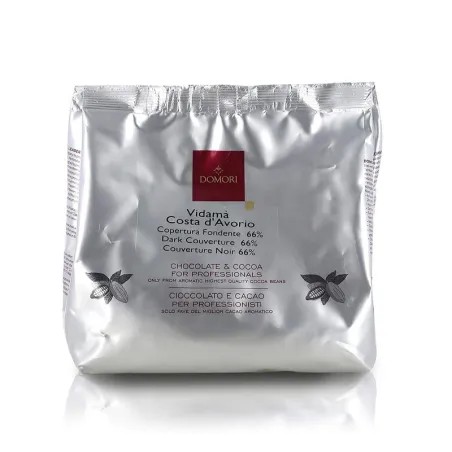
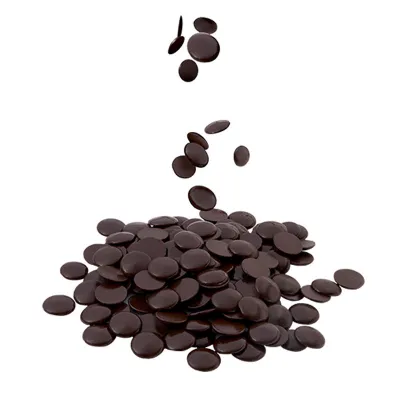
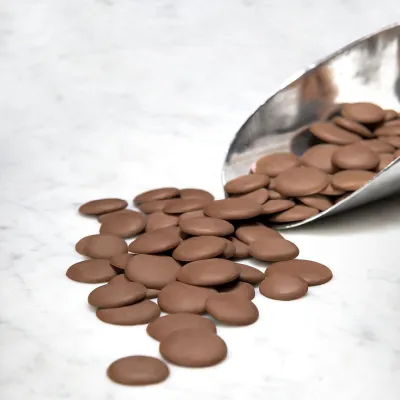
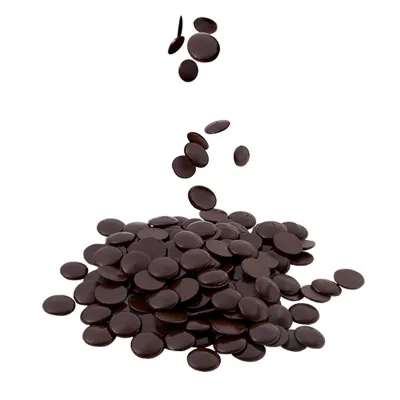
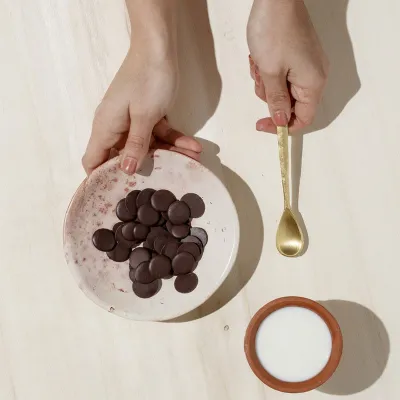
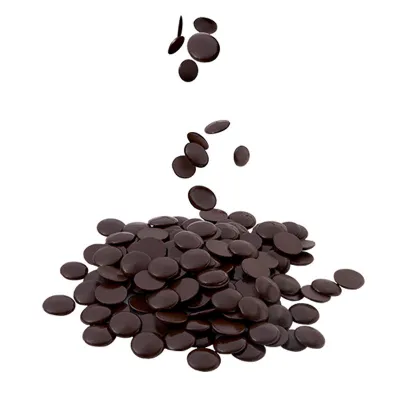
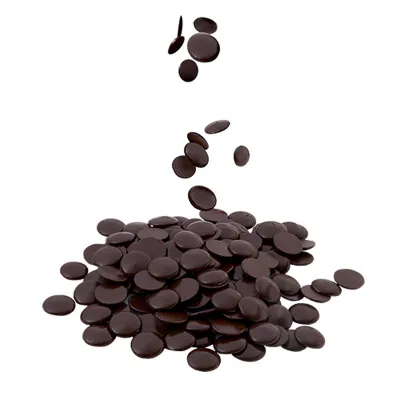
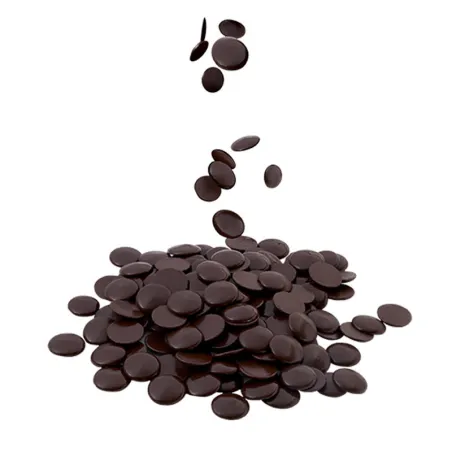
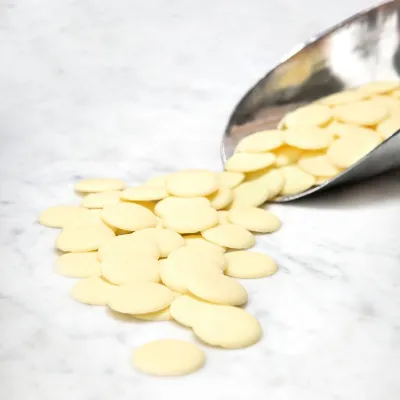
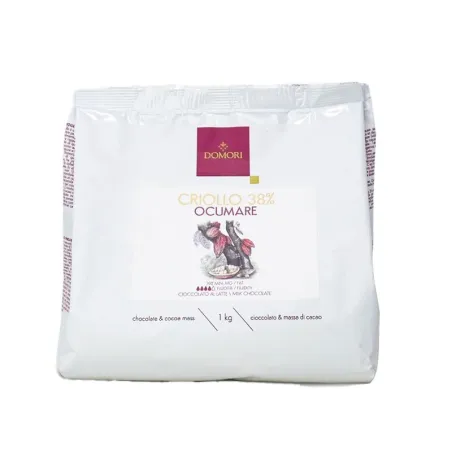
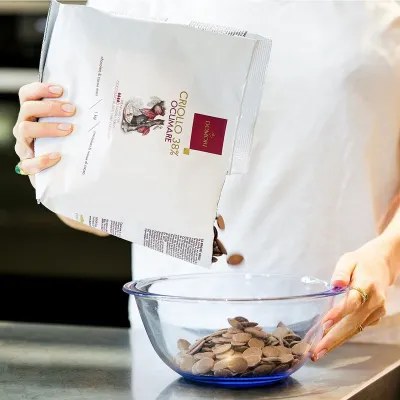
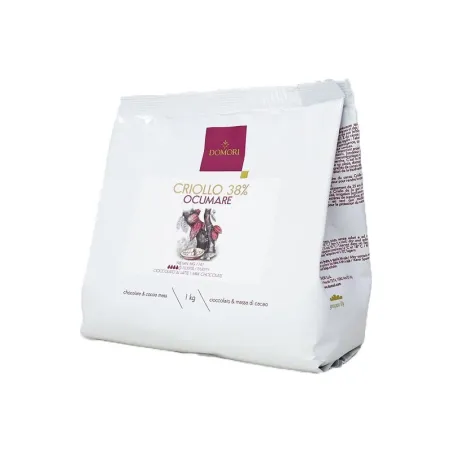
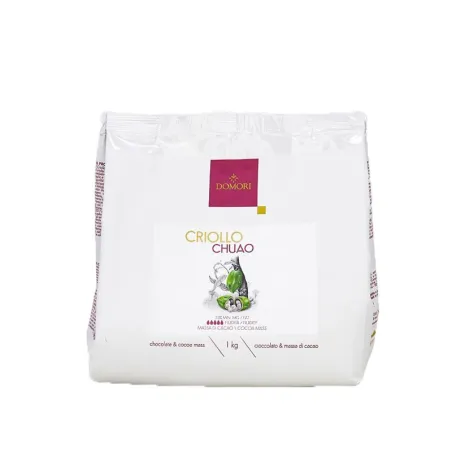
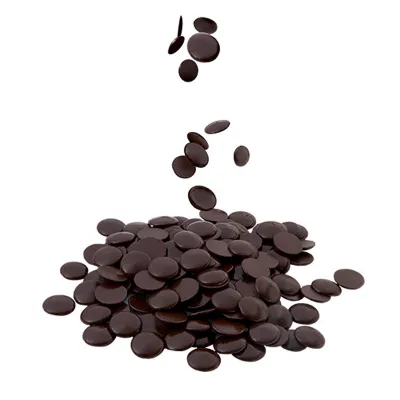
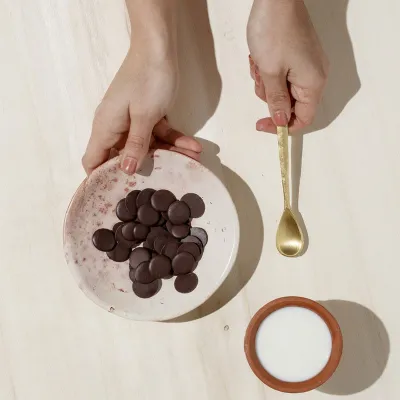
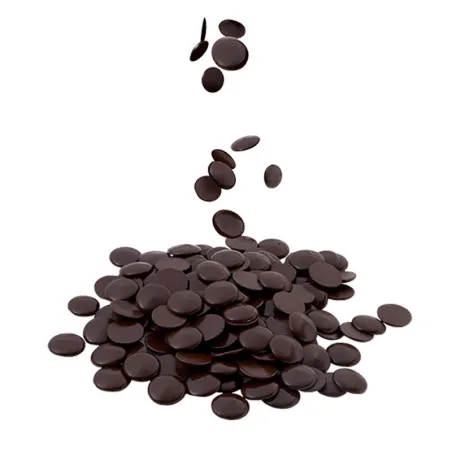
Most Domori chocolates consist of cocoa mass at 70% or more and cane sugar – nothing more is needed. No soya lecithin, no additional cocoa butter, no flavourings. This reduction to essentials is not deprivation but consequence: those working with cocoa of this quality need no additives. For use in confectionery and chocolaterie, Domori also offers couvertures with lower cocoa content and adapted processing properties – optimised for tempering work, enrobing and praline fillings. The couvertures are available in drops form.
Criollo couvertures · Trinitario couvertures · Nacional/Arriba couvertures · Dark, milk and white varieties
Those who work with Domori couverture work with the result of over thirty years of cocoa research, plantation care and craft conviction. Behind every drop lies a decision: which bean, which plantation, which degree of fermentation, which processing. These decisions are not delegated at Domori – they are the company.
In practice this means: a Domori couverture tempers differently from mass-market chocolate. The absence of soya lecithin makes the flow properties directly dependent on temperature management. Those who take this into account get pralines, bars and coatings with a texture and melting behaviour that is not comparable with industrial products. The range at miniSchoggi includes couvertures from Criollo, Trinitario and Nacional/Arriba – in drops form, in dark, milk and white varieties. miniSchoggi carries Domori because couverture of this quality should be found in every seriously run bakery.
Founded 1993. From a passion. In None, Turin. Domori.