
Ready-to-ship quantity: more than 20 pieces20+ in stock
Price:CHF21.90

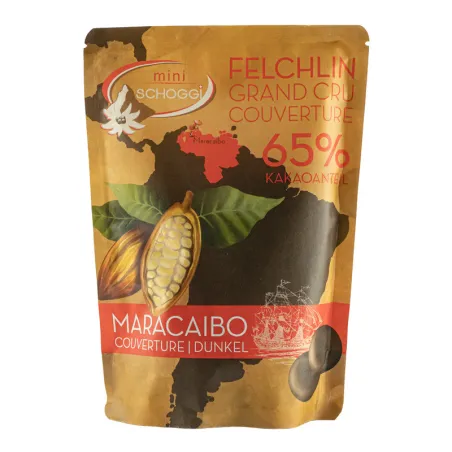
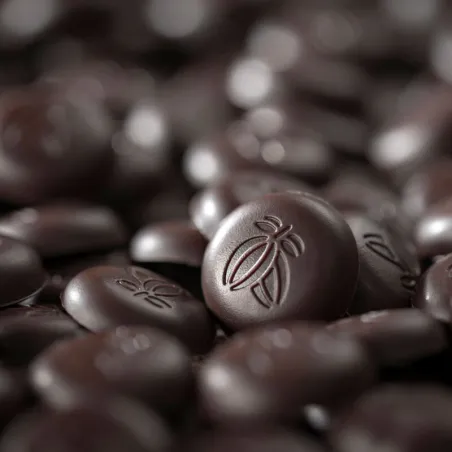
What does provenance mean in chocolate? For most manufacturers: a statement on the packaging. For Felchlin: a commitment traceable to the individual cocoa bean. Felchlin's chief buyer travels personally to the growing regions – to Venezuela, Ghana, Ecuador – buys directly from the farmers and pays a price above the Fairtrade standard. Not because it is required, but because the quality of the bean depends on the quality of the relationship with those who grow it. Felchlin was founded in 1908 – not as a chocolate factory but as a honey trading company. Cocoa only enters the picture in the 1920s. Since then, Max Felchlin AG in Ibach-Schwyz has become one of the world's most renowned couverture manufactories: Bean-to-Bar in the Canton of Schwyz, with Swiss milk, Swiss beet sugar and organic vanilla from Madagascar. In 1999, Felchlin becomes the first Swiss company to coin the term 'Grand Cru' for single-origin couvertures from defined growing regions. In 2004, the Maracaibo Clasificado is named the world's best chocolate by the Accademia Maestri Pasticceri Italiani. The range at miniSchoggi includes selected Felchlin couvertures.
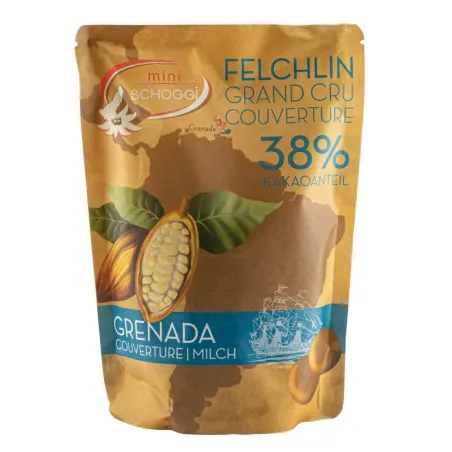
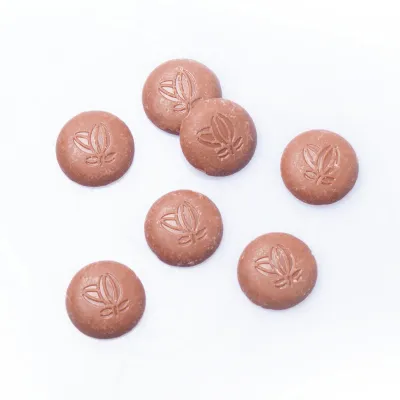
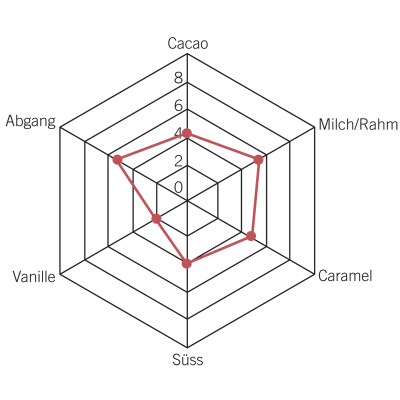
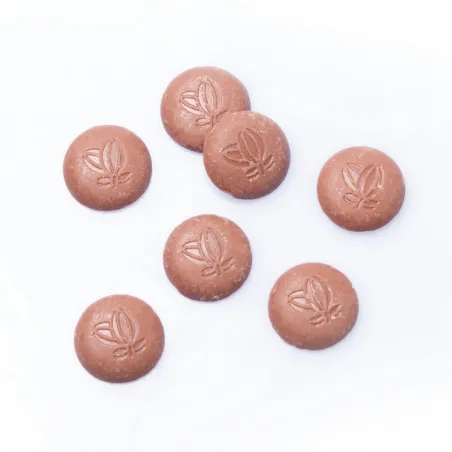
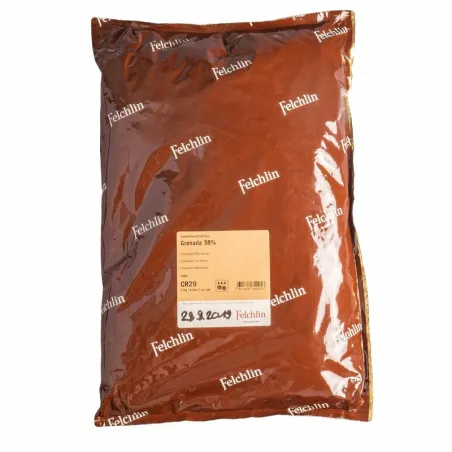
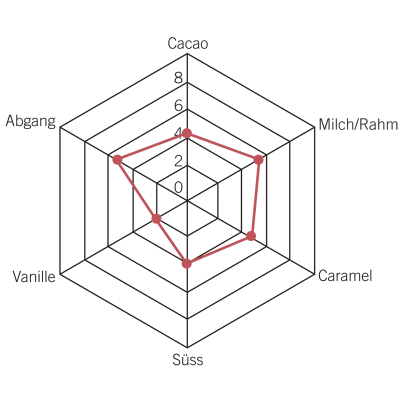
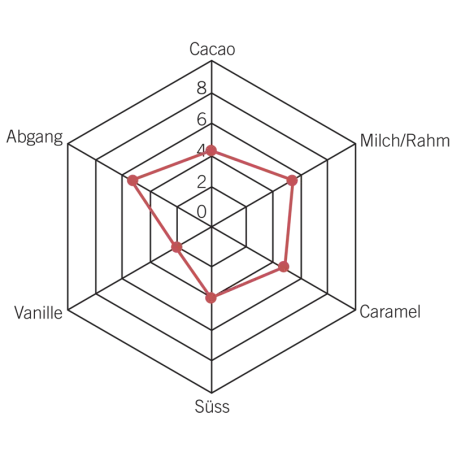
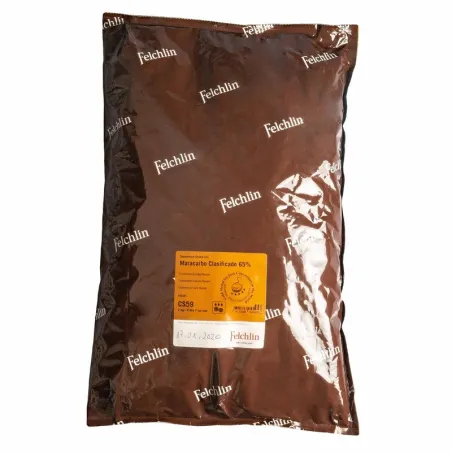
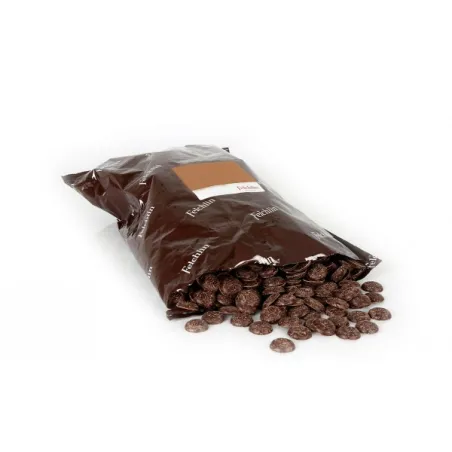
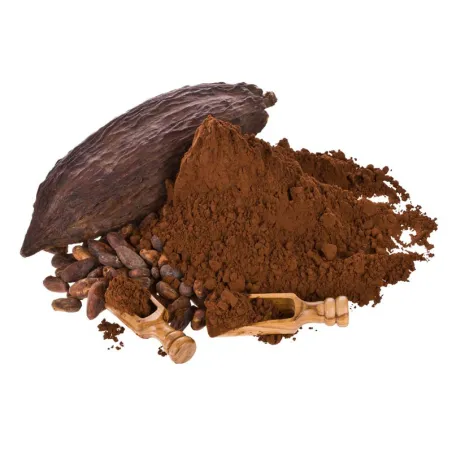
1908 in Schwyz: Max Felchlin, a trained merchant, begins trading honey. Five years later he runs the 'Honigzentrale Schwyz'. In 1920 the first manufactory is established in Seewen. And in 1923 cocoa enters the range – alongside baking powder, couverture and cocoa butter, sold to bakers and confectioners in the region. What looked at the time like a pragmatic range extension was the beginning of a long search: the question of how good chocolate really comes into being – and what one is prepared to do for it.
The answer Felchlin has developed over more than a century does not begin in the factory in Ibach-Schwyz. It begins on a cocoa farm in Venezuela or Ghana, at the moment when the beans are drying on wooden racks in the sun after fermentation. Felchlin's chief buyer travels regularly to the regions of origin and buys the cocoa directly on site – personally, with the knowledge that the aroma development of a cocoa bean depends substantially on soil, climate, fermentation duration and drying conditions. These parameters cannot be assessed from an office. One must be there. Not as an inspector. As a partner.
Felchlin pays its cocoa farmers more than the Fairtrade price. This is not a communications measure but a production necessity: those who want the best beans need farmers who can afford the care that the best beans require. Criollo and Trinitario – the fine cocoa varieties Felchlin favours for its Grand Cru lines – are less productive than the Forastero beans the mass market processes. They have a more delicate shell, require more precise fermentation of seven to ten days depending on variety and region, and demand more even, slower drying. Those who grow them invest more labour for less kilogram yield. That must be economically viable – otherwise farmers switch to higher-yielding, aroma-poor varieties and the foundation for Grand Cru quality disappears.
Felchlin secures this foundation through higher prices and through direct investment: in infrastructure, education, healthcare and safety in the growing villages. The project 'Healthcare in the Cacao Origin' supports cocoa farmers in Ghana, Venezuela and Ecuador with basic medical care. This is not charitable engagement at the margins of the core business. It is part of the production principle: when farmers' livelihoods are secure, they can cultivate with care. When they cultivate with care, the bean quality emerges that Felchlin needs. The causality is direct.
The cocoa beans arrive in Ibach-Schwyz and are fully processed there – from roasting to finished couverture. Every production step takes place at the same location, under the control of the same team. This is unusual: most Swiss chocolate manufacturers buy in already-processed cocoa mass or cocoa butter and begin their process only at mixing and conching. Felchlin begins with roasting – using a new cocoa roastery commissioned in 2014 that makes it possible to set roasting temperature and duration individually for each bean variety and each harvest.
Roasting is aroma-critical: too brief or too cool, and acids remain that make the end product harsh and unbalanced. Too long or too hot, and fine fruit notes and floral notes are irreversibly destroyed. Felchlin roasts gently, with the goal of unfolding the bean's natural aroma potential – not uniformising it. After roasting: cracking, winnowing – separating the cocoa nibs from the shell by airstream –, grinding to cocoa mass, mixing with the remaining ingredients and finally conching. Conching times vary by recipe and can extend to 48 hours. Conching drives off volatile acids and unwanted roasted flavours, distributes the cocoa butter more evenly and develops the final aroma towards the characteristic roundness and depth that marks Felchlin couvertures.
All ingredients available in Switzerland come from Switzerland: milk and cream from Swiss cows, beet sugar from domestic production. The vanilla is organic vanilla from Madagascar, in its pure form, not as an extract or synthetic flavour. Soya lecithin and cocoa butter are purchased in the best quality. No additives, no artificial flavours. This standard is not new – it has applied since Max Felchlin's first steps in chocolate production and remains unchanged today.
In 1999, Felchlin introduced the term 'Grand Cru' for a selection of its couvertures – as the first company in the Swiss chocolate industry. Borrowed from viticulture, Grand Cru means at Felchlin specifically: all cocoa beans in a couverture come from a single, clearly defined growing region. No mixing of different origins, no smoothing of the aroma through blending of different provenances. Instead: the complete, undiluted aroma profile of a single region, translated into chocolate.
This is technically more demanding than blending. Mixing beans from different origins is simpler – irregularities between harvests and regions even out, the result is more consistent and plannable. Single-origin Grand Cru couverture from a single region, by contrast, requires that the production team know the characteristics of every harvest, adjust roasting parameters accordingly and align conching time with the respective aroma profile. There is no safety margin through blending. The end product is either outstanding or it is not good enough. In 2004, the Maracaibo Clasificado 65% was named the world's best chocolate by the Accademia Maestri Pasticceri Italiani – one of international confectionery's most respected expert bodies. A gold medal for a couverture consisting exclusively of cocoa beans from the region below Lake Maracaibo in Venezuela. This award is the logical consequence of a manufacturing principle that takes no shortcuts.
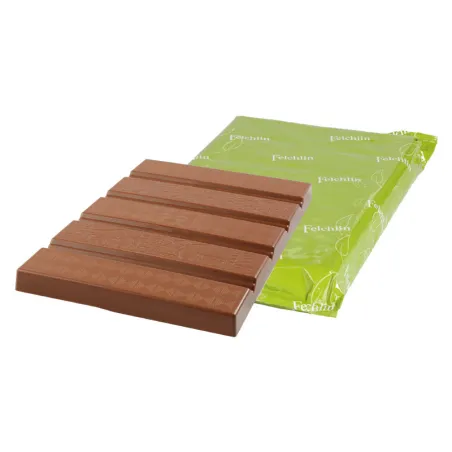
Felchlin produces a broad spectrum of couvertures for professional and semi-professional use: dark Grand Cru couvertures from defined regions of origin with distinctive, terroir-typical aroma profiles, milk couvertures with unusual depth and complexity far beyond the sweet mass-market standard, white couvertures with genuine caramel and vanilla character instead of synthetic uniformity. All varieties fully Bean-to-Bar produced in Ibach-Schwyz. For the professional confectionery, for confectioners who build their creations on a couverture that brings its own character – and for home bakers who take that equally seriously.
Grand Cru couvertures · Dark couverture · Milk couverture · White couverture
Couverture quality begins before the conche. It begins with the bean – with the decision about which beans to buy, from whom, at what price and with what understanding of provenance and aroma character. Felchlin has been making these decisions more consistently than most for over a century: personal purchasing directly from the farmers, prices above Fairtrade level as a structural principle, complete Bean-to-Bar production in the Canton of Schwyz, gentle roasting individually calibrated to the harvest, conching times that serve the aroma profile rather than the production schedule.
What that means in processing: Felchlin couverture has an aroma profile that does not get lost in the ganache, the coating or the praline. It is complex enough to carry other ingredients without overwhelming them. It is stable enough to work reliably during tempering – the balanced cocoa butter structure provides predictable crystallisation behaviour and the characteristic gloss and snap of correctly tempered chocolate. And it is honest enough to stand alone: in a truffle, a coating, a tablet that tastes of chocolate – of the variety, the soil, the fermentation – and not of the minimum standard that industrial chocolate meets. miniSchoggi carries Felchlin couvertures because this quality makes the difference – for all who already know that, and for all who will understand it the first time they work with it. The range includes selected Felchlin couvertures and is continuously expanded. Those who have worked with Felchlin once understand why confectioners worldwide no longer accept any other couverture as a benchmark.
1908. Ibach-Schwyz. From honey to Grand Cru. Always the same question: where does this come from? Felchlin.