
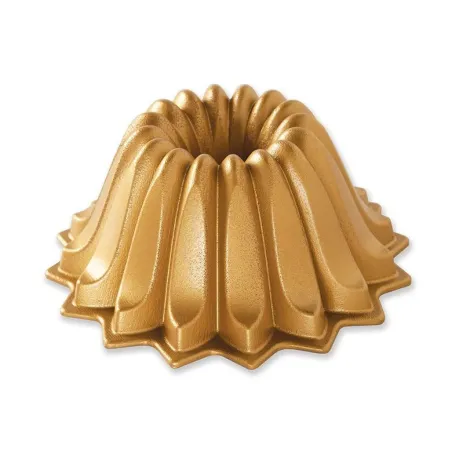
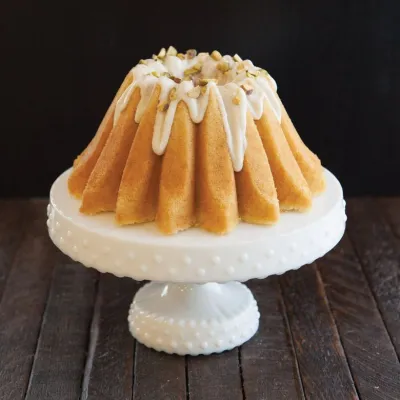
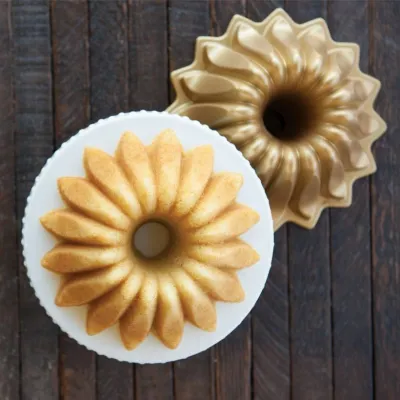
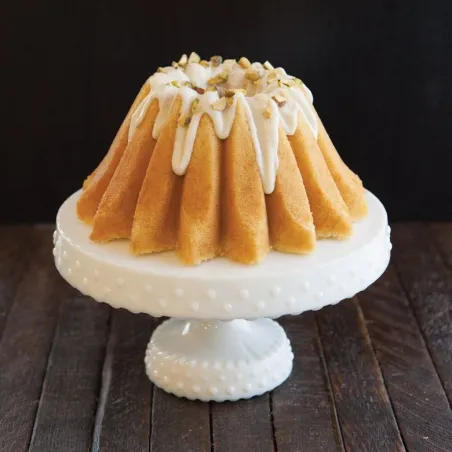

A baking pan made of cast aluminium bakes differently. Not because aluminium sounds particularly noble, but because it conducts heat differently from steel, silicone or ceramic: evenly, quickly, from all sides simultaneously. For a Bundt cake with a hole in the middle, this means: no raw centre, no over-baked edge. The heat reaches every point of the batter at the same time. The result is a cake that rises evenly, browns evenly and releases cleanly from the pan once cooled. Nordic Ware has been building these pans since 1946, in Minneapolis, Minnesota – in the same workshop that Dave and Dorothy Dalquist started with $500 seed capital in the basement of their home. Still family-owned. Still produced almost exclusively in the USA, even though relocating to Asia would have been economically advantageous long ago. Over 70 million Bundt pans have been sold. The range at miniSchoggi includes selected Nordic Ware baking pans.
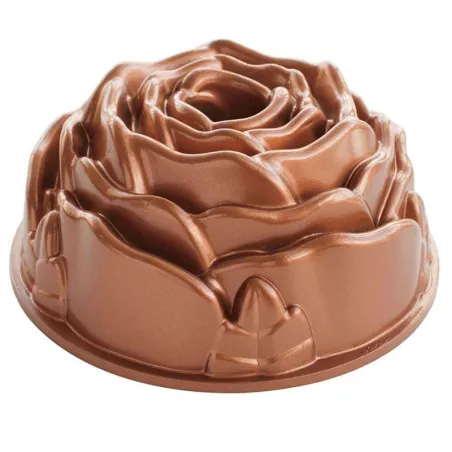
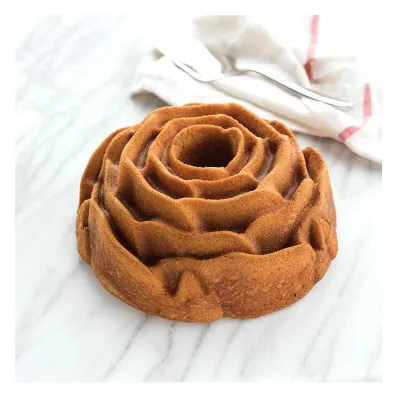
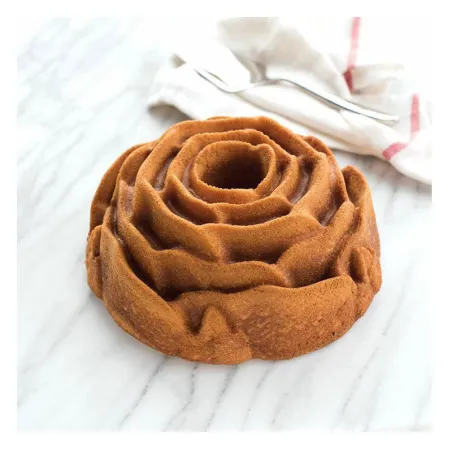
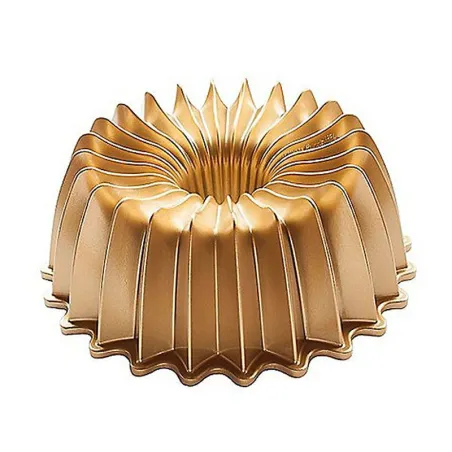
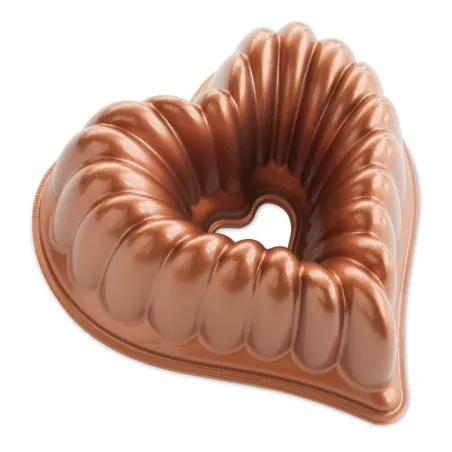
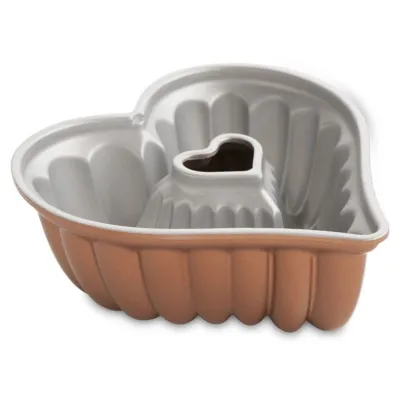
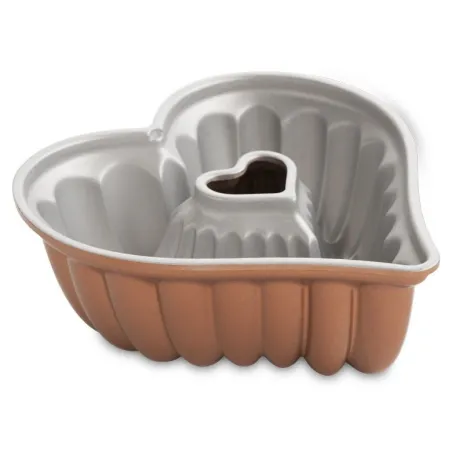
Baking pans come in silicone, coated steel, glass, ceramic. All bake. None bakes like cast aluminium. The difference is physical: aluminium has a thermal conductivity more than twice as high as steel. This means heat spreads quickly and evenly in all directions through a cast aluminium pan. In silicone pans this does not happen – silicone is a poor conductor of heat, which means batter in silicone pans often takes longer, bakes unevenly and develops less colour. With coated sheet steel the wall thickness is often too thin for even heat distribution.
Nordic Ware uses cast aluminium with a wall thickness calibrated to the geometry of each individual pan. For a Bundt pan with a central tube – the classic Bundt design – this geometry is particularly important: the batter sits in a ring that must be heated from inside and outside simultaneously. Without even heat conduction the result is a cake that is done on the outside but still raw in the middle. Cast aluminium solves this problem structurally, not through compromises in the recipe.
Dave Dalquist had returned from the US Navy after the Second World War. Together with his wife Dorothy – Dotty, as everyone called her – he founded a small company in the basement of their Minneapolis home in 1946. Starting capital: $500. First name: Plastics for Industry. First products: Scandinavian kitchenware for the large Scandinavian-descended population of Minnesota – rosette irons, krumkake pans, ebelskiver pans. Products sought in the region by immigrants from Norway, Sweden and Denmark that were barely available in shops.
In 1950 they acquired Northland Aluminum Products, a small company with a product line called Nordic Ware. That same year Dave Dalquist, at the request of two members of Hadassah, a Jewish women's organisation, designed a baking pan modelled on the German Bund cake: a ring pan in cast aluminium with a fluted surface and central tube. He called it Bundt and registered the name as a trademark. Initial sales were slow.
Sixteen years after its introduction, the Bundt pan was a solid niche product – known to a loyal customer base but not a mass-market item. That changed overnight. In 1966, Texan housewife Ella Rita Helfrich entered the national Pillsbury Bake-Off, the largest baking contest in the USA, and placed second with her Tunnel of Fudge Cake – baked in a Nordic Ware Bundt pan. First place won prize money. Helfrich won something different: tens of thousands of letters from people who wanted the baking pan. Nordic Ware could barely meet the demand. The Bundt pan had become famous overnight.
What followed was one of the most remarkable growth stories in the American housewares industry. From 1971 Pillsbury developed cake mixes specifically formulated for Bundt pans. The pan found its way into millions of American homes, then European ones, then more than 25 countries worldwide. Today over 70 million Bundt pans have been sold – every one of them from the same factory in Minneapolis.
Nordic Ware still produces almost exclusively in the USA, even though the company received advice multiple times to relocate production to Asia. The decision against this was not a sentimental reflex but a deliberate choice: quality control is closer, the supply chain is shorter, working conditions are directly verifiable. And: the production expertise in cast aluminium that Nordic Ware has built up over decades is anchored at this location. It is no coincidence that pans bought in the 1970s are still in use.
That a company with over 350 employees exporting to more than 25 countries still manufactures in Minneapolis is an exception in the global housewares industry. Nordic Ware carries this decision consciously – and communicates it accordingly: 'We are proud to manufacture the vast majority of our products in Minneapolis.'
Designs at Nordic Ware do not emerge from a separate design department. Teams from various areas of the company – production, sales, engineering, marketing – develop ideas together. The best are passed to a smaller, specialised group and developed to production readiness there. The result is a range that works not only aesthetically but is also thoughtfully engineered. One of the newest pans emerged from the idea of an employee in tool production – someone who works with cast aluminium daily and knows what the material can and cannot do. The range today covers far more than Bundt pans: loaf and springform pans, special pans for holidays, barbecue accessories, baking sheets and continually new pans that use the grooves, waves and structures of cast aluminium as a design element.
Bundt pans · Loaf cake pans · Special and seasonal pans · Baking sheets · Barbecue accessories
What a Nordic Ware baking pan does to the result is directly visible: even browning, a clean release from the pan, a Bundt cake that precisely reproduces the grooves and structures of the pan because the cast aluminium transfers heat evenly and the pan is stable enough to hold its geometry after hundreds of baking sessions. The pan releases cleanly after cooling because aluminium contracts slightly as it cools and the surface does not stick.
Hand wash – no dishwasher. This is not a limitation but the condition under which aluminium maintains its properties. Dishwasher tablets are alkaline; over time they attack the aluminium surface, dull it and reduce the non-stick effect. With a quick hand rinse after use, a Nordic Ware pan lasts a lifetime. miniSchoggi carries selected Nordic Ware baking pans because the result in the oven is the best argument. Anyone who has once eaten a Bundt cake from a cast aluminium pan that rose evenly, has a crispy crust and perfectly reproduces the fine relief structure of the pan understands why these pans have been in use for 75 years.
1946. A basement in Minneapolis. $500. Dotty and Dave. Nordic Ware.