
Fougasse: Origins, Variations and the Difference from Focaccia
Good to know · Bread
Fougasse: origin, variations and the difference from focaccia
The flatbread of Provence – and why it looks like a leaf
E-mail
WhatsApp
Facebook
Copy link
https://www.minischoggi.ch/gb/blog/recipe/fougasse-bread-from-provence.html
Tap once to select the whole address — then copy.
Handy as a cheat sheet next to the oven.
What you'll learn in this article
- Where the fougasse comes from and why it began as the bakers' "test bake"
- What sets it apart from the Italian focaccia
- Why the leaf-shaped cuts are more than just decoration
- Which ingredients are typical in Provence – from olives to anchovies
- What the dough needs: proving, hydration and the windowpane test
- How the crust turns crisp – and why steam makes all the difference
- How to serve the fougasse and what it goes with
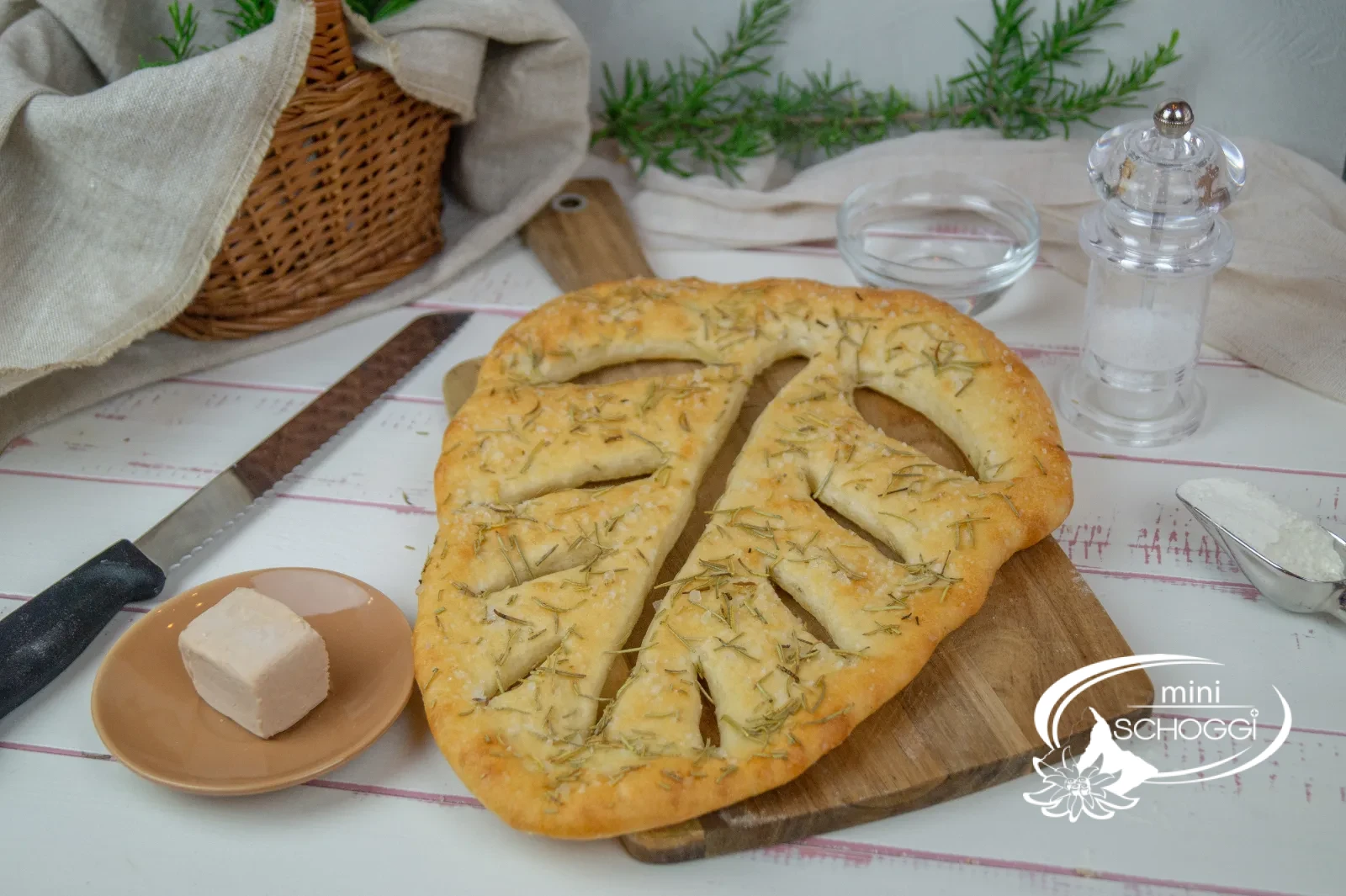
The fougasse is a flat bread from Provence that you'll recognise instantly by its shape: it is cut so that several "branches" form and the bread looks like a leaf. Originally it was not a speciality but a tool – the bakers slid a flat piece of dough into the oven to check whether the temperature was right before baking the actual bread. Because this test piece was ready quickly, it became breakfast for the bakery staff.
In this article you'll learn where the fougasse comes from, what sets it apart from the Italian focaccia, why the cuts are more than decoration and what it is topped with in Provence. If you want to bake it right away: you'll find the detailed recipe with quantities, times and step-by-step photos in our post Fougasse – the flatbread from Provence.
1Where the fougasse comes from
The fougasse has a long history – and its origin lies in the oven itself.
Flatbreads are among the oldest breads of all: the Romans already baked flat doughs of cereal flour, water and yeast directly in the embers. From this tradition the fougasse emerged in Provence. The name itself goes back to the Latin "panis focacius" – the bread from the hearth. Incidentally, the Italian focaccia comes from the same root.
For a long time the fougasse was not a pastry for guests but a measuring instrument. The bakers slid a flat piece of dough into the wood oven and watched how quickly it took on colour: that told them whether the oven was hot enough for the actual bread. Because this test piece was ready after just a few minutes, it became breakfast for the bakery staff – and over time a speciality in its own right, which today can be found in every Provençal bakery.
2Fougasse or focaccia?
Related, but not the same: two flatbreads with the same origin and a different character.
Both descend from Roman hearth bread, but they developed in two directions. Focaccia comes from Italy, is thicker, softer and is dimpled all over with olive oil and salt. The fougasse from Provence is flatter, which means it bakes through faster and gets its characteristic slashes. The flavour reveals the difference too: the fougasse works with herbs of Provence, olives, sometimes bacon or anchovies, while focaccia usually sticks to olive oil.
The easiest difference to remember
Focaccia is eaten in pieces that you cut off. A fougasse is torn apart along the slashes – each «branch tip» is a portion. That's exactly what the slashes are made for.
3Why the leaf pattern?
The slashes are the fougasse's hallmark – and they have a solid reason behind them.
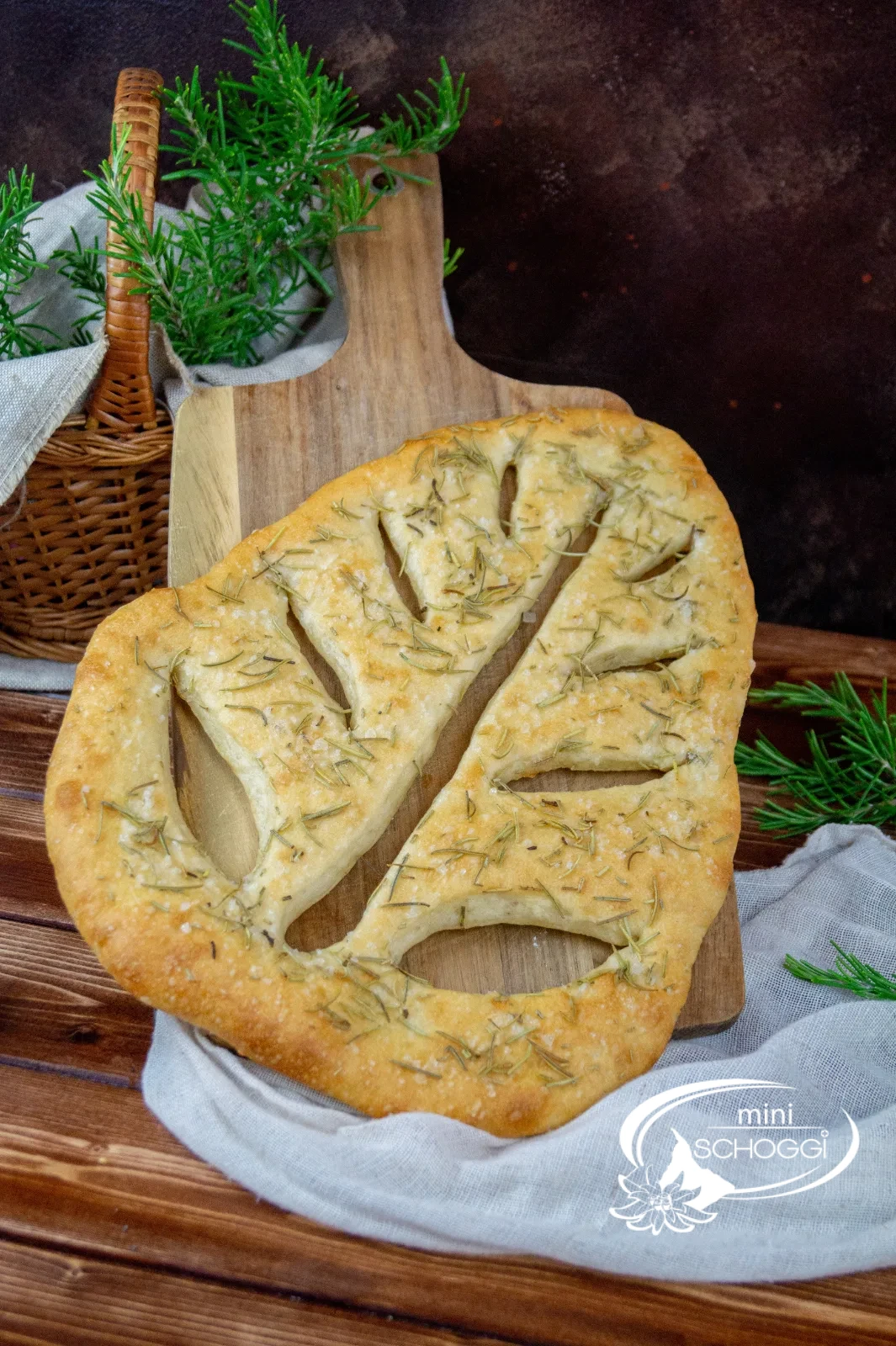
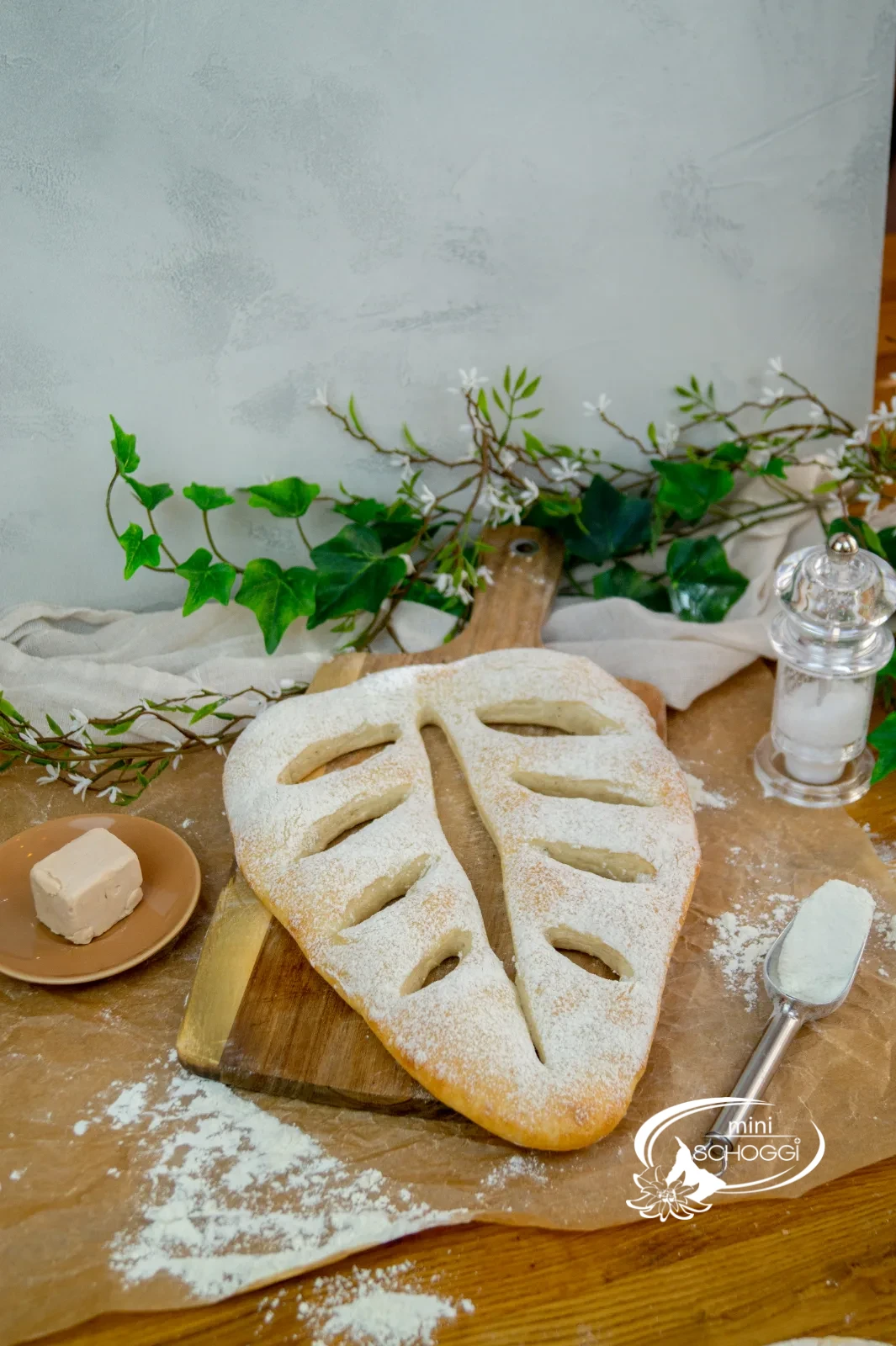
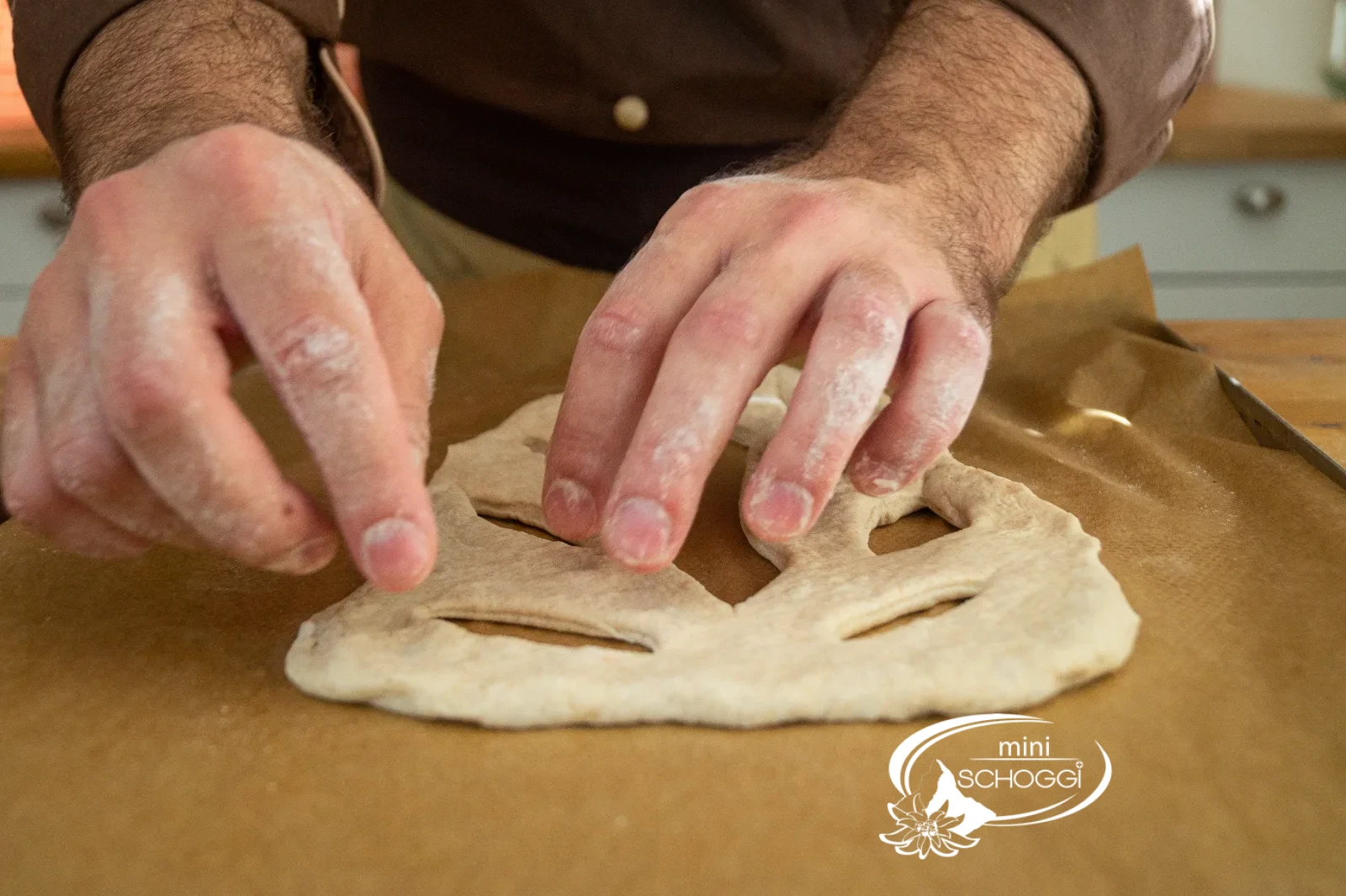
Classically, the fougasse is cut like a leaf: a central rib with several diagonal branches running off it. It looks pretty, but above all it's practical. Every cut creates new edges, and edges turn crisp in the oven – so a fougasse has far more crust relative to its weight than a loaf. At the same time, the flat, opened-up bread bakes through in 15 to 20 minutes without staying doughy inside.
Slashing alone isn't enough
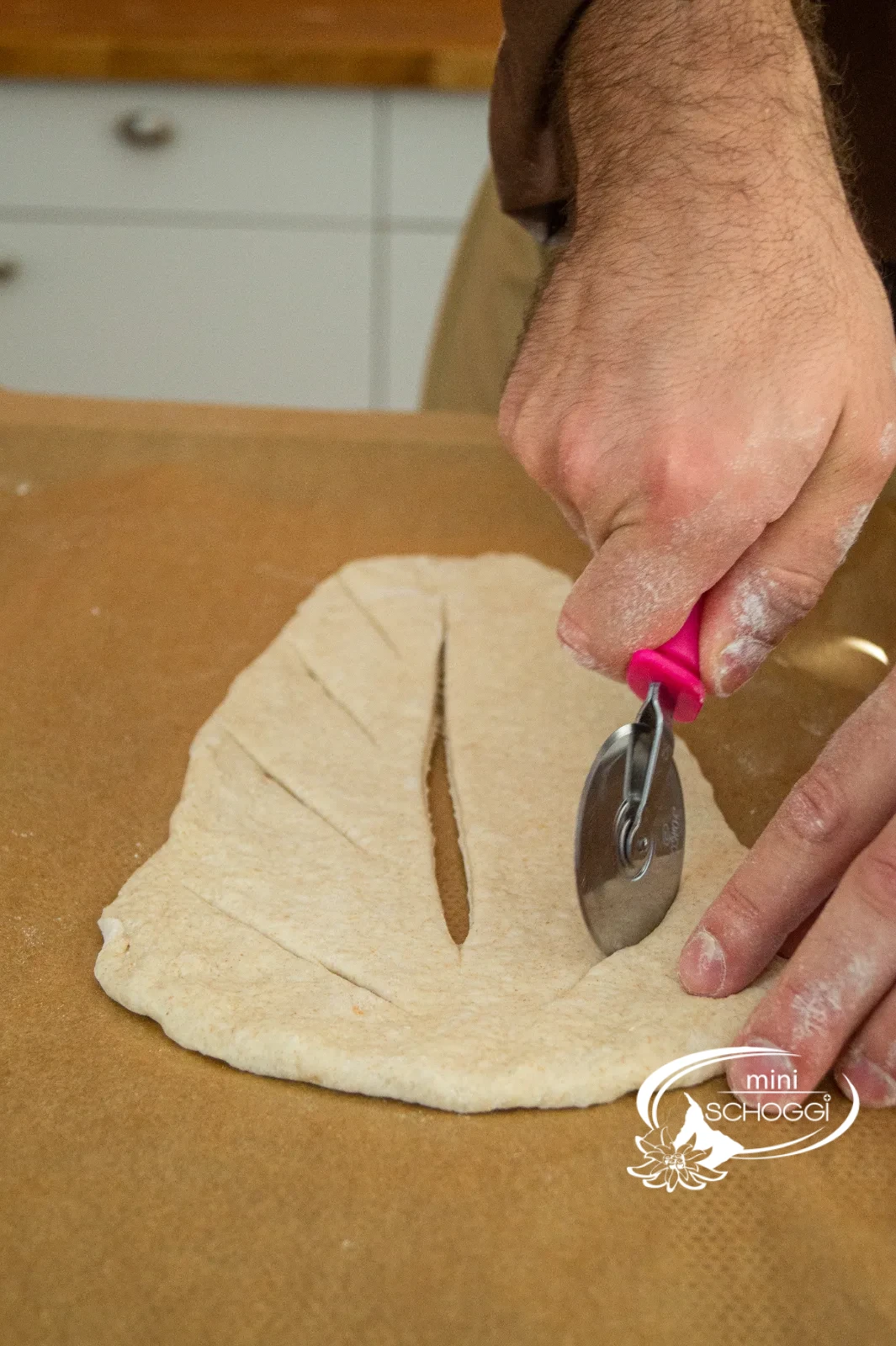
The most common mistake is to make the cuts and then slide the dough into the oven just like that. During proofing and in the oven the dough rises and closes the slits again – and the leaf turns into a flatbread with scars. So after cutting, pull the openings generously apart with your fingers.
4The ingredients of Provence
Few basic ingredients, but plenty of scope for everything you add on top.
The dough is about as simple as it gets: wheat flour, water, yeast and salt – nothing more. What defines the fougasse comes afterwards. Olive oil plays the leading role: in the dough or as a brushing before baking, it brings flavour and helps the crust. Then come the herbs of Provence – rosemary, thyme, oregano –, coarse sea salt and, depending on your mood, olives, sun-dried tomatoes, onions, bacon or anchovies. Cheese works too, but belongs only in the last few minutes of baking, otherwise it burns.
And the sweet version?
Yes, it exists: in parts of Provence the fougasse is lightly sweetened and flavoured with orange blossom water – the «fougasse à la fleur d'oranger» is eaten as a dessert or with coffee. The best-known version comes from Aigues-Mortes. The dough stays the same, only sugar and liquid aroma are added.
5What the dough needs
A simple yeast dough – which nonetheless demands two things: time and a fully kneaded gluten network.
The yeast makes the fougasse light, but for that it needs rest. During proofing, the enzymes break down starch, the yeast produces gas and the flavour develops – a dough that goes into the oven too soon tastes of nothing but yeast. The usual approach is a bulk proof of around 30 minutes, during which you fold the dough several times, and a final proof of another 30 minutes once the fougasses are shaped – exactly as it says in the recipe with all the times and quantities. A share of wheat sourdough powder brings extra flavour and keeps the bread fresh for longer.
The windowpane test
No clock will tell you whether the dough is kneaded enough – the windowpane test will: gently pull a piece of dough apart. If it stretches into a thin, almost translucent film without tearing, the gluten network is ready. If it tears before then, keep kneading – only then will the dough hold the gas bubbles later.
6The crust: heat and steam
A fougasse doesn't turn crisp through heat alone, but through the right combination of heat and moisture.
In the first few minutes of baking, steam keeps the surface supple and lets the bread rise before the crust forms. If the surface dries out too soon, it tears in an uncontrolled way and stays pale. Only once the steam is gone does the browning begin – the Maillard reaction, which provides colour and roasted aroma. A baking stone helps as well, because it releases its stored heat from below and gives the fougasse an immediate boost.
The crust stays pale and soft
The crust stays pale and soft
Remedy
Usually the steam is missing – or it came too late. With a steaming set you'll have it reliably; without one, place a heatproof tray on the oven floor while preheating and pour a cup of hot water into it as you load the bread. What matters is that the steam is there when the bread goes into the oven, not five minutes later.
7Regional variations
There isn't just one fougasse – almost every bakery has its own.
In one region the fougasse is baked thicker and stays soft inside, in another it is made very flat and is almost all crust. Common versions include the one with olives, the one with «grattons» – rendered bacon cubes – and the one with anchovies or onions, which is reminiscent of a pissaladière. Then there's the sweet version with orange blossom water. What they all share is the shape: flat, slashed, meant for sharing.
8How to serve fougasse
Best warm, in the middle of the table and without a knife.
Fresh from the oven is when the fougasse is at its best: the crust crackles and the crumb is still soft. In Provence it appears on the table as an apéro – with olives, cheese, cold cuts and a glass of wine – or as a side to fish and meat dishes. Place it on a wooden board and let everyone tear off their own; along the slashes it comes apart by itself. A few drops of good olive oil and a little sea salt over it, and that's all it needs.
Reheat instead of slicing
By the next day the fougasse becomes drier, but not bad. Two to three minutes at 180 °C in the oven, and the crust is crispy again. The same goes for frozen fougasses: wrap them once cooled, then put them straight into the hot oven from frozen.
9What you need for it
Flour, a sharp Baker's knife and steam – that's all that stands between you and a fougasse.


Leave a comment