
Pavlova – quick, foolproof recipe
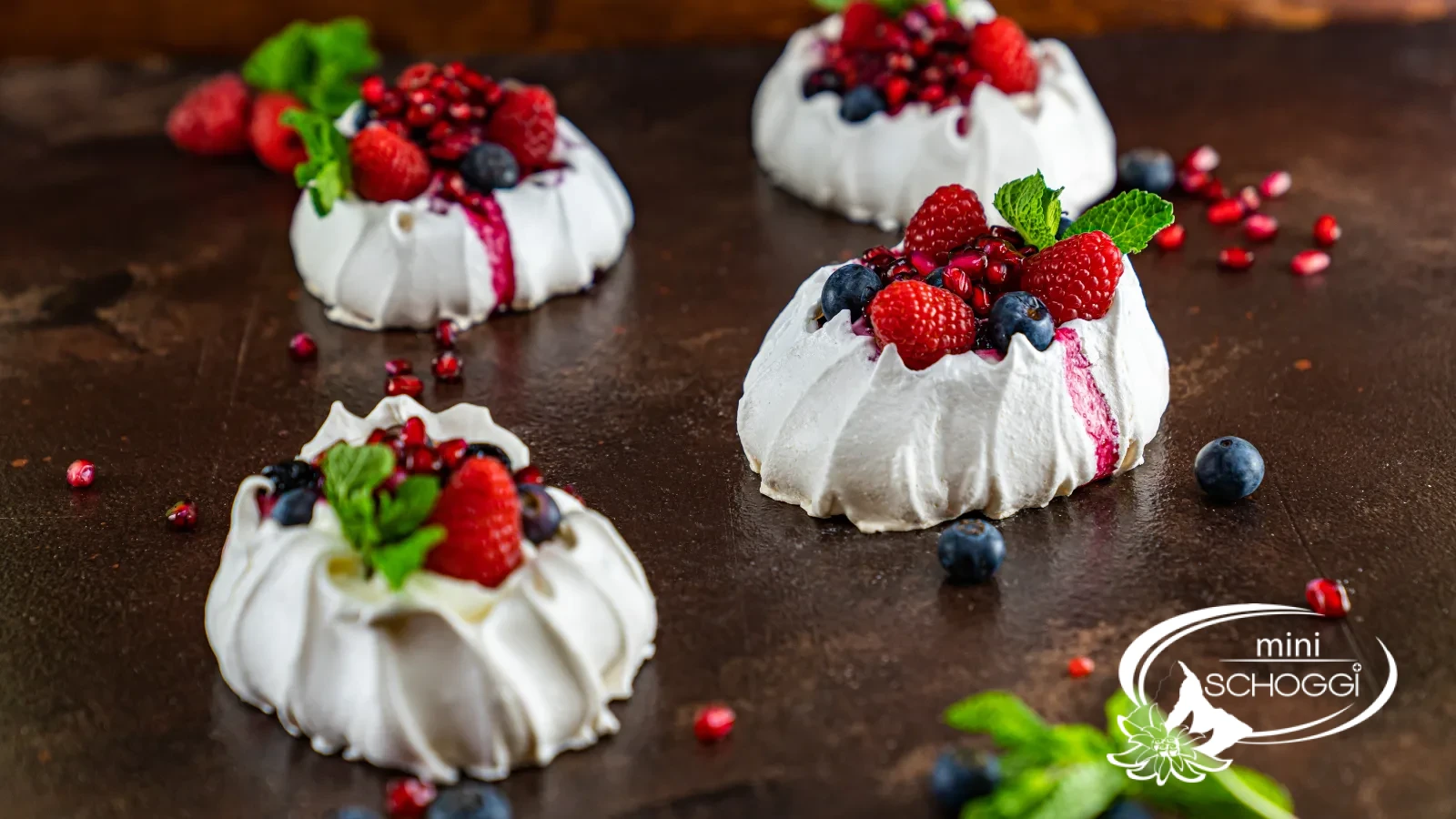
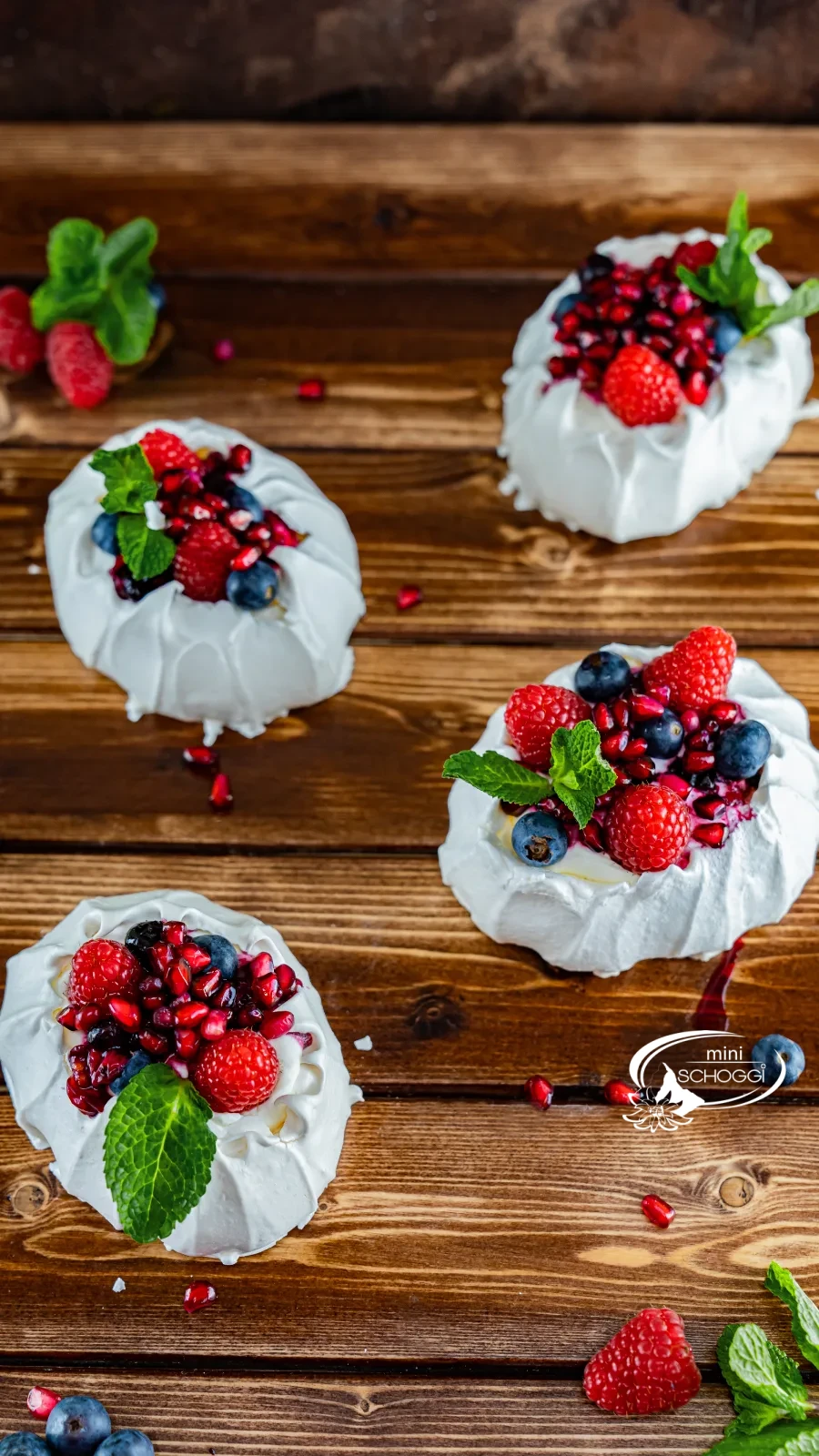
A berry dream on Meringue
Quantity6 pieces
Active time30 min.
Total time2 hrs.
EggMilk
Anyone who likes Meringue will love pavlova — whether served simply with whipped cream or with fresh seasonal berries and other fruits such as pomegranate, mango or passion fruit.
We show you how easily you can make these little Meringue clouds yourself and then arrange them however you like with a homemade fruit coulis and fresh berries.
The secret lies in the sugar: two thirds are trickled in slowly, the last third only briefly stirred in. This way fine sugar crystals remain in the mixture — and those are exactly what give the pavlova its stability. If you want to learn more about airy egg-white mixtures, you'll find further basics in our knowledge articles.
Enjoy trying it out.
Ingredients
Quantity:
Meringue
120 gEgg white
1 pinchSalt
200 gGranulated sugar
1 tspVinegar (white wine or apple)
1 tspCornflour
Fruit coulis
80 gWild berries, fresh or frozen
10 gPomegranate seeds
10 gWater
Finishing
80 gFull cream, whipped
10 gBlueberries, fresh
10 gRaspberries, fresh
as neededPomegranate seeds, fresh
as neededPeppermint, fresh
Step by step
If you're in a hurry: the compact recipe card further down sums it all up.
Meringue mixture
1
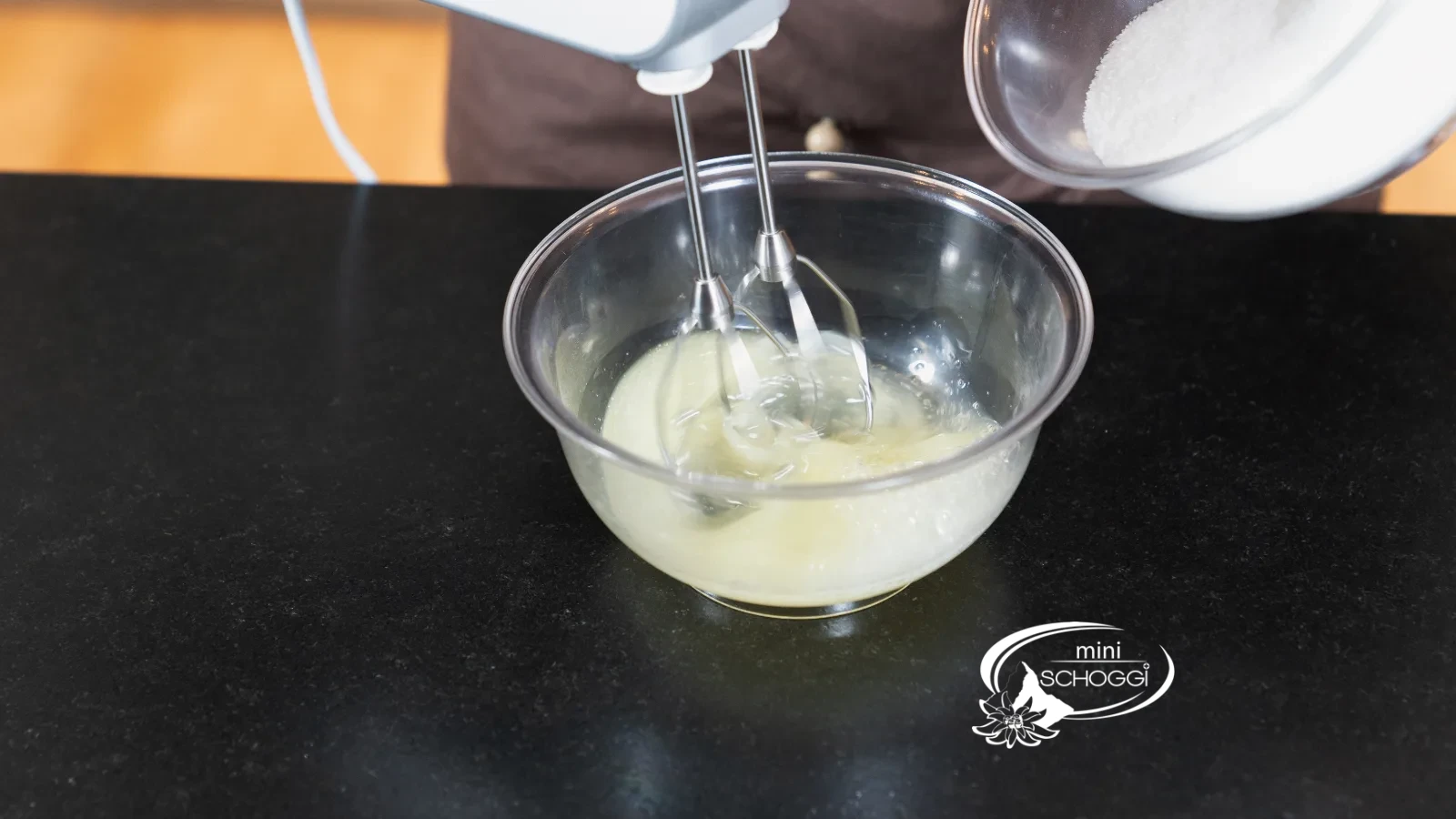
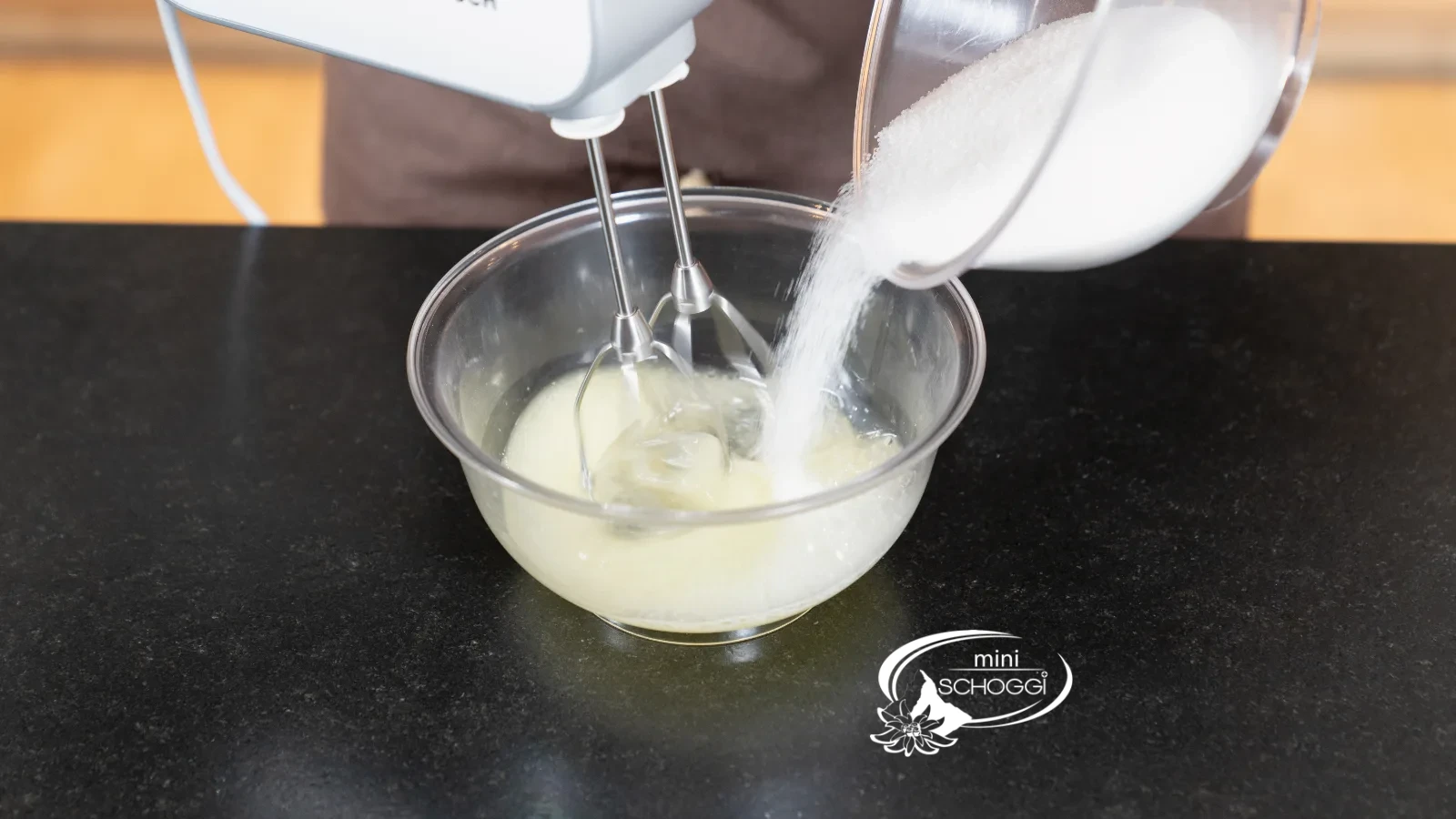
Whisk the egg whites with salt
Whisk the egg whites in the stand mixer with a little caster sugar and a pinch of salt. As soon as the mixture becomes foamier, slowly trickle in a bit more sugar.
2
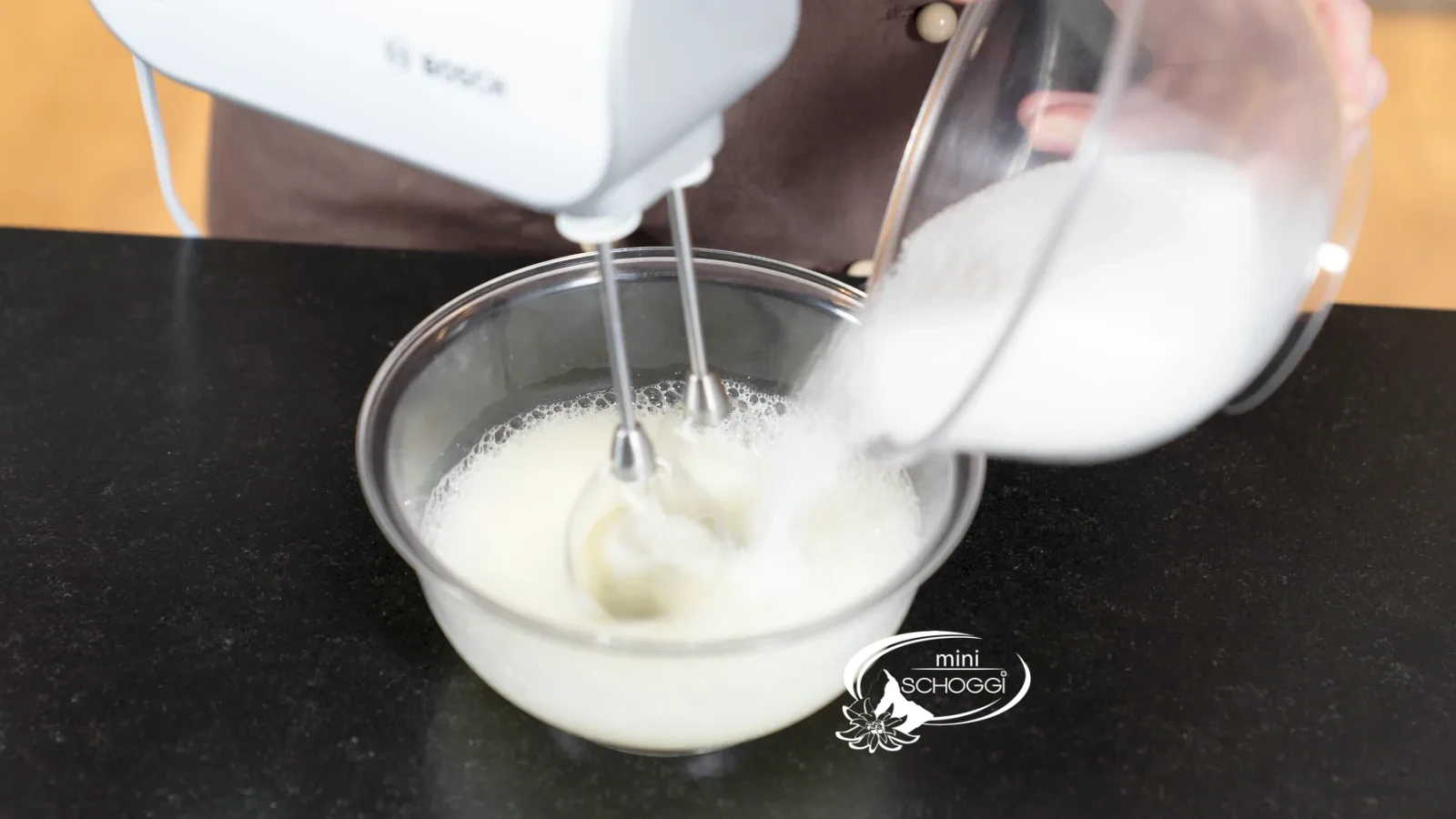
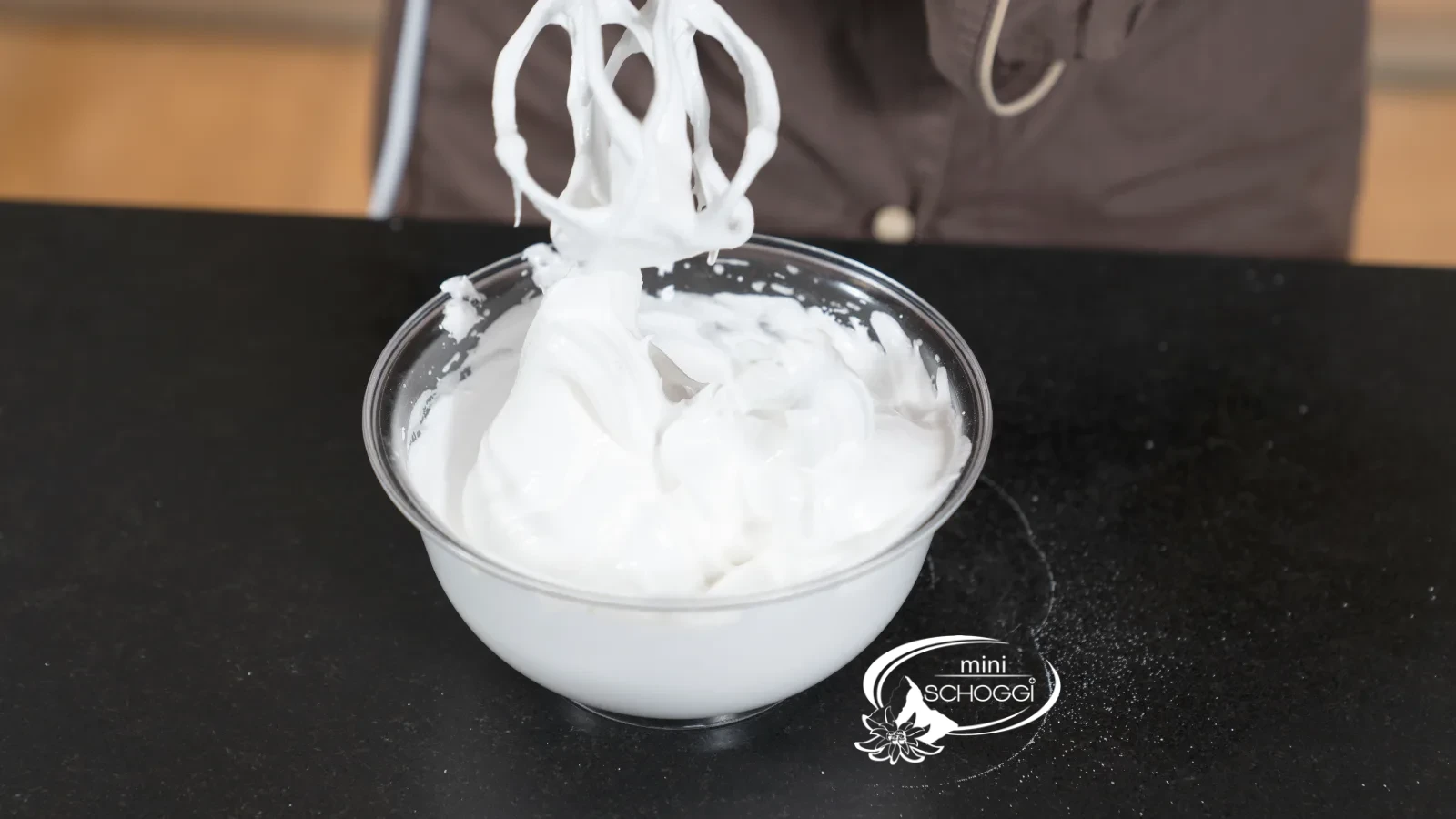
Add the sugar in stages
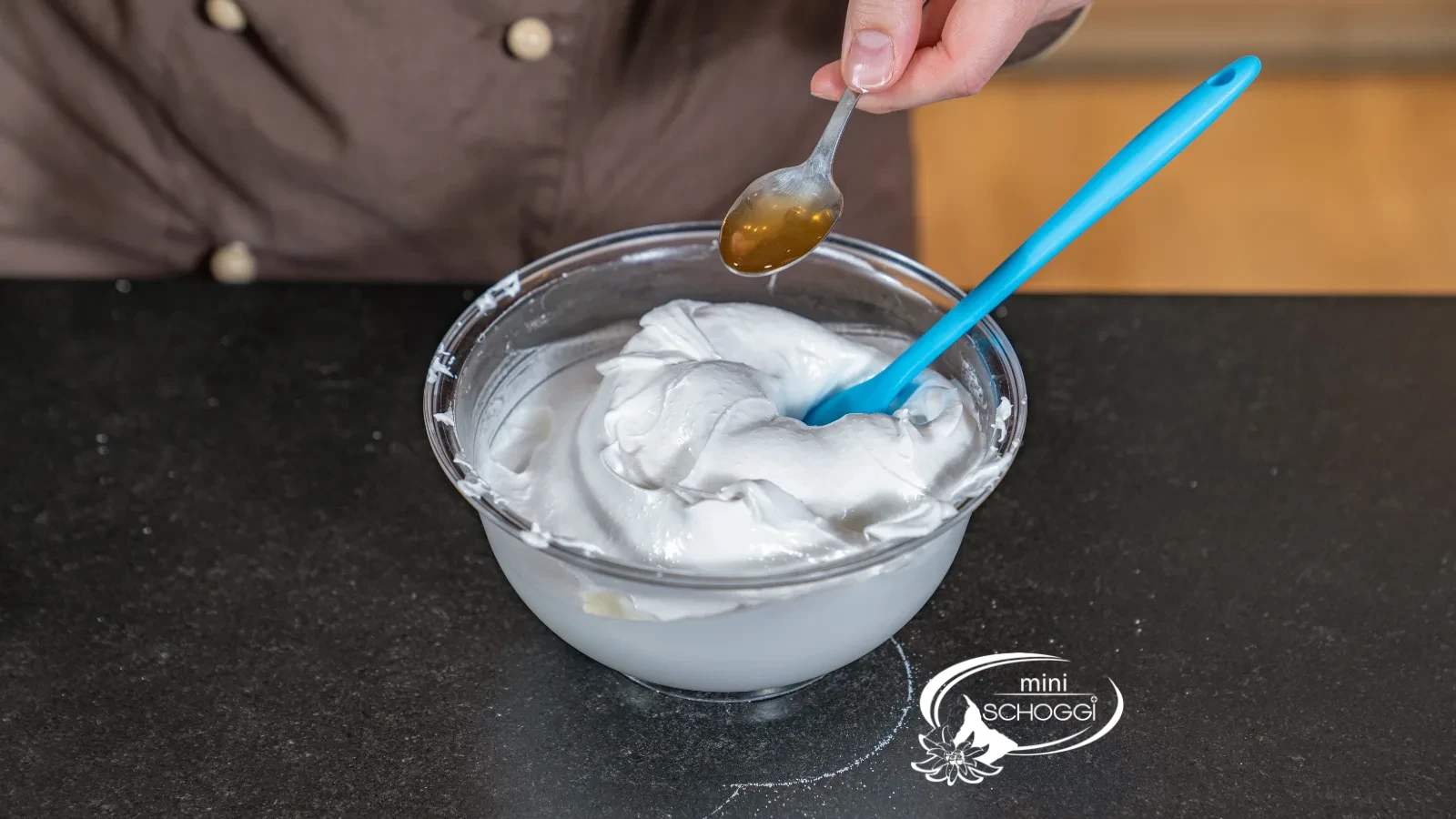
Repeat the slow addition of sugar until the meringue is nicely white and firm — about two thirds of the sugar in total. Add the last third at the very end and stir it in only briefly.
The mixture may still contain sugar crystals: those are exactly what give it stability.
3
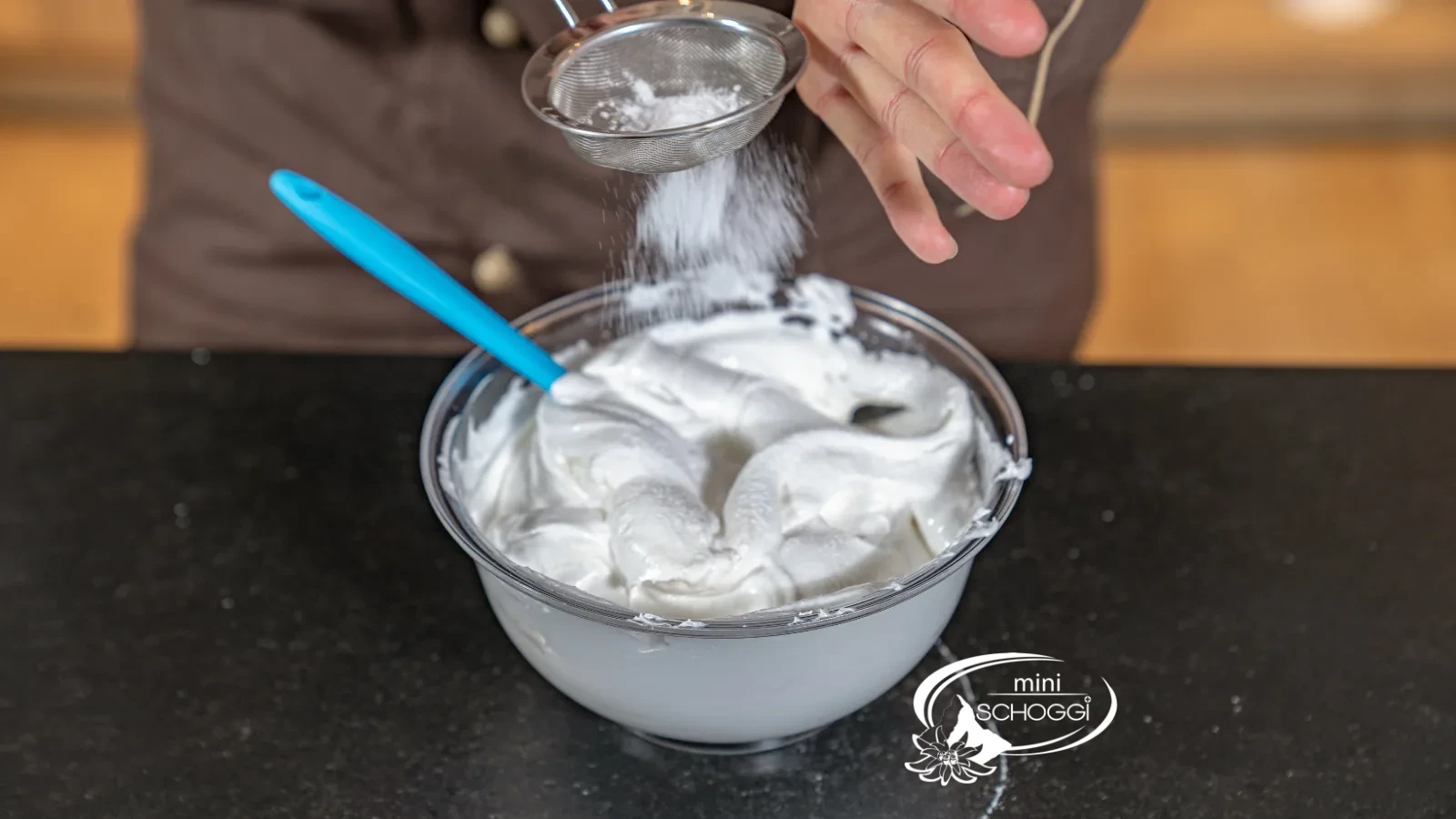
Stir in the vinegar and starch
Add the vinegar and sieve in the cornflour. Fold both in with a Rubber scraper — no longer with the machine, otherwise you'll lose the air.
Shaping and baking
1
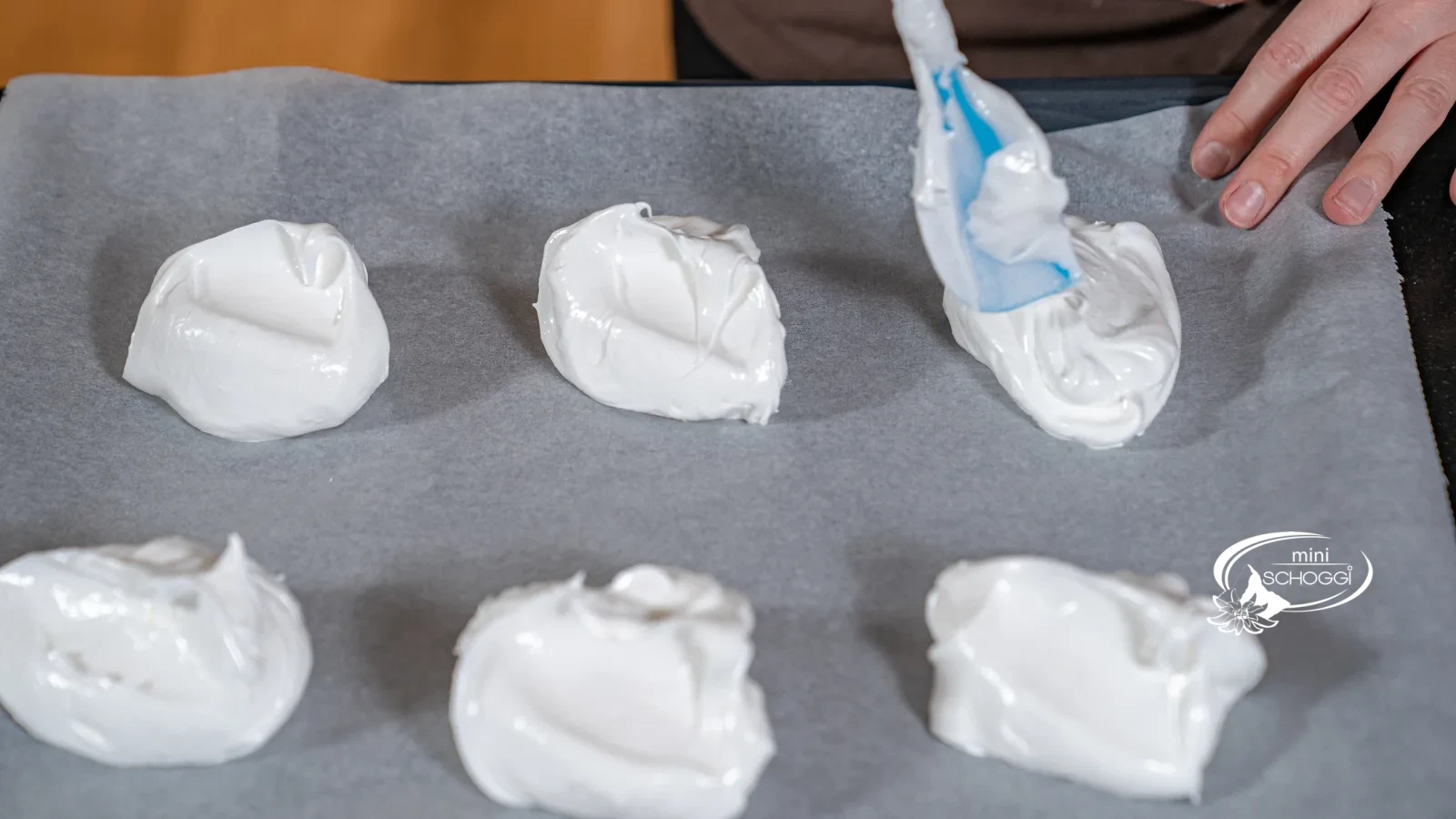
Portion and spread into shape
Place 50 g of the mixture per pavlova onto a baking tray lined with baking paper. Run the Rubber scraper around the outside of the mixture and shape it into an oval.
2
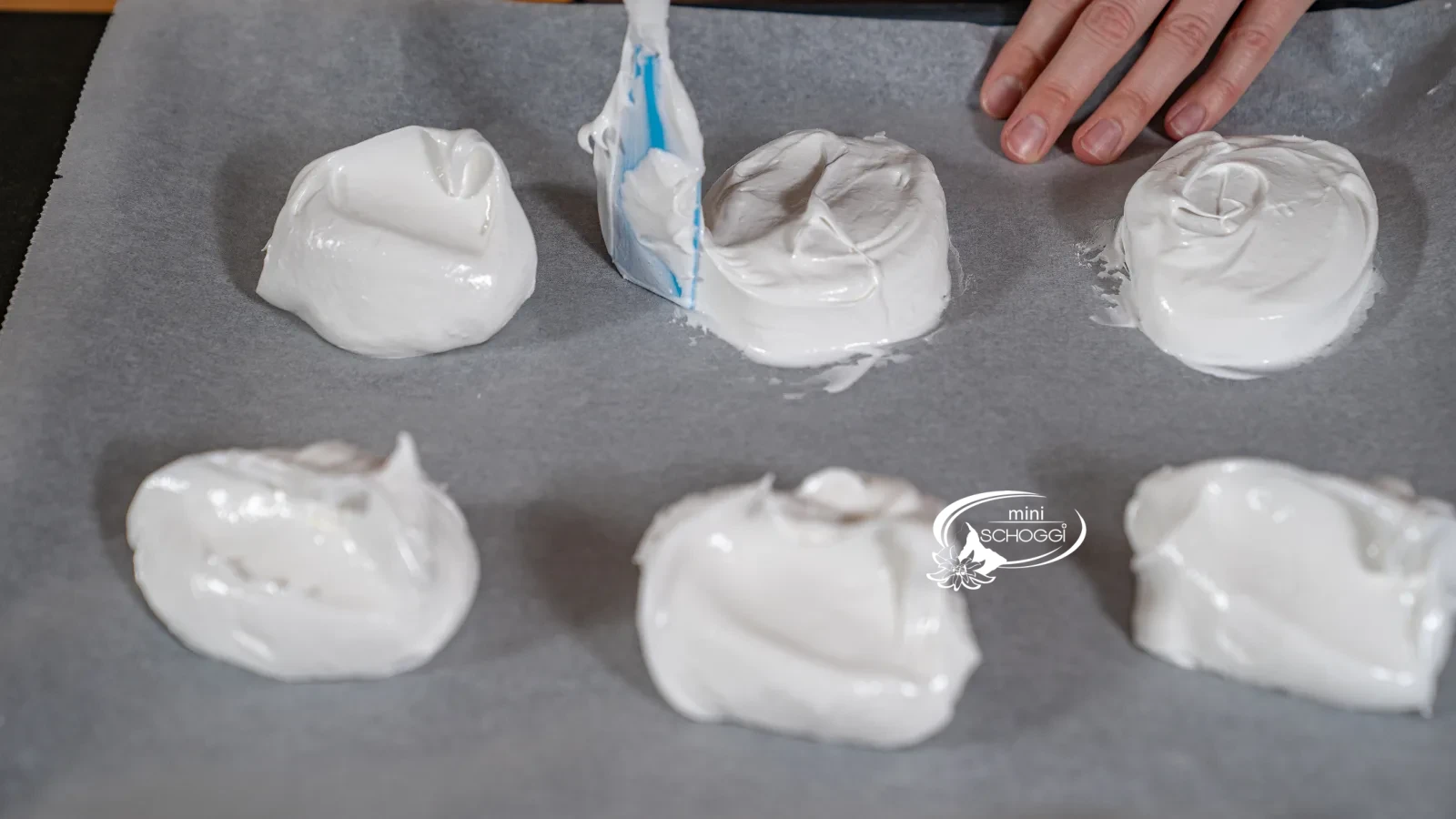
Pull up the edge
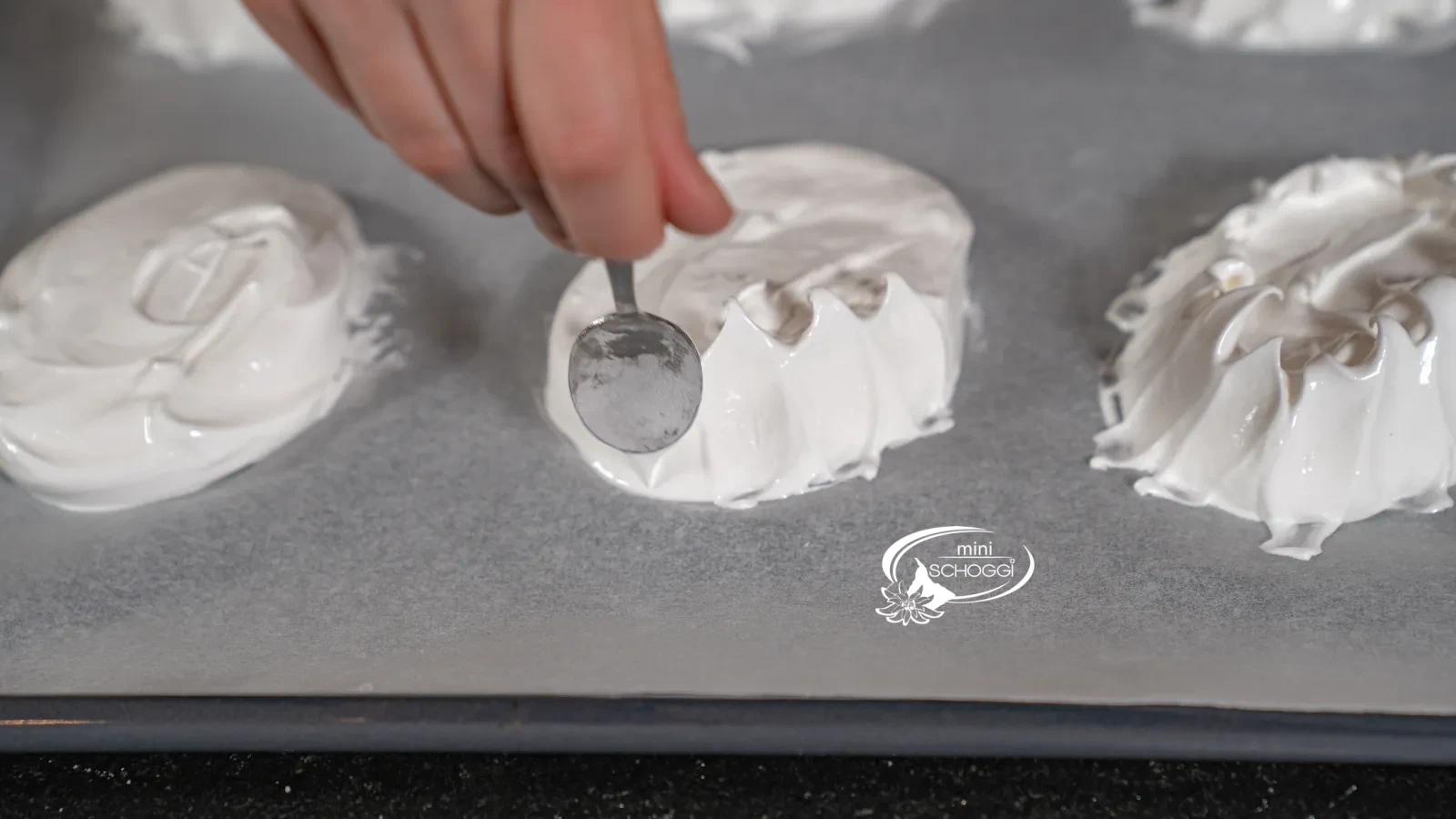
Using a small spoon, sweep the edge upwards from the outside and pull the egg white peaks slightly towards the centre. This creates the hollow that the cream goes into later.
3
Dry for 90 minutes
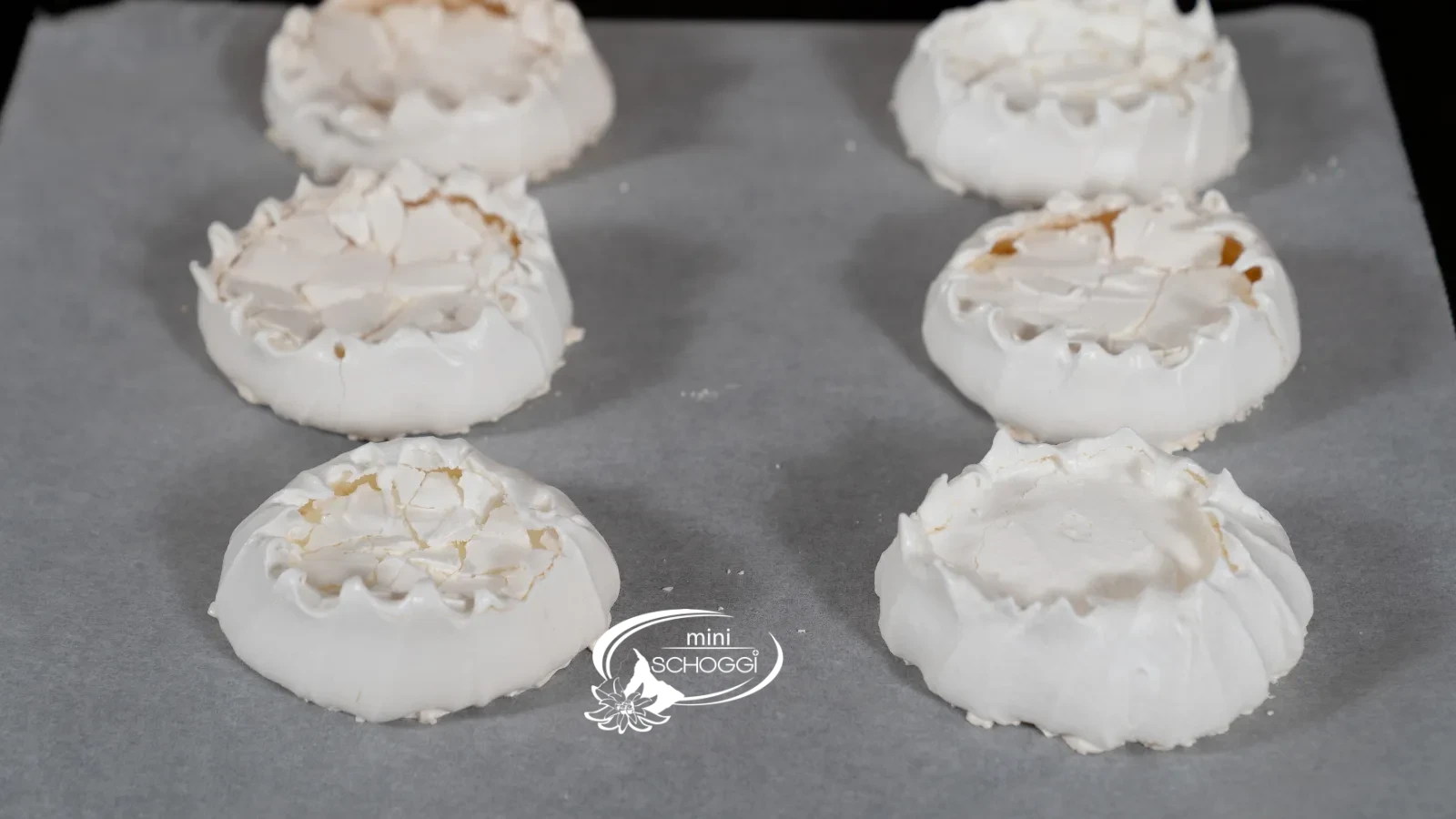
Slide the meringues into the oven, preheated to 130 °C fan, turn it straight back down to 100 °C and dry them for about one hour and 30 minutes.
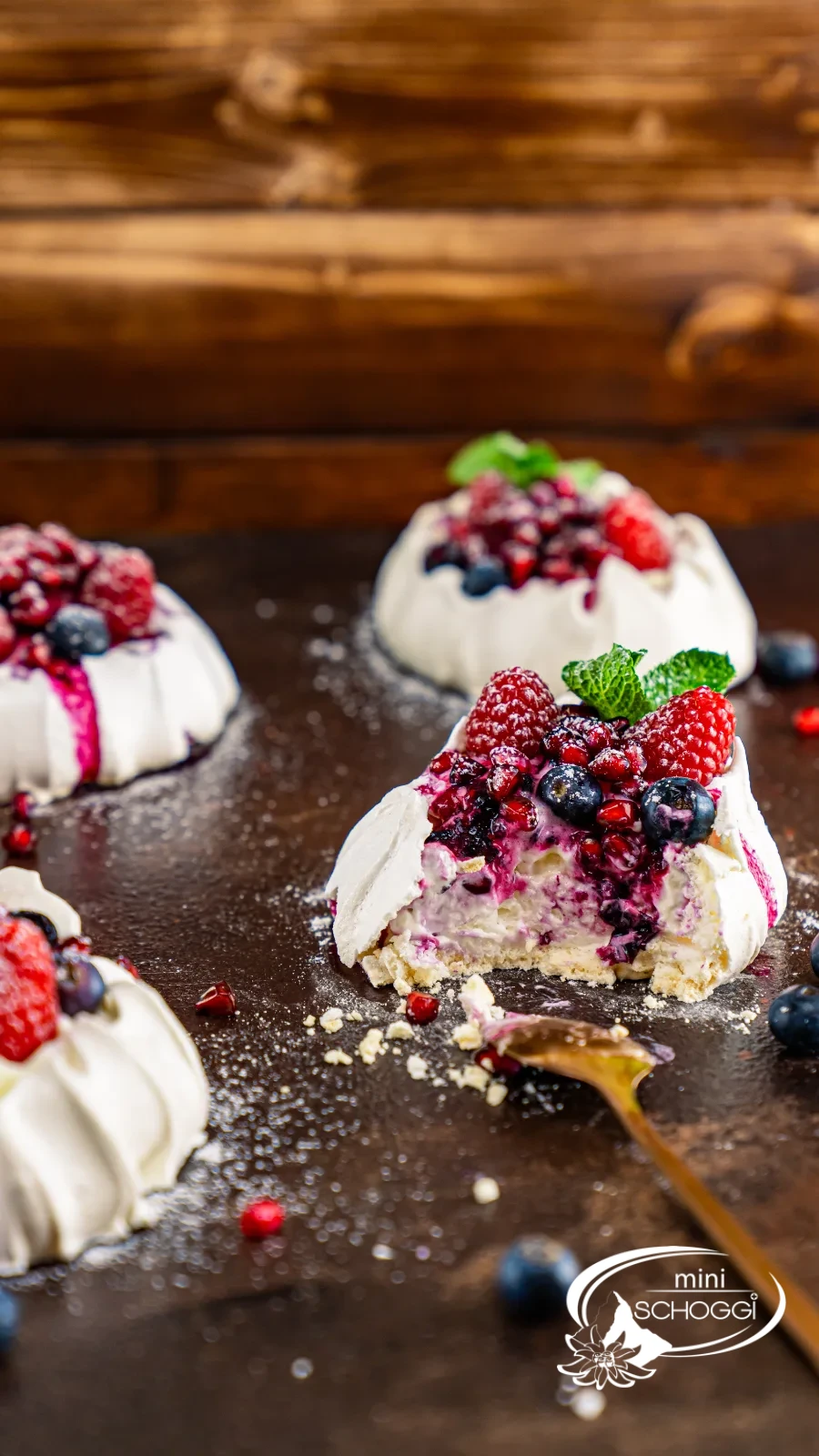
They're done when they're nicely crisp on the outside and still soft inside — much like marshmallows. Then they're perfect.
Fruit coulis (optional)
1
Briefly cook down the berries
Put a few fresh wild berries and pomegranate seeds into a small pan and heat them on a low setting. If they release too little water, you can add a tablespoon of water. Let the mixture cook down briefly, pour it into a fresh bowl and let the fruit coulis cool completely.
The fruit coulis is entirely optional — you can also top the pavlova dessert directly with fresh fruit.
Finishing
1
Fill in the cream
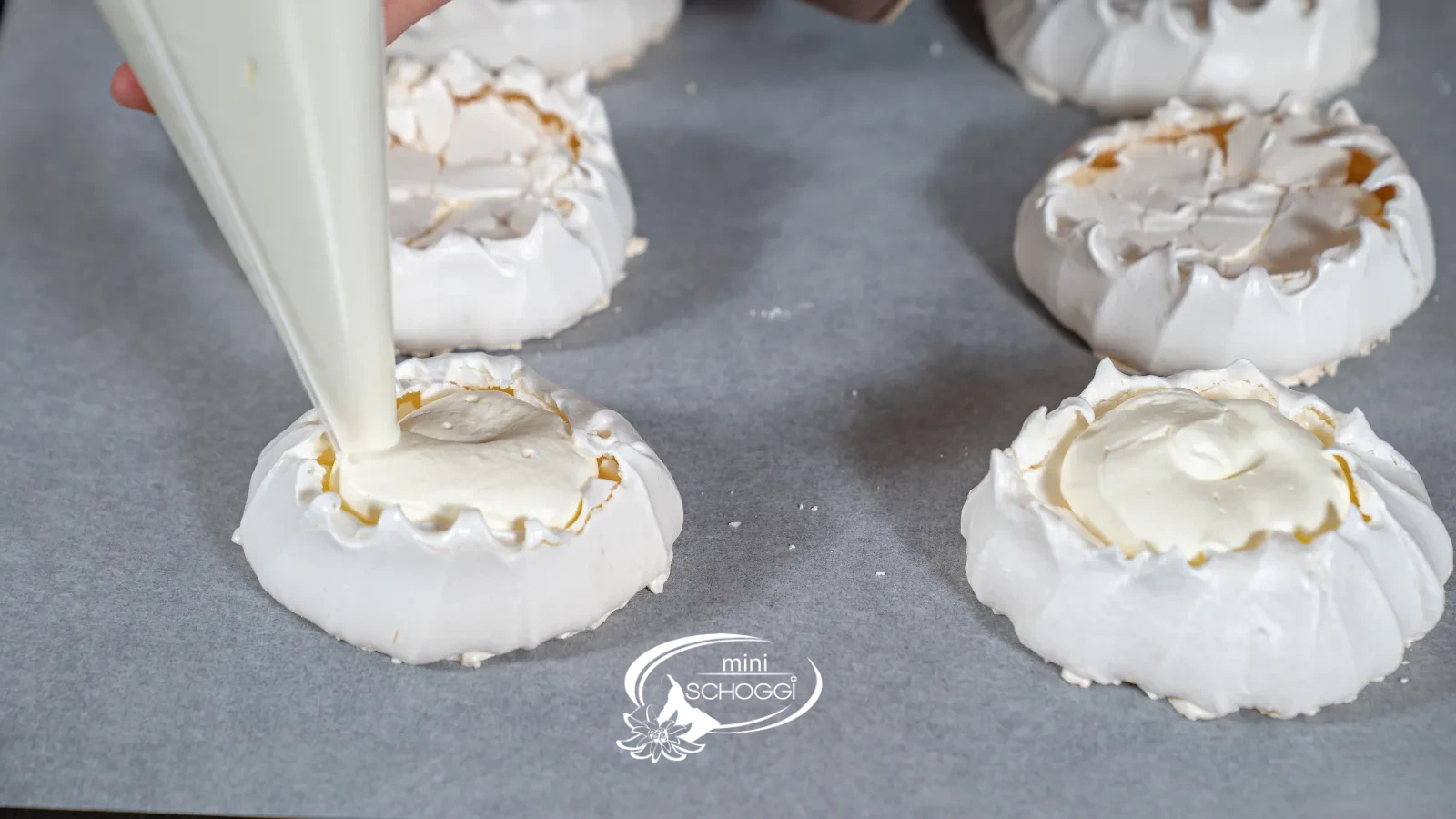
Whip the full cream until stiff, fill it into a piping bag and add about 25 g to each fully cooled meringue nest.
If the surface hasn't collapsed on its own, help it along gently with your fingers and press it down slightly — that way you'll have more room for the cream.
2
Arrange the berries and fruit coulis
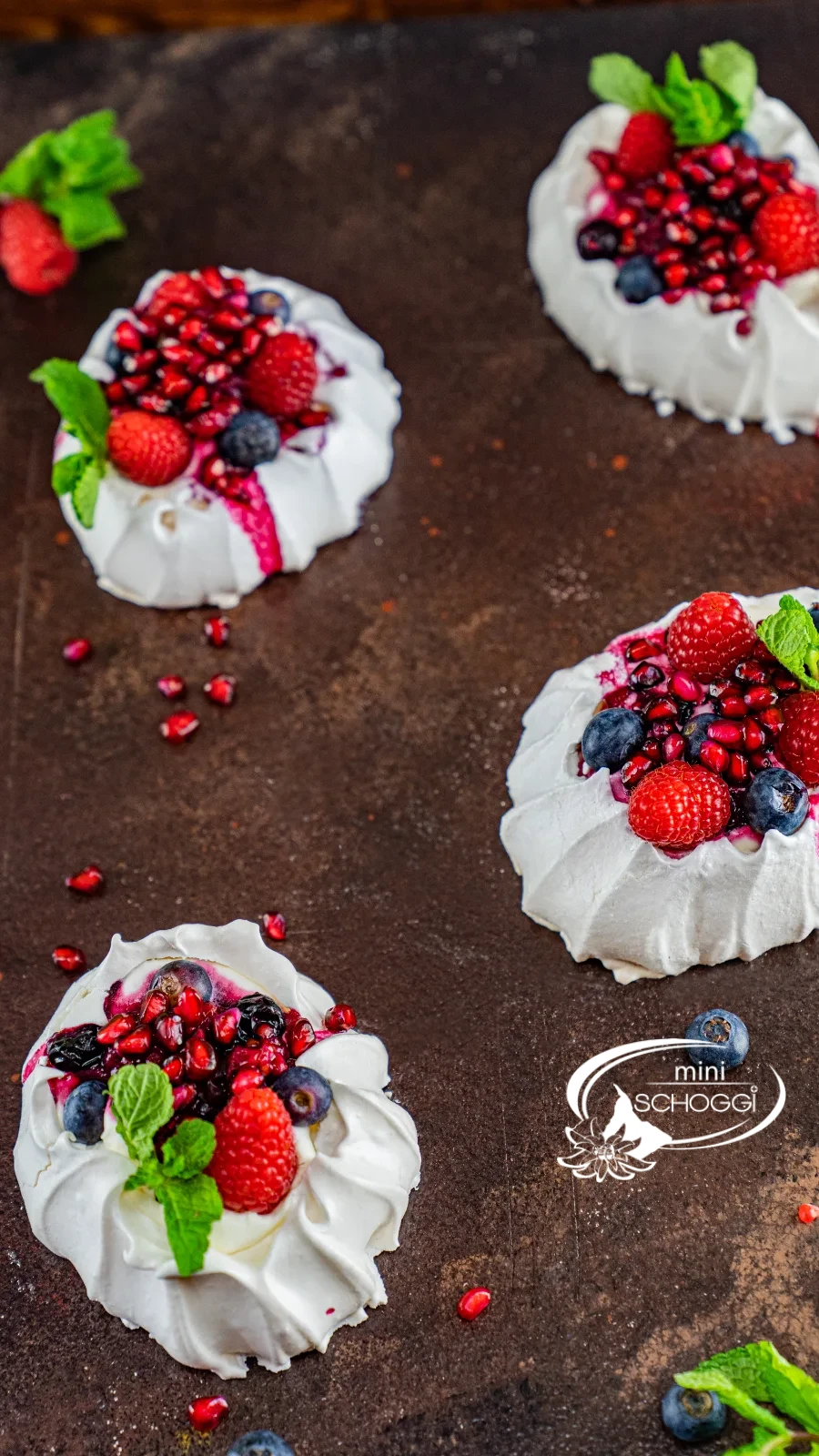
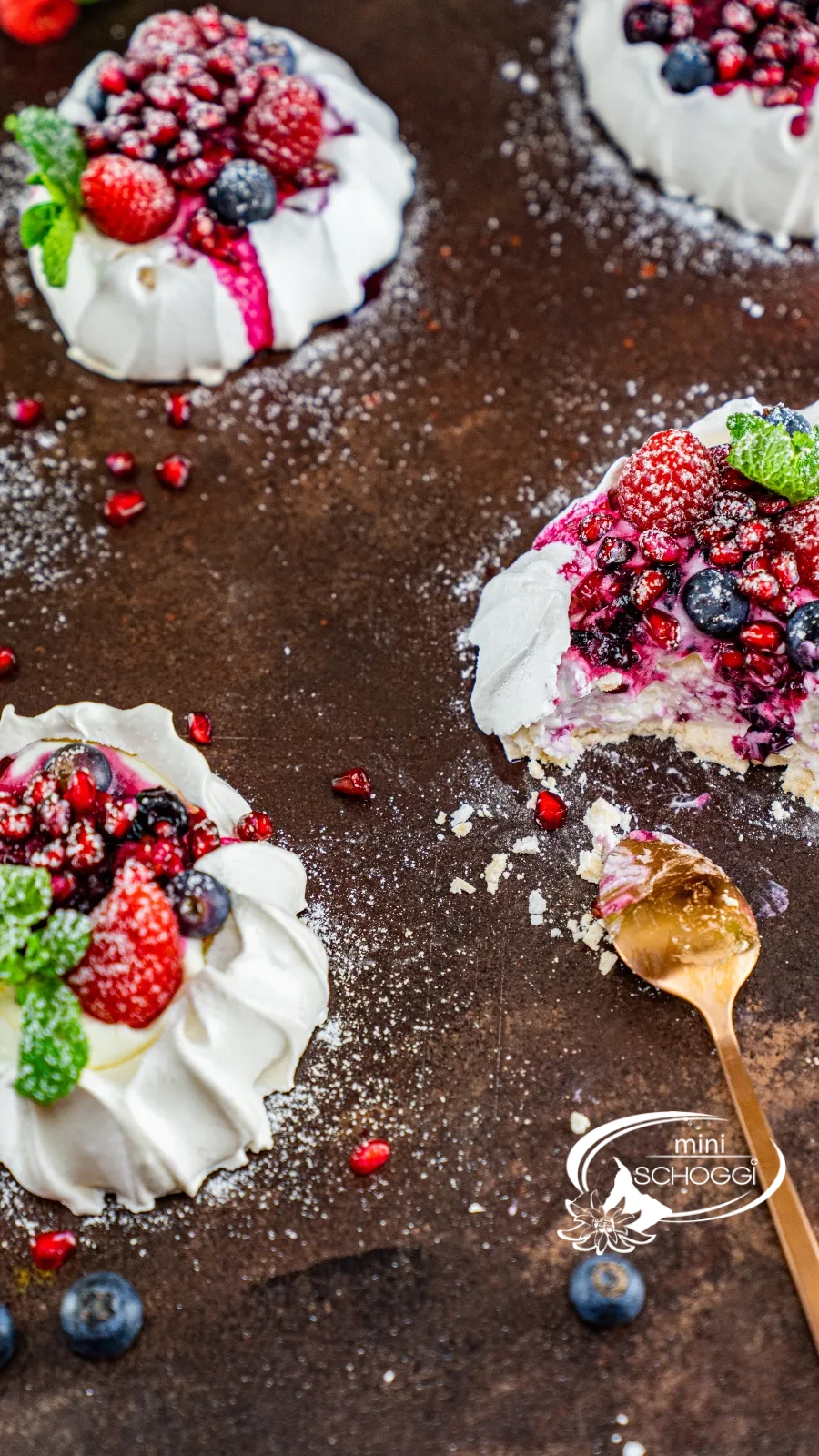
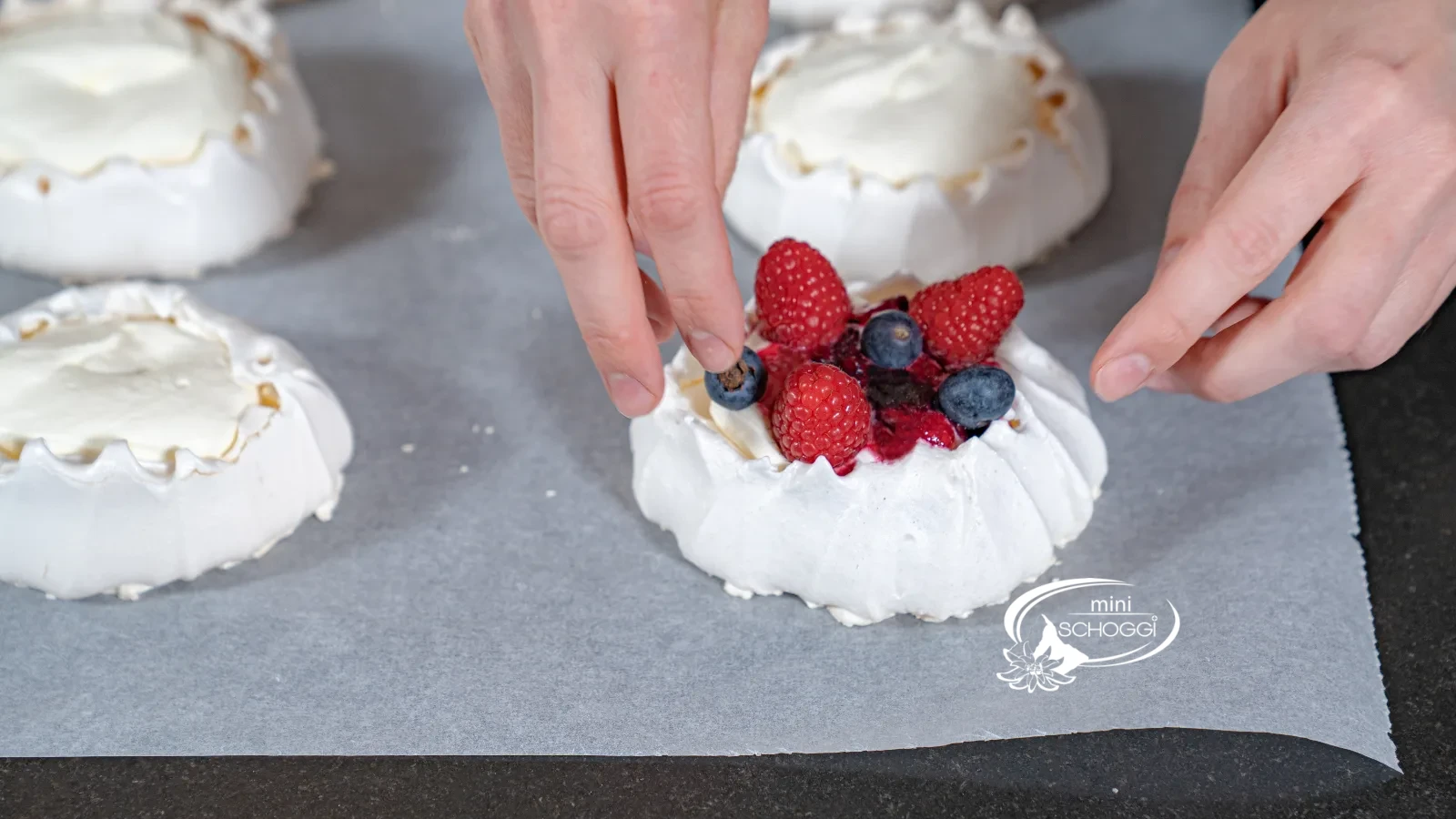
Now place the fresh berries on top of the cream — raspberries, blueberries and pomegranate seeds. If you've made the fruit coulis, add it beforehand or in small dabs over the top. A few sprigs of peppermint at the end, and the pavlova is ready.
Serve it right away: the meringue draws moisture from the cream and loses its crispness over time.
Compact · printable
Pavlova with berries
Ingredients
Quantity:
Meringue
Fruit coulis
Finishing
Preparation
- Whisk: Whisk the egg white with the salt and a little sugar until foamy.
- Sugar: Slowly sprinkle in two thirds, then briefly stir in the final third.
- Bind: Add the vinegar, sift in the cornflour and fold in with the scraper.
- Shape: 50 g per pavlova onto the tray, spread into an oval and pull up the edges.
- Dry: Put in at 130 °C, reduce to 100 °C and dry for 90 min.
- Fruit coulis: Optional: briefly cook down the wild berries and pomegranate, then let cool.
- Fill: Whip the cream stiff and pipe about 25 g into each cooled nest.
- Arrange: Add berries, pomegranate and mint — serve immediately.
Nutritional values per 100 g
236kcal
5.9 gFat
42.7 gCarbohydrates
3.1 gProtein
Storage & shelf life
Pavlova is meant to be eaten straight away: the meringue draws moisture from the cream and fruit and loses its crispness in the process. The unfilled meringue nests, on the other hand, can be prepared well in advance — kept airtight and dry, they last several days. Only fill them just before serving.
Everything for this recipe
Recommended from our bakery — exactly the sizes the recipe was tested with.
Ingredients
Pasteurised egg white powder 100 g
Accessories
Rubber scraper light blue, small
Plastic bowl 1 litre
Baking paper 42 x 33 cm, 25 pieces
Disposable piping bag transparent 20 pieces
Flat whisk 20 cm
Round piping nozzle 10 mm
Delivery in 1–2 working days · Free shipping from CHF 100*
A lovely touch
Not needed for the recipe — but it fits.
Rubber scraper light blue, large
So it turns out perfectly, guaranteed
The sugar crystals are intentional
The final third of the sugar is stirred in only briefly and should not dissolve completely. The fine crystals give the mixture stability — they are the reason this pavlova is foolproof.
Preheat to 130, bake at 100
The oven is preheated to 130 °C and turned down to 100 °C the moment you put the tray in. The initial heat sets the crust, the low temperature then dries it gently — at a constant 130 °C the pavlovas turn brown and cracked.
Nests in advance, fill only shortly before
The baked Meringue nests keep for several days if stored airtight and dry. Cream and berries are added only just before serving — otherwise the Meringue goes soggy.
Frequently asked questions
Vinegar stabilises the egg white and, together with the cornflour, helps the pavlova stay crisp on the outside and soft on the inside — instead of drying out completely like an ordinary Meringue.
The nests yes — kept airtight and dry they last several days. Fill them only shortly before serving, otherwise the Meringue goes soggy.
Usually because the oven was too hot. Preheat to 130 °C, but the temperature must go back down to 100 °C right after you put the tray in. If it bakes at a constant higher heat, the sugar caramelises and the surface browns.
Print recipe
Choose what should appear on the printout.
Related products
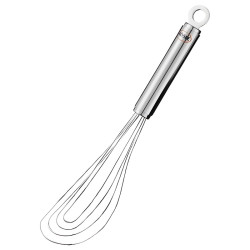
Whisk flat 20 cm
Price: CHF 32.50
Rated out of 5 stars based on
review(s)
Vous devez être connecté à votre compte client
Every kitchen needs some basic equipment, and this includes a sturdy whisk....
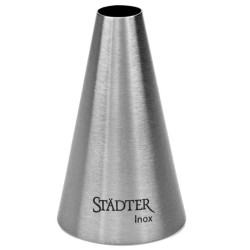
Hole grommet 10 mm
Price: CHF 6.90
Rated out of 5 stars based on
review(s)
Vous devez être connecté à votre compte client
For pretty little decorations and typical edge decorations, this nozzle is...
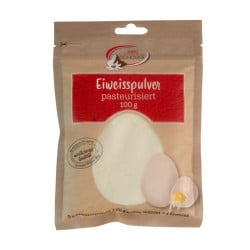
Pasteurised egg white powder 100 g
Price: CHF 8.50
Rated out of 5 stars based on
review(s)
Vous devez être connecté à votre compte client
We all know the feeling – a recipe only calls for the egg white and the yolk...
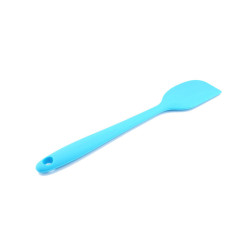
Rubber scraper light blue, small
Price: CHF 6.90
Rated out of 5 stars based on
review(s)
Vous devez être connecté à votre compte client
The rubber scraper Top is made of silicone, which protects pots and bowls...
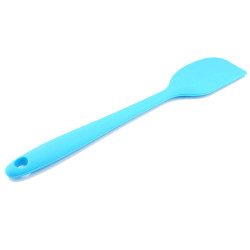
Rubber scraper light blue, large
Price: CHF 9.90
Rated out of 5 stars based on
review(s)
Vous devez être connecté à votre compte client
The rubber scraper Top is made of silicone, which protects pots and bowls...

Plastic bowl 1 liter
Price: CHF 4.50
Rated out of 5 stars based on
review(s)
Vous devez être connecté à votre compte client
A plastic bowl is one of the simplest but also absolutely most important...
Baking paper 42 x 33 cm, 25 pieces
Price: CHF 4.95
Rated out of 5 stars based on
review(s)
Vous devez être connecté à votre compte client
With these baking paper sheets your pastries rise evenly and are baked...

Disposable piping bag transparent 20 pieces
Price: CHF 6.90
Rated out of 5 stars based on
review(s)
Vous devez être connecté à votre compte client
The disposable piping bag is versatile and ideal for filling various fillings...
Bewertungen
Leave a comment
Related posts
 Make your own chocolate Easter bunnies
You can easily make your own Easter bunnies at home! You can find out how to do it and what you need here. A sweet...
Read more
Make your own decorative Swiss roll
Make your own decor roulade - we'll explain exactly how in this blog, with lots of tips and tricks from our...
Read more
Cinnamon Star Biscuits Recipe
Make your own cinnamon stars with the help of our professionals, with lots of tips & tricks to bake the best...
Read more
How can I convert a cake recipe?
Converting a cake recipe, whether a sponge or a cake filling, is easy with our conversion table.
Read more
Chocolates with mulled wine jelly
A wonderfully wintry Christmas jelly, which is ideal as a praline or macaron filling.
Read more