



Ready-to-ship quantity: more than 20 pieces20+ in stock
Price:CHF5.30

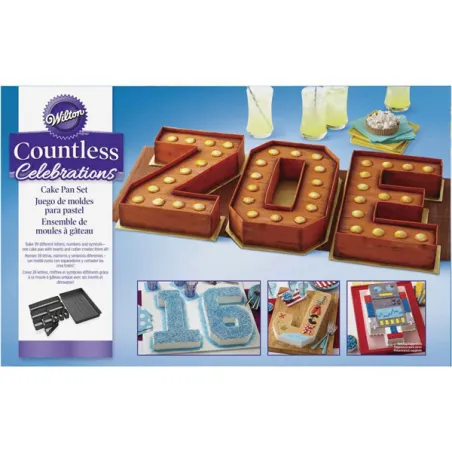
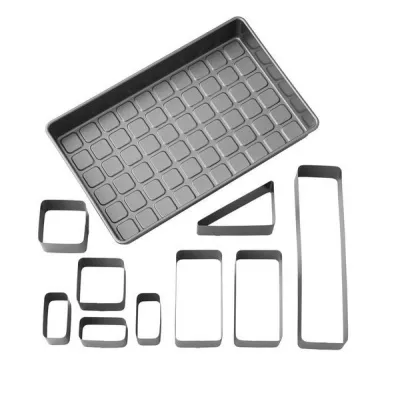
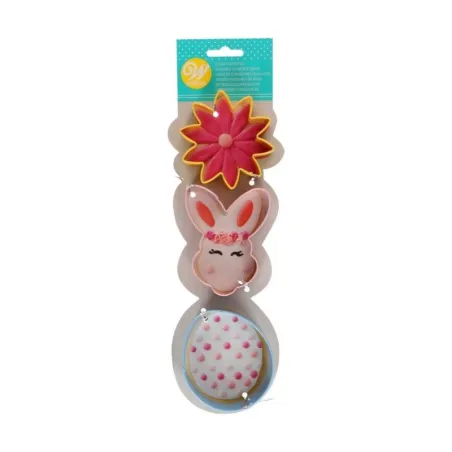
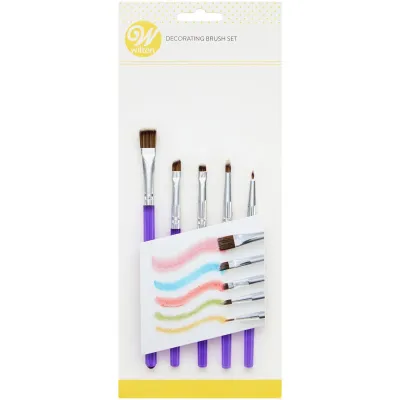
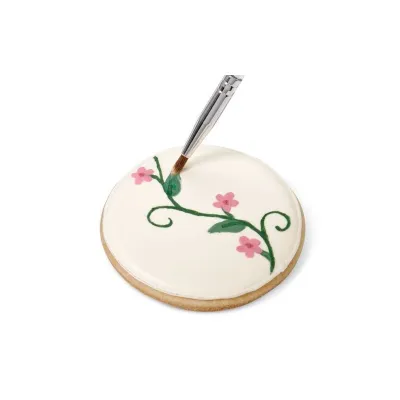
Anyone holding a Wilton cutter today is holding almost 100 years of history. Not a dramatic history – a persistent one. The story of a man who began as a candymaker in 1912, travelled through Europe in the 1920s to teach and learn from sugar artists, and in 1929 started sharing his accumulated knowledge from the dining room of his house in Chicago – with pâtissiers, caterers, homemakers, veterans, home bakers, everyone who wanted to create something beautiful. From those first lessons came a method, from the method a school, from the school a world company – and from the dining room in Chicago a range now available in over 100 countries. Wilton is today one of the best-known brands in the field of bakeware, baking accessories and cake decoration worldwide. The range includes cutters in hundreds of shapes, baking moulds for special occasions and creative creations, decorating tools, food colours and much more. The range at miniSchoggi includes cutters, baking moulds and further baking accessories from Wilton.









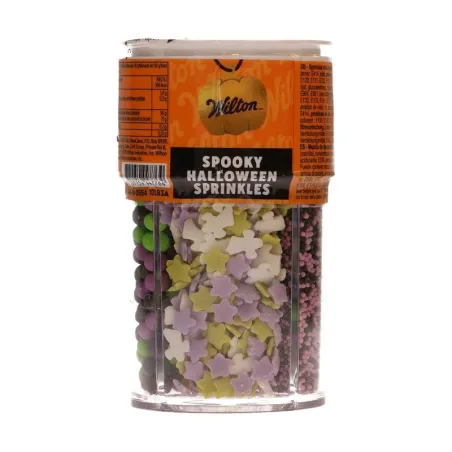


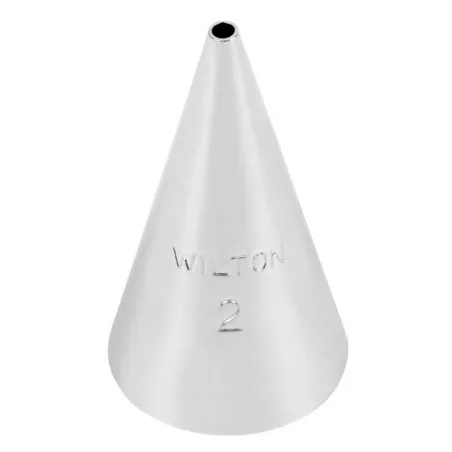

















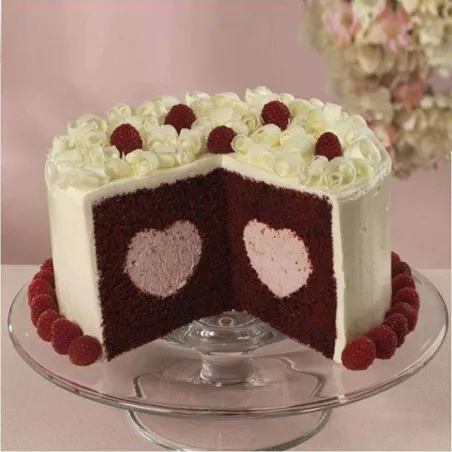
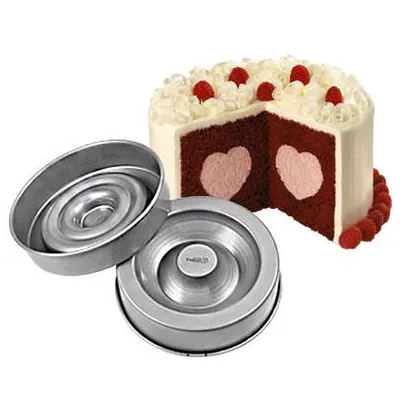
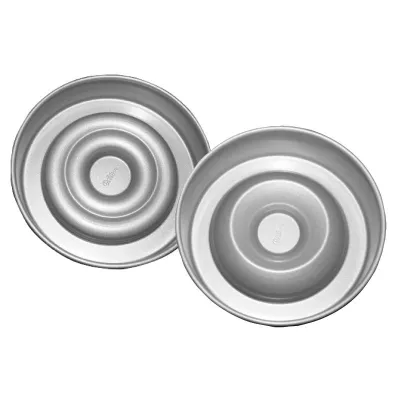
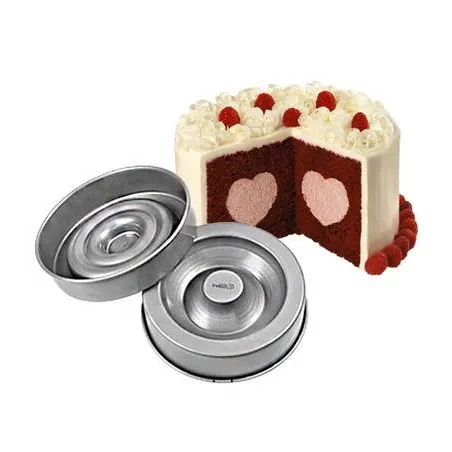
















Dewey McKinley Wilton was not a baker in the classical sense. He began his career in 1912 as a candymaker in a Chicago factory – a craft that demands precision, patience and a deep understanding of the material. Sugar behaves differently from flour, differently from chocolate, differently from buttercream. Someone who understands how sugar reacts to heat and cold, how it can be pulled and shaped, how it sets and shines, has acquired a fundamental understanding of confectionery craft that underpins all other techniques. Dewey Wilton acquired this understanding through years of daily work – and became one of America's most sought-after sugar artists.
In the 1920s he travelled to Europe to teach the great pâtissiers and confectioners of the continent the American art of pulled sugar. What he received in return was worth more than any payment: the classical European techniques of cake decoration – buttercream, piping, building multi-tiered creations, using fondant as a covering and modelling mass. He learned from the best of Europe, took the best back to America and began to develop something of his own: a method that combined the craftsmanship of European tradition with the American demand for accessibility and reproducibility.
In 1929 Dewey Wilton founded the Wilton School of Cake Decorating in the dining room of his house in Chicago. Each lesson cost 25 dollars – a considerable sum at the time, but the places filled quickly. The first students were pâtissiers and caterers from the region who recognised that Dewey Wilton was teaching something they could not learn anywhere else. Word soon spread about what was happening in this dining room, and the classes filled with people from all walks of life – not just professionals, but also homemakers, home bakers, curious people, everyone who wanted to create something beautiful.
This was the core of the Wilton philosophy that was already taking shape in these early years: baking and decorating do not belong in the back room of a professional but in every kitchen. The technique that distinguishes a wedding cake confectioner can be learned by anyone, if it is explained correctly. Not simplified beyond recognition, but broken down into learnable steps that build on one another. Beauty for everyone, not only for the trained. This conviction has never left Wilton since.
What Dewey Wilton developed over the years he called the Wilton Method. This was not a collection of tricks or recipes but a philosophy: the finest European craftsmanship – precise, classical, high quality – combined with the American demand that every technique should be explained so that someone without prior knowledge can learn, understand and reproduce it. Every step of decorating was broken down into its components, every movement analysed, every action described so that it could be taught and learned.
Dewey's son Norman Wilton continued this work and developed the company consistently through the 1940s and 1950s. When veterans returned home after the Second World War seeking employment, the family explicitly opened the school to them. From 1940 to 1948 the number of bakers in America rose from around 70,000 to over 250,000 – growth in which the Wilton School had its share. In 1959 the first product catalogue appeared, making cake decorating tools accessible to a broad public for the first time. Buttercream replaced jams and fruits as the new decorating medium. In the 1970s Wilton began offering demonstrations in shopping centres – bringing the Wilton Method directly to the people.
What distinguishes Wilton from many baking accessories suppliers is the inseparable connection between knowledge and product. Wilton has never simply sold cutters and baking moulds – from the outset Wilton has shown how to use them, what is possible with them and how to improve one's own creations step by step. The Wilton School of Cake Decorating in Illinois still teaches students of all levels today: from beginners picking up a piping bag for the first time to professionals refining their technique. Online courses make the Wilton Method accessible worldwide – the spirit of the dining room in Chicago, now digital.
This is reflected in the range: Wilton products are designed to work – even for someone using them for the first time. A cutter that cuts cleanly. A baking mould that makes unmoulding easy. A piping bag that can be controlled. Every product is the result of decades of feedback from students, home bakers and professionals who work with these tools daily. Today Wilton is part of the Dr. August Oetker KG Group – a family-owned, multi-billion-dollar company with over 125 years of history – and delivers to over 100 countries. The school from the dining room has grown up. The idea behind it has remained the same.
What has distinguished Wilton for almost 100 years is a conviction that runs through every product: beautiful baking and decorating should be possible for everyone – not only for professionals with years of training, but for everyone who enjoys it and is willing to try something. This conviction is in every cutter that cuts cleanly, in every baking mould that makes a special creation possible, in every tool that makes a technique accessible that would be harder without it. For almost 100 years Wilton has been working to narrow the gap between what professionals can do and what everyone can do – with tools that work, with methods that can be taught, and with a standard of quality that makes no distinction between someone who bakes every day and someone trying it for the first time. miniSchoggi carries Wilton products – cutters, baking moulds and further baking accessories – because tools with this history and this conviction belong directly in the bakery, whether professional or at home. The range is continuously expanded.
What began in 1929 in a sugar artist's dining room now stands in bakeries, confectioneries and home kitchens in over 100 countries. Dewey's conviction survived the journey. Wilton.