Ready-to-ship quantity: more than 20 pieces20+ in stock
Price:CHF12.50

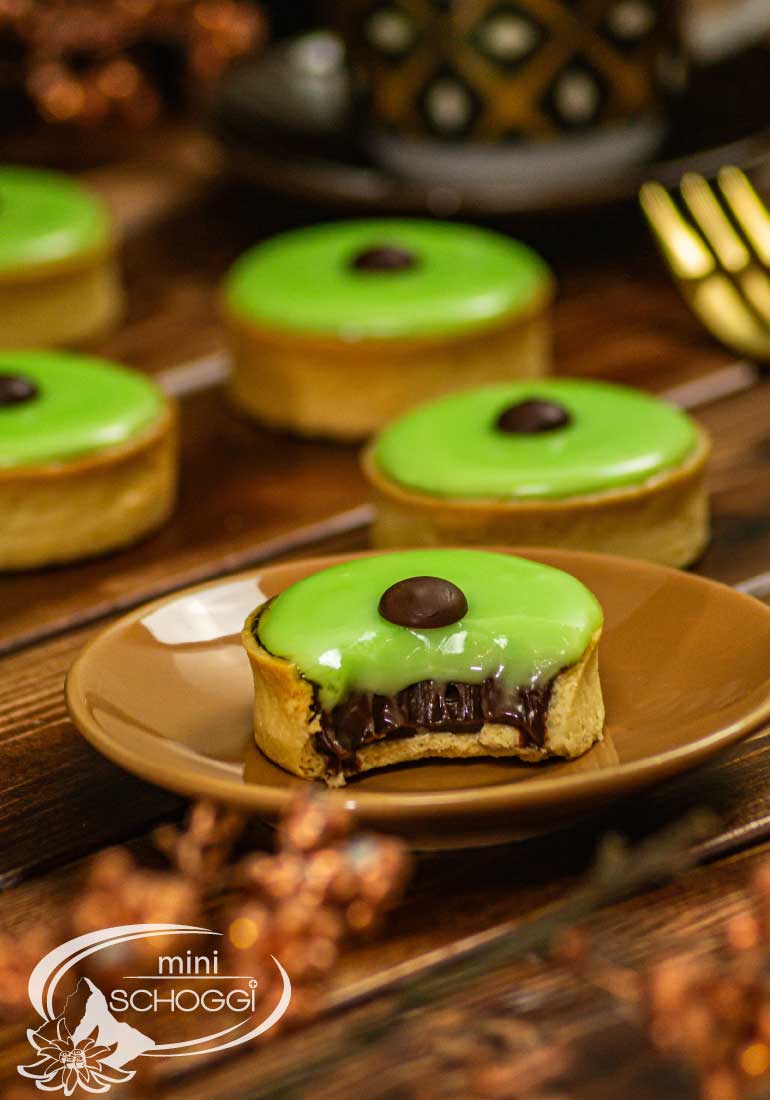
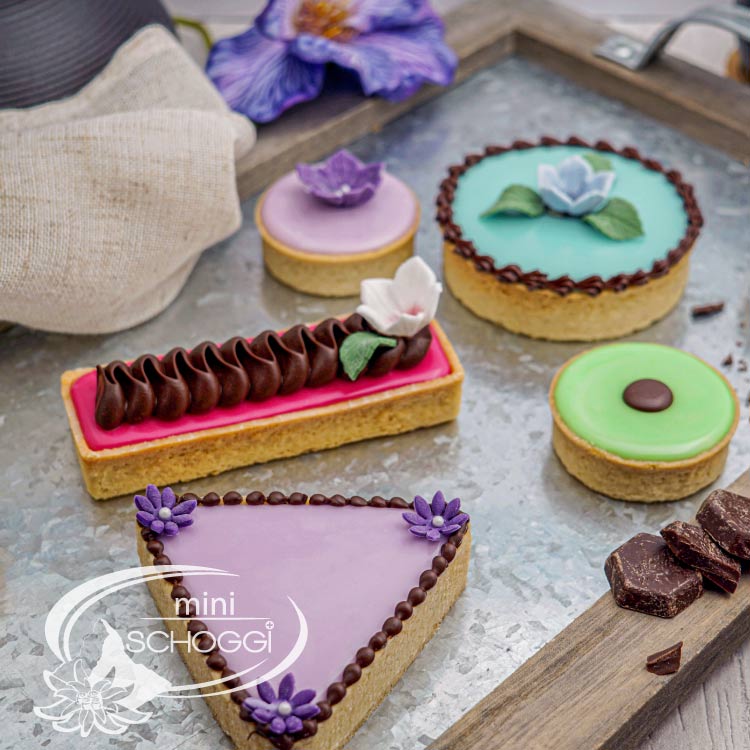
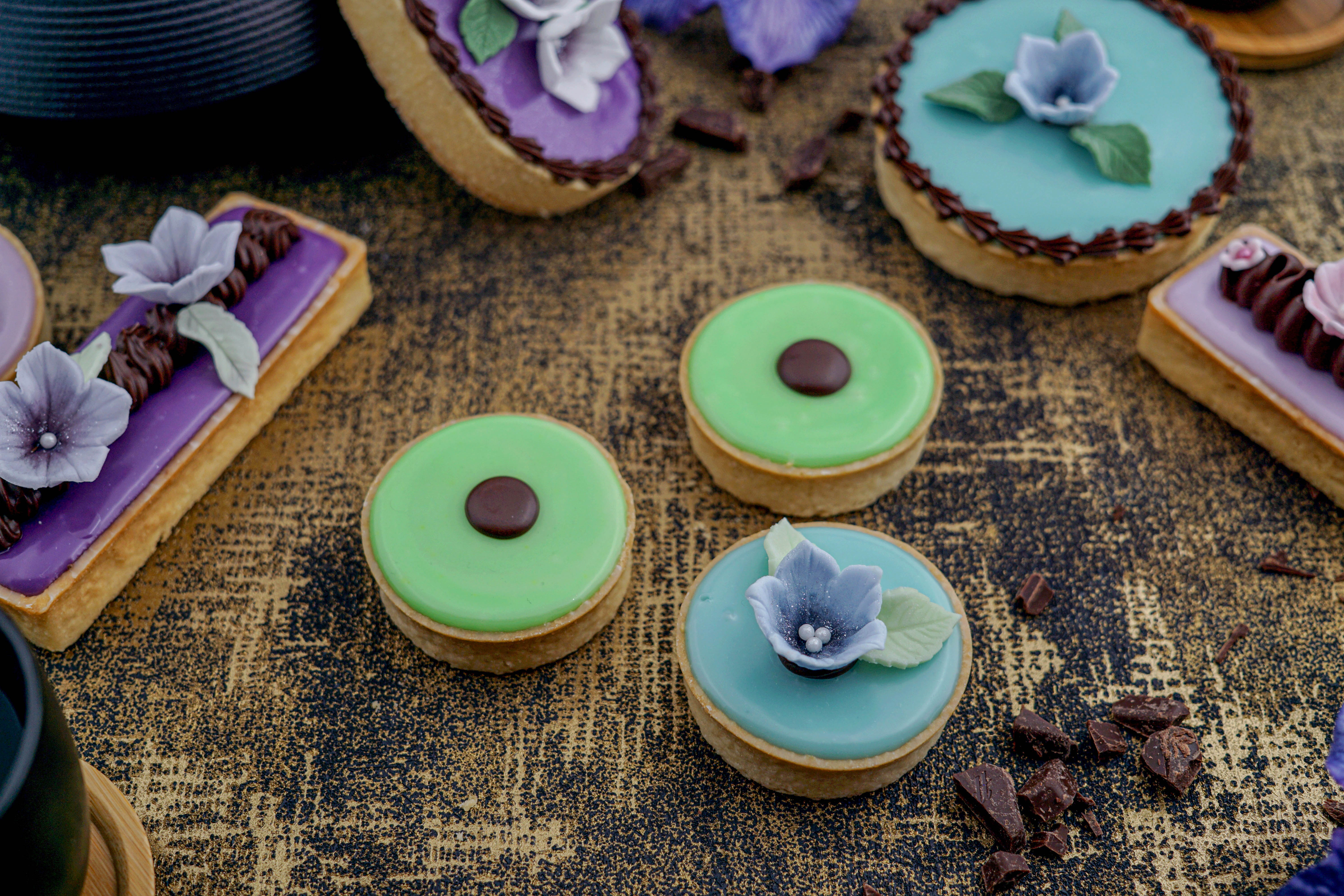
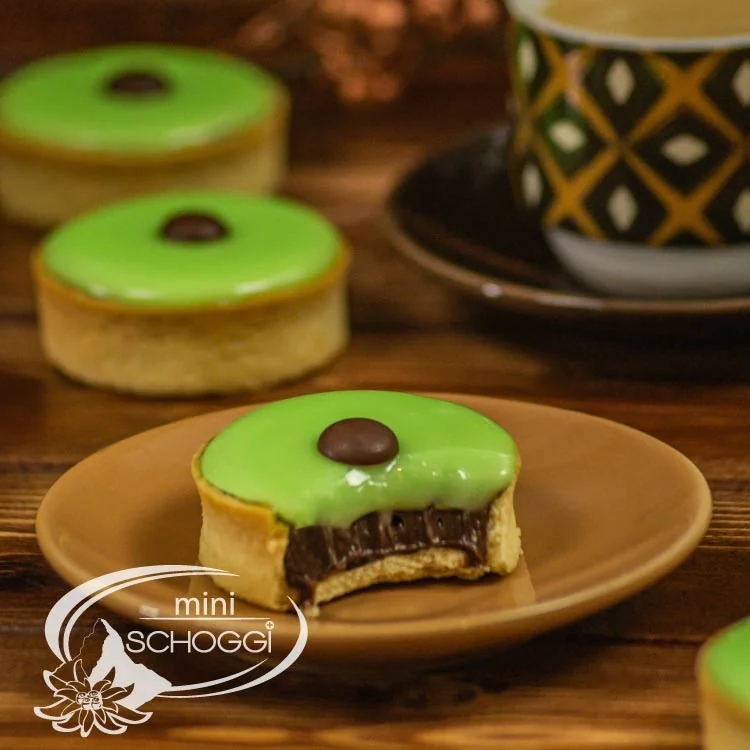
Who hasn’t come across them? Those little round shortcrust tartlets, filled with dark ganache, coated in green fondant icing and topped with a chocolate dot in the centre. That’s what the traditional Carac looks like, just as we know and love it. However, we thought this delicious pastry could be shaped into something even more beautiful. That’s why, in this blog post, we’ll show you how to make your very own personalised Carac and, above all, how to decorate them so beautifully. You’ll often find thispastrywith a diameter of around 6–8 cm, but they’re also available in confectionery-sized versions to enjoy with tea. In our video, we’ll show you several shapes and sizes of this classic treat and explain in detail exactly how to make it. Naturally, you’ll find all the ingredients you need to make the Carac in our online shop.
Quantity: 10 pieces
Baking time: approx. 10 minutes
Difficulty: Medium
Shelflife:1 month
| Butter | softened | 130 g | |
| Icing sugar | 70 g | |
| Whole egg | 30 g | |
| plain flour | 200 g | |
| Vanilla seeds | 1/4 tsp | |
| Double cream | 150 g | |
| butter | 25 g | |
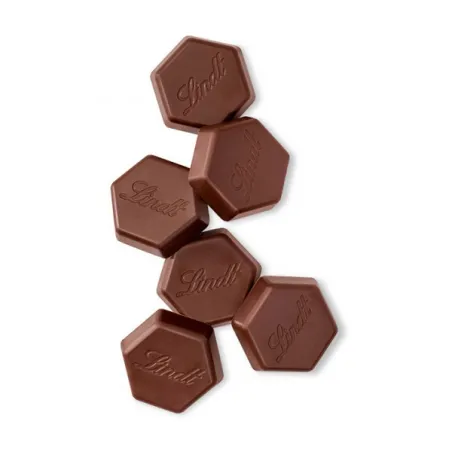
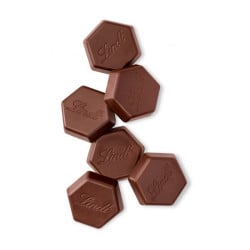
| Dark chocolate couverture | 300 g | |
| Water | 30 g | |
| Granulated sugar | 60 g | |
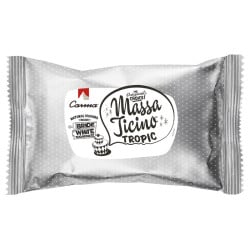
| Melting fondant | 400 g | |
| Food colouring | 1 pinch | |
| Chocolat de couverture | dark, tempered | 100 g | |


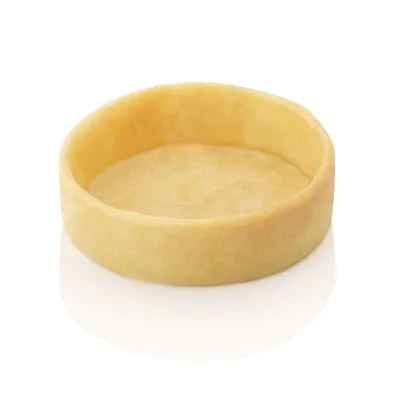
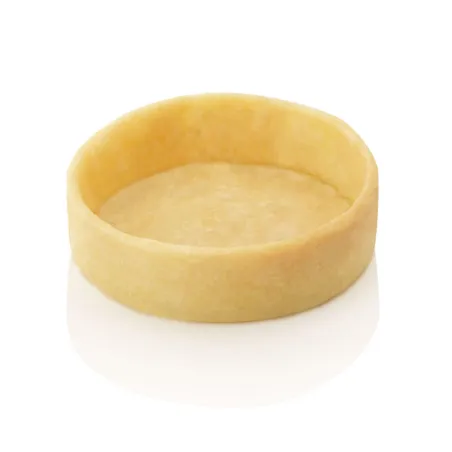
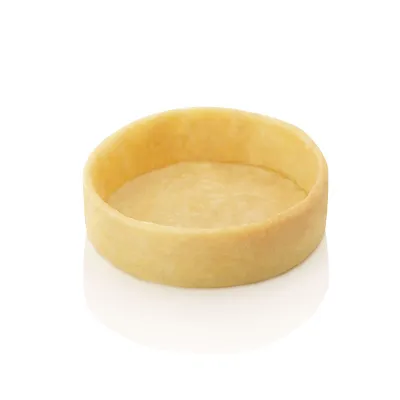
In principle, both sugar pastry and shortcrust pastry are ideal as a base for carac. The difference between the two is that sugar pastry contains a higher proportion of sugar and a lower proportion of butter. This makes it firmer, so it is easier to line the tart tin. Furthermore, sugar pastry hardens more than shortcrust pastry after baking. So if you’re still a bit unsure about lining tart tins, we recommend using sugar pastry for your Carac. The advantage of shortcrust pastry is that it isn’t quite as hard after baking and melts more easily in the mouth. However, lining the tart tins is a little more fiddly. But it’s a small extra effort you’ll be happy to put in if you want a perfect Carac.
80 g butter
120 g granulated sugar
50 g whole egg
200 g plain flour
1/4 tsp vanilla seeds
80 g butter
120 g granulated sugar
50 g whole egg
180 g plain flour
20 g cocoa powder
1/4 tsp vanilla seeds
130 g butter
70 g icing sugar
30 g whole egg
180 g plain flour
20 g cocoa powder
1/4 tsp vanilla seeds

Preheat the oven to 160 ºC (fan).
Cream the softened butter with the sugar until the mixture becomes lighter in colour and fluffier. Use a food processor or a hand mixer for this. Then add the whole egg (beaten) and stir it in briefly. Next, add the dry ingredients, stir briefly, tip the mixture onto the work surface and quickly knead by hand to form a dough. Wrap the dough for the carac in cling film and place it in the fridge for about 20 minutes or in the freezer for about 10 minutes.

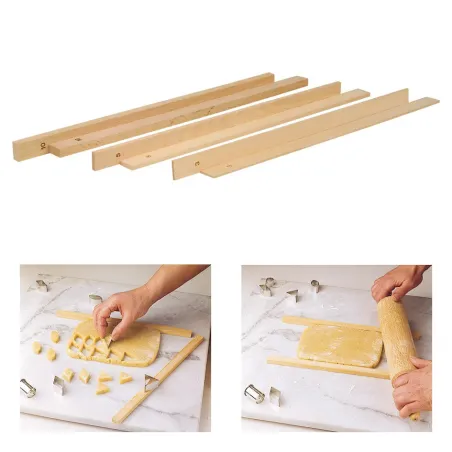
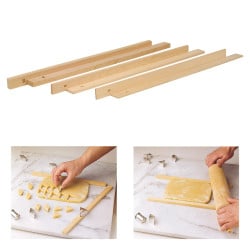
Divide the chilled dough in half, put one half back in the fridge and knead the other half briefly by hand until the dough becomes smooth. Now roll out the pastry on a floured work surface to a thickness of 3 mm. This is best done using rolling pins.
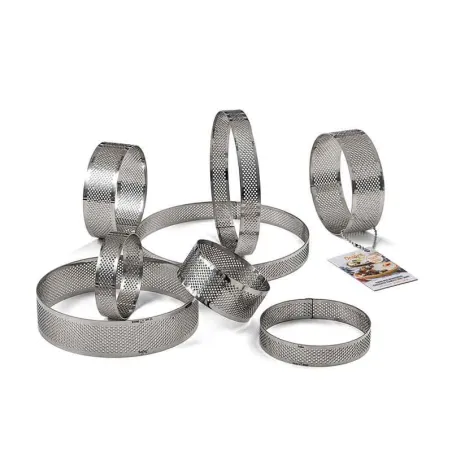
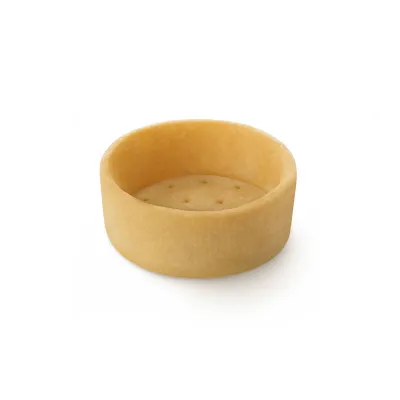
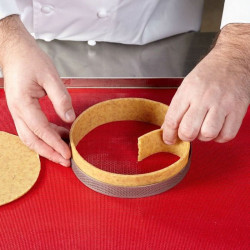
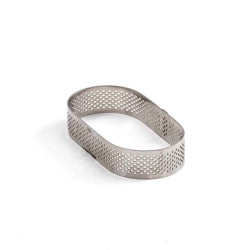
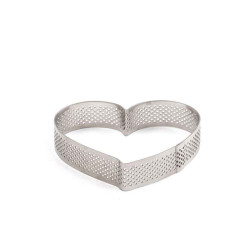
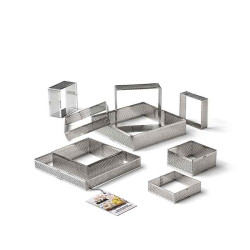
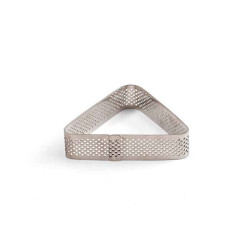
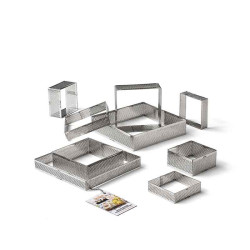
Grease and flour the (perforated) tart cases, then cut out the bases using the mould and place them onto a baking tray lined with baking paper using a spatula. Now take the second portion of the pastry out of the fridge, knead it briefly as well, and roll it out to a thickness of 3 mm.
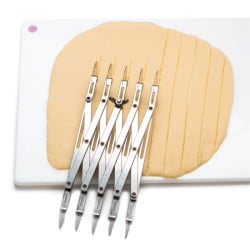
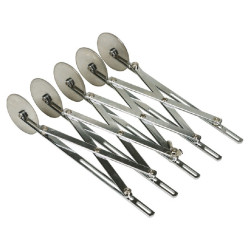
Remove the rolling pins and roll over the pastry again with light pressure until it reaches a thickness of approx. 2 mm. For a perfect, even edge, it’s best to use a pastry cutter.
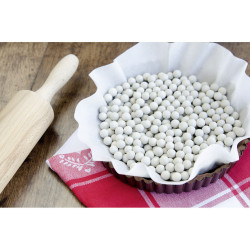
Line the tins neatly and blind-bake at 160 °C (fan oven) for about 10 minutes. To do this, place a small piece of baking paper in the tart and fill it with baking beads.
After baking, leave to cool on a wire rack.

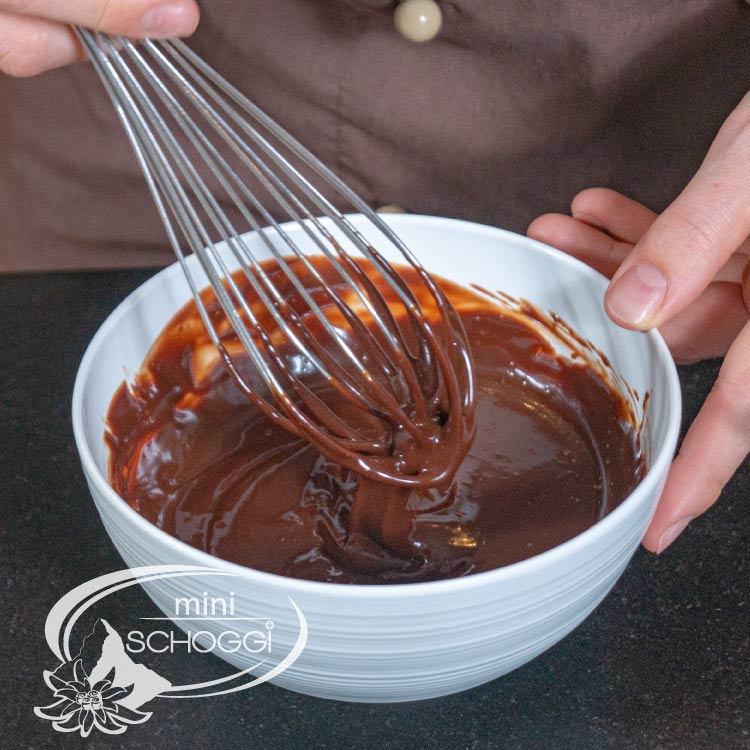
Heat the double cream and butter together in a pan. Weigh out the couverture in a separate bowl. Then pour the hot butter and cream mixture over the couverture and leave it to stand for a short while.
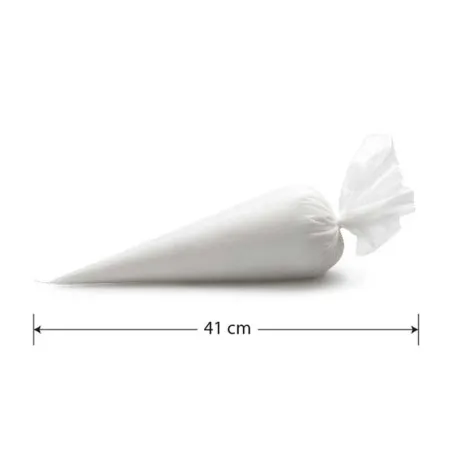
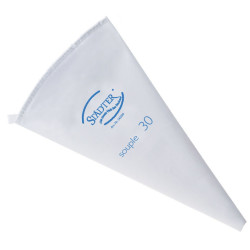
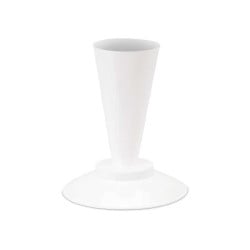
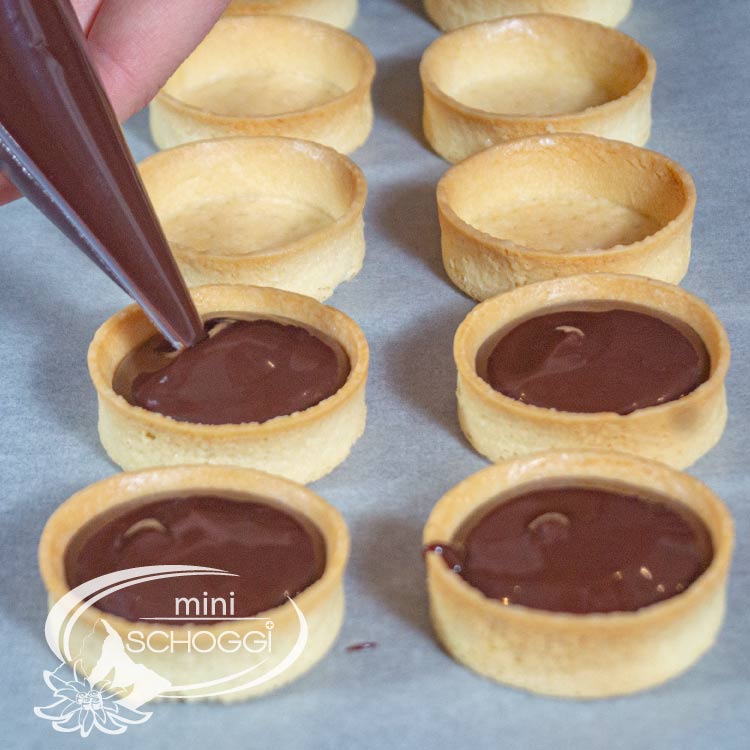
Now stir well with a whisk until you have a smooth mixture. Transfer the finished ganache to a piping bag and fill the cooled moulds to about 3 mm below the rim. Place the Carac in the fridge for 30 minutes to allow the ganache to set. Alternatively, you can leave them at room temperature for about 2 hours.


First, make a simple syrup. To do this, bring the water and granulated sugar to the boil together and let the mixture boil for about 1 minute. Then remove from the heat.
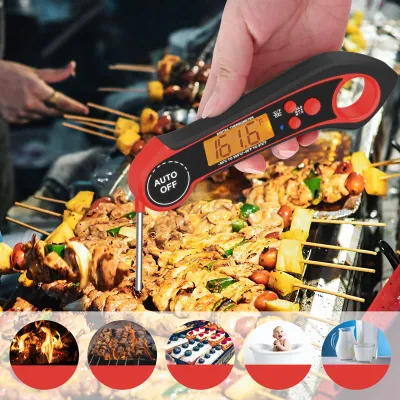
Put the fondant into a pan and heat it over a low heat. Now add 2–3 tbsp of the syrup. Important – do not heat the mixture to more than 40 ºC, otherwise the icing will lose its shine! It’s best to use a thermometer for this.
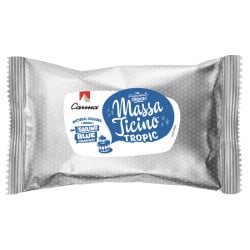
Now add a pinch of the food colouring (ProGel) of your choice and stir well until the fondant is evenly coloured. Traditionally, green colouring is used for the classic Carac, but you can colour your Carac any colour you like.
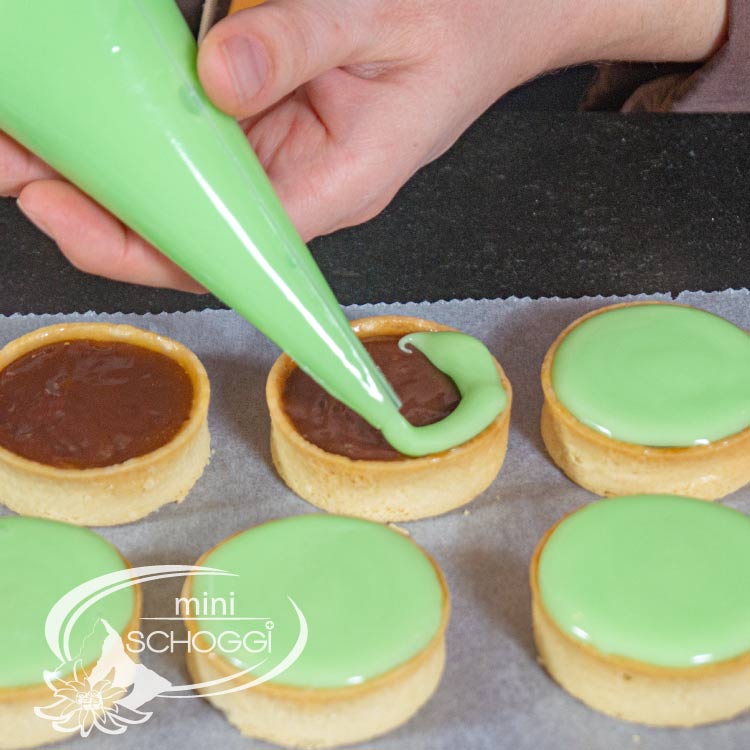
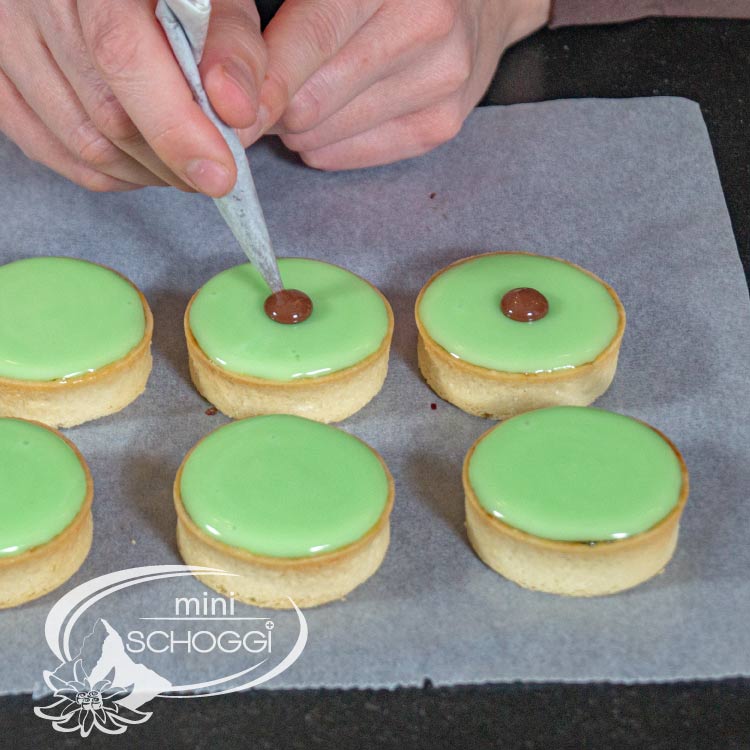
Put some of the melted fondant into a piping bag and use it to top up the last 3 mm of the ganache-filled Carac. You’ll need to work quickly here, as the mixture cools down quite rapidly. Now you can colour the remaining fondant again and repeat the previous step. This way, you’ll have two creations with minimal effort.
Traditionally, just a dab of tempered dark couverture is added to the green surface. But further down, we’ve listed some more decoration ideas for you.


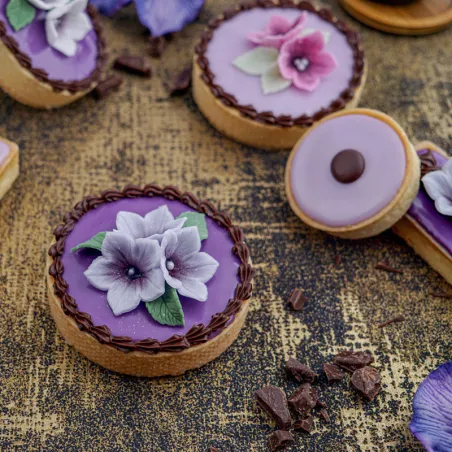
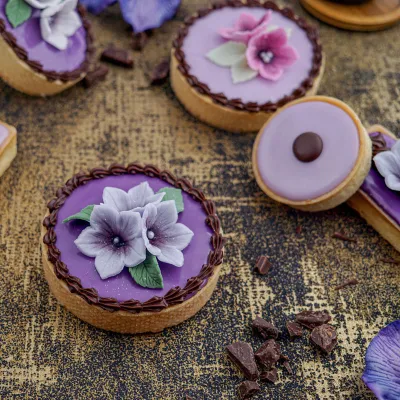
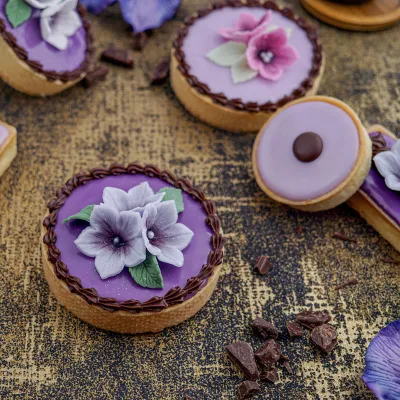
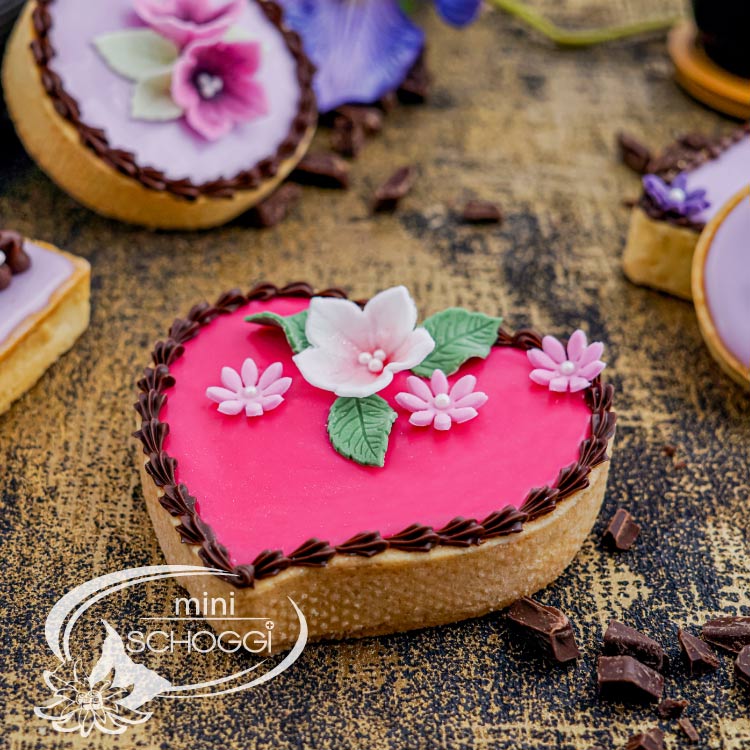
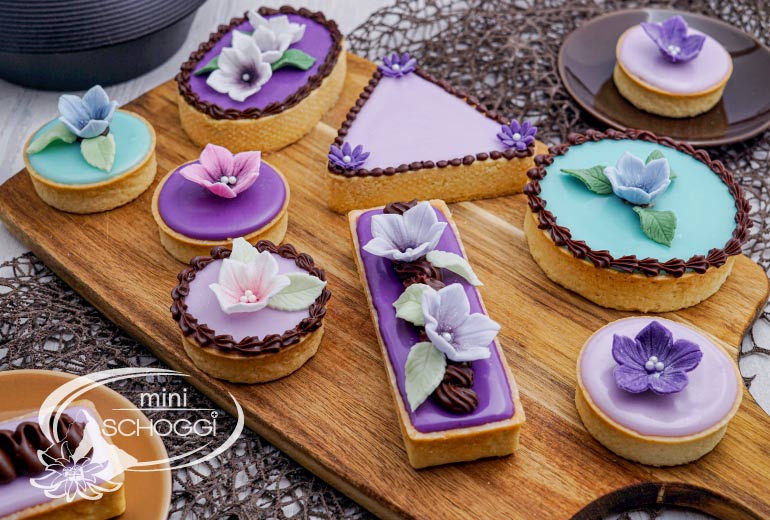
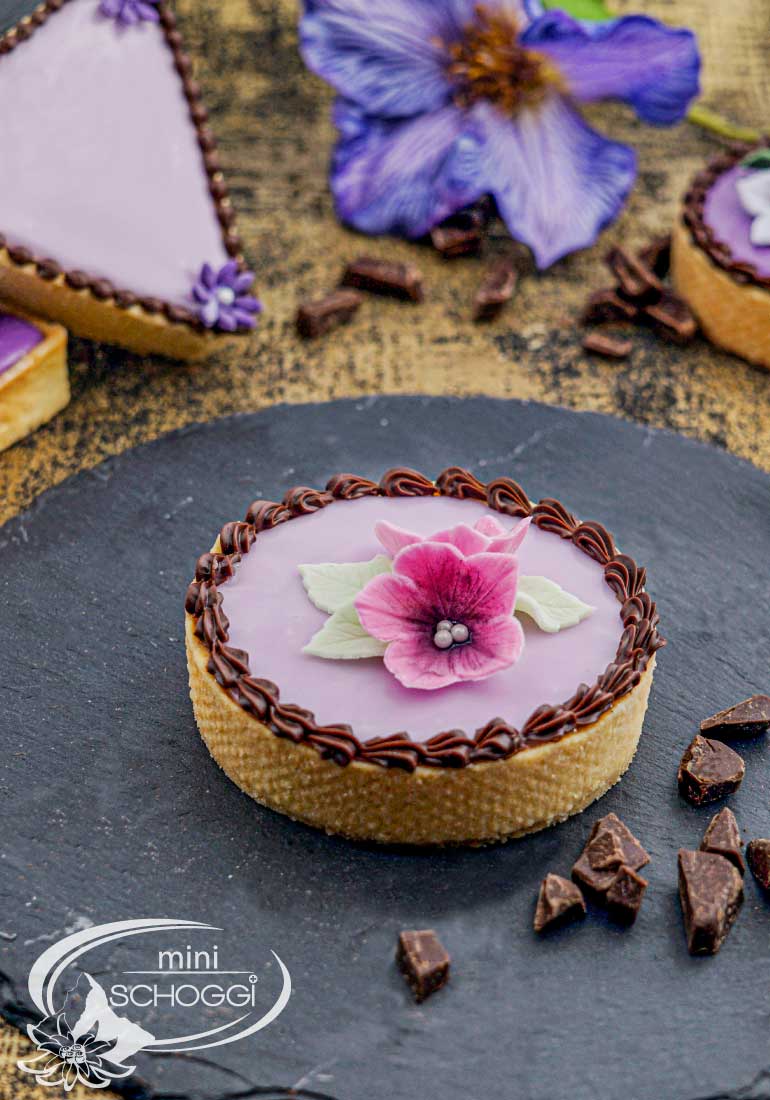
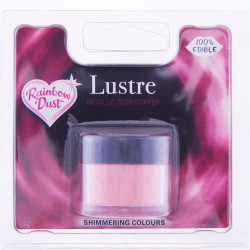
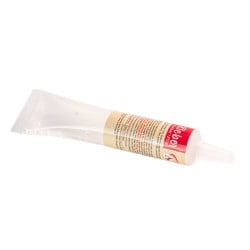
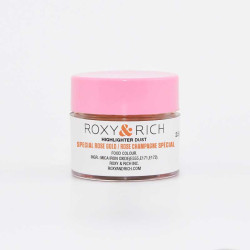
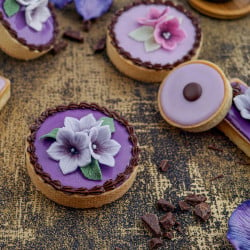
When decorating the Carac, you can really let your creativity run wild. We used different coloured fondant, mixed it with a little flower paste, then shaped it beautifully using our flower embossing tool, and finally brushed the flower with a little edible powder colouring to give it a bit more depth. Using edible glue and a pair of small tweezers, place 2–3 sugar pearls in the calyx, and you’ll have a beautiful, edible decorative flower that looks perfect on the surface of your Carac.
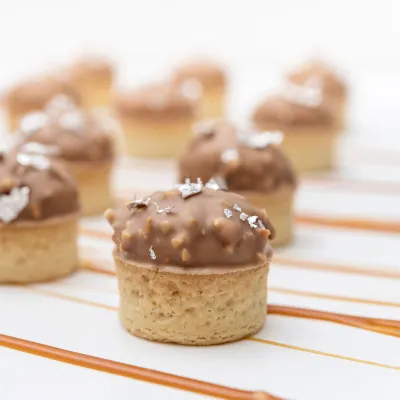
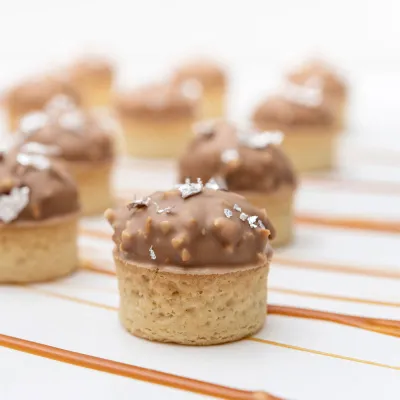
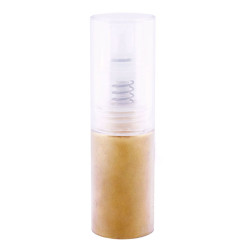
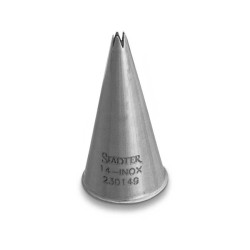
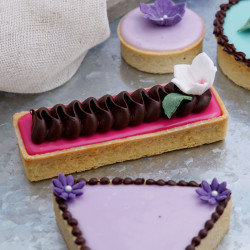
You can also decorate the Carac beautifully with a bit of glitter and gold powder. Furthermore, you can transfer the remaining ganache into a new piping bag fitted with a particularly pretty nozzle and then pipe lovely dots of ganache onto the glaze.
Another option is to use set couverture for the edge decoration of your Carac. To do this, simply mix tempered (important!) couverture with a little rum, whisky or kirsch, and pipe the decoration using a pretty nozzle. As you can see, there are no limits to your imagination. There are countless ways to turn your Carac into a real eye-catcher. We hope you have lots of fun making and decorating it!
If stored in a cake tin at room temperature, Carac will keep for up to a month. But of course, it’s best when fresh.


Energy value in kJ:1822 kJ |Energy value in kcal:436 kcal |Fat:21 g, of which saturated fatty acids: 13 g |Carbohydrates:56 g, of which sugars: 41 g |Protein:4 g |Salt:0.033 g
Das Carac-Rezept ist ein Genuss! Der Teig und die schokoladige Füllung harmonieren perfekt. Einfach köstlich!
Replied by: Thomas Ramseier On 2025-02-11 Herzlichen Dank für die Rückmeldung, dies freut uns sehr! Süsse Grüsse Dein miniSchoggi-Team

Make your own chocolate Easter bunnies
Make your own decorative Swiss roll
Cinnamon Star Biscuits Recipe
Tempering couverture and chocolate correctly
Make your own chocolate pumpkin pralines