
How to Store Chocolate & Couverture: Shelf Life Explained
Good to know · Chocolate School
How to Store Chocolate & Couverture: Shelf Life Explained
Grey, dull or suddenly tasting of the fridge? Almost always it isn't the chocolate that's to blame, but where it's kept.
E-mail
WhatsApp
Facebook
Copy link
https://www.minischoggi.ch/gb/blog/recipe/how-to-store-chocolate-couverture.html
Tap once to select the whole address — then copy.
To print: Cmd+P (Mac) or Ctrl+P (Windows)
What you'll learn
- The best temperature at which to keep chocolate
- Why the fridge is the worst place
- How to store leftover couverture
- How long dark, milk and white chocolate keep

Chocolate and couverture are natural products – and quite delicate. If you're wondering how to store chocolate, the answer comes down to four things: temperature, humidity, odour and light decide whether the surface stays glossy or takes on a grey haze.
The good news: you don't need a wine cellar. A dry, dark cupboard at around 18 °C is perfectly sufficient.
1The four enemies of chocolate
Four things make life hard for chocolate and couverture. Once you know them, you've mastered how to store chocolate.
Temperature
Chocolate is very sensitive to heat. The ideal storage temperature is 18 °C – and it should stay as constant as possible. Fluctuations are worse than a few degrees too many.
Humidity
Chocolate and couverture are sensitive to moisture and therefore belong in a dry place. Moisture causes the sugar to crystallise on the surface – that's the whitish, rough sugar bloom.
Odour
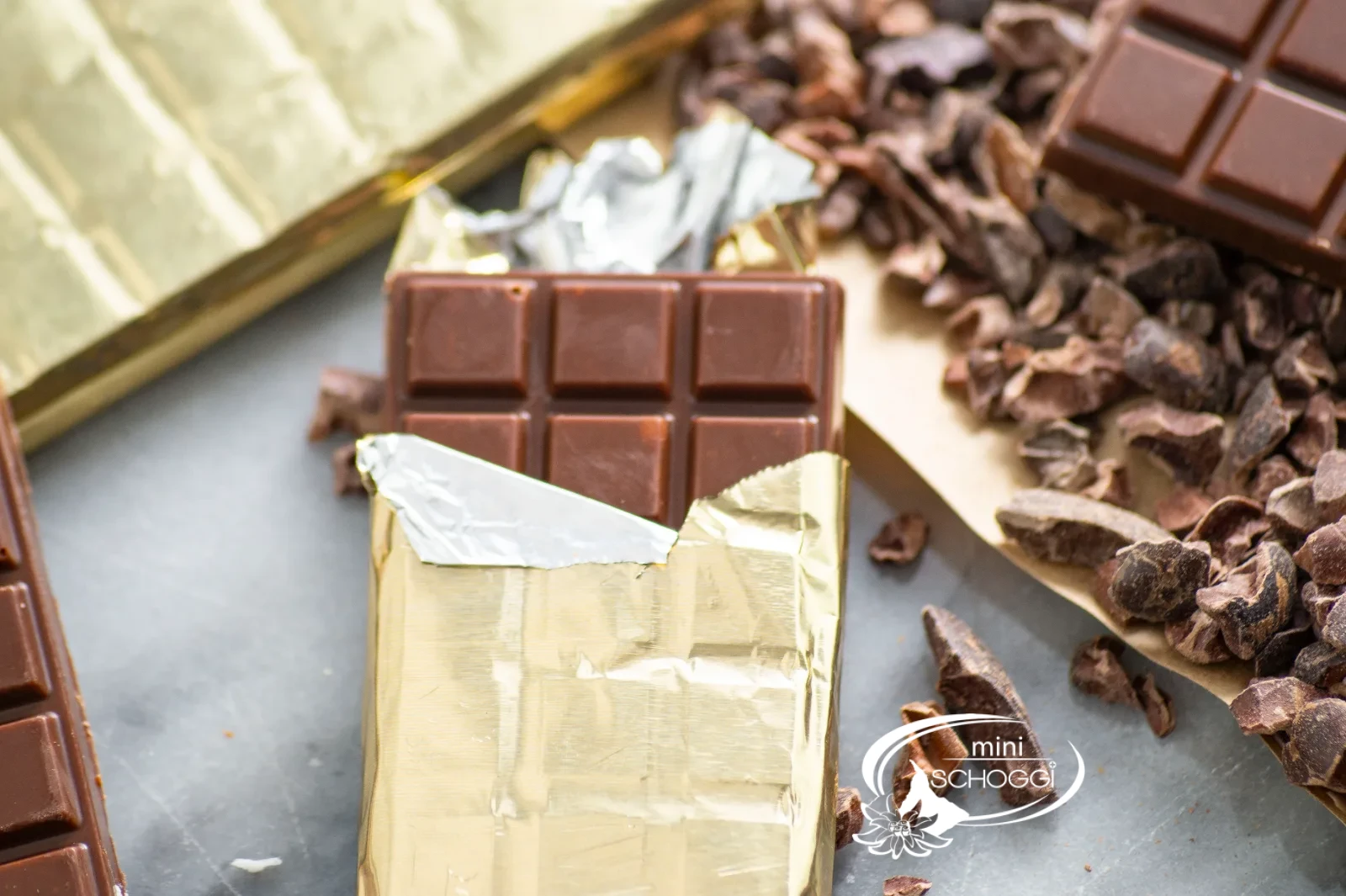
Chocolate absorbs foreign smells in a flash. Never store it next to strongly scented foods and wrap it as airtight as possible.
White chocolate is especially sensitive. Make sure the packaging itself is odour-neutral too.
Light
When light and air reach chocolate, oxidation begins: the fat it contains changes, and taste and smell suffer.
The cocoa components slow this process. Dark chocolate with a high cocoa content is therefore best protected, milk chocolate less so – and white chocolate has no protection at all. So: keep it dark and airtight.
Pro tip
Measure the temperature where the chocolate actually sits. A pantry cupboard on an exterior wall can quickly reach 25 °C in summer – and 12 °C in winter.
2Chocolate in the fridge?
The opened bar goes straight into the fridge.
The fridge combines all four enemies
Strong temperature swings, plenty of moisture and the smells of everything else inside – there's hardly a worse place for chocolate. So how long can you keep chocolate in the fridge? As briefly as possible.
The fix
Store it dry, dark and at a constant 18 °C. If you like your chocolate cold: put it in the fridge only just before eating, don't keep it there for weeks.
3Storing leftover couverture
Tempered couverture left over? You definitely don't have to throw any of it away. The same principle applies if you're asking how do I store homemade fudge – keep it airtight and away from moisture.
1
Spread it thin
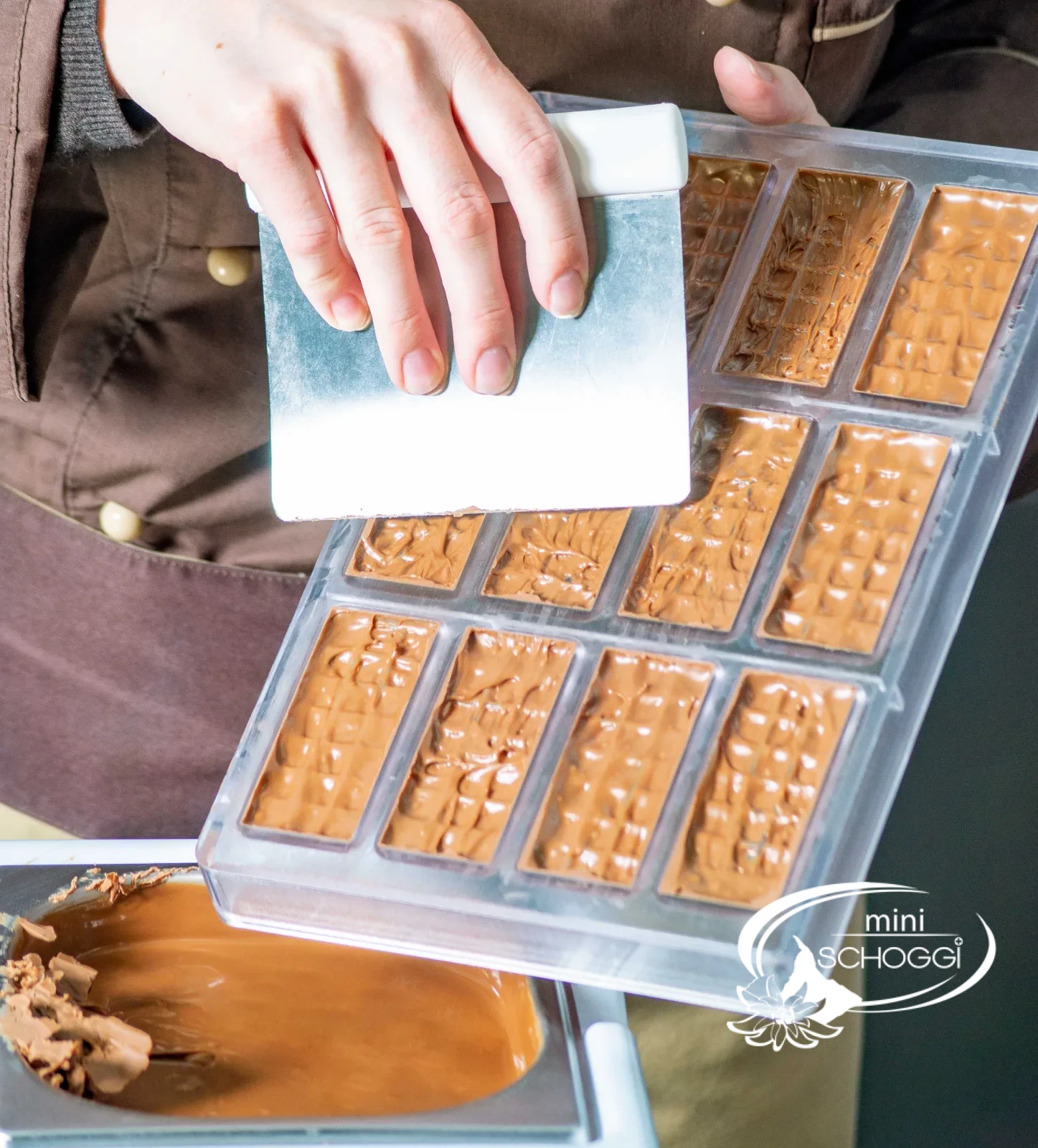
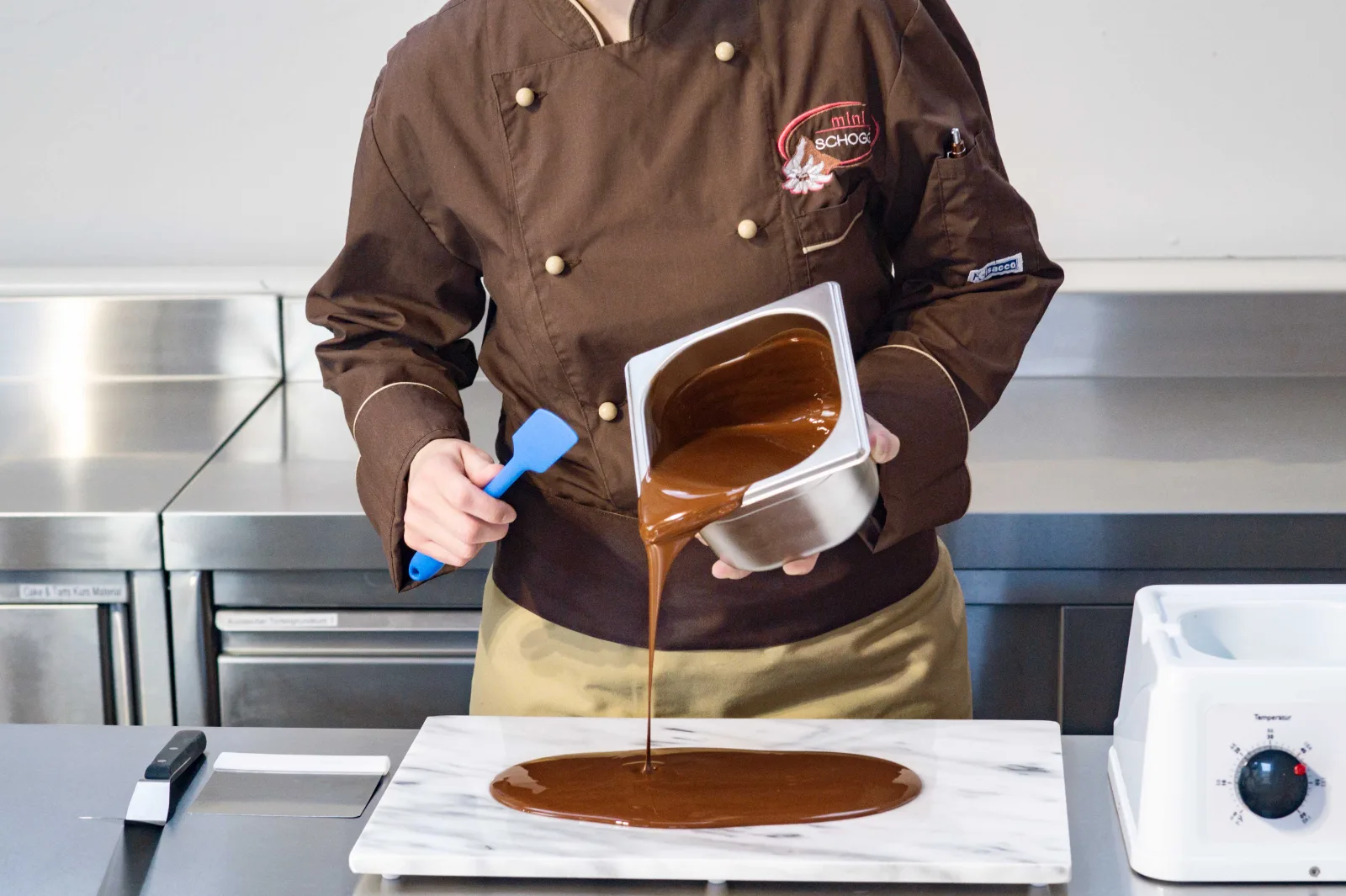
Pour the still-liquid, tempered couverture onto a sheet of baking paper and spread it as evenly and thinly as possible with the angled spatula.
2
Let it cool
Put the baking paper in the fridge for about 10 minutes – in winter the balcony will do.
3
Break and pack
Once the chocolate is firm and glossy, break it into small pieces and pack it airtight.
4
Reuse
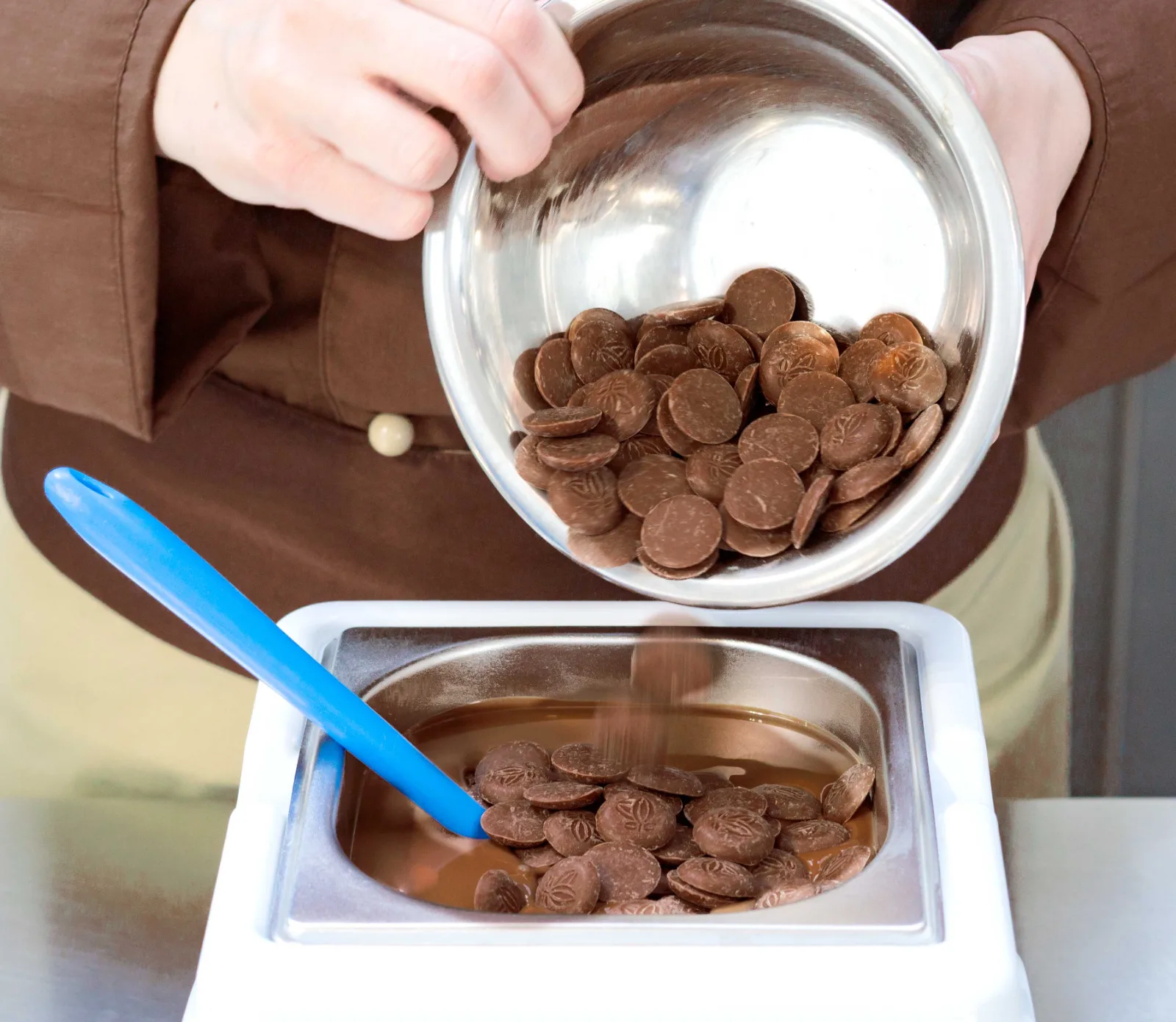
The pieces can be melted down again in your next batch – or used to seed the liquid couverture.
Unevenly set after cooling, with grey patches
That's not a problem at all – the chocolate is perfectly fine, only the crystals are in the wrong places.
The fix
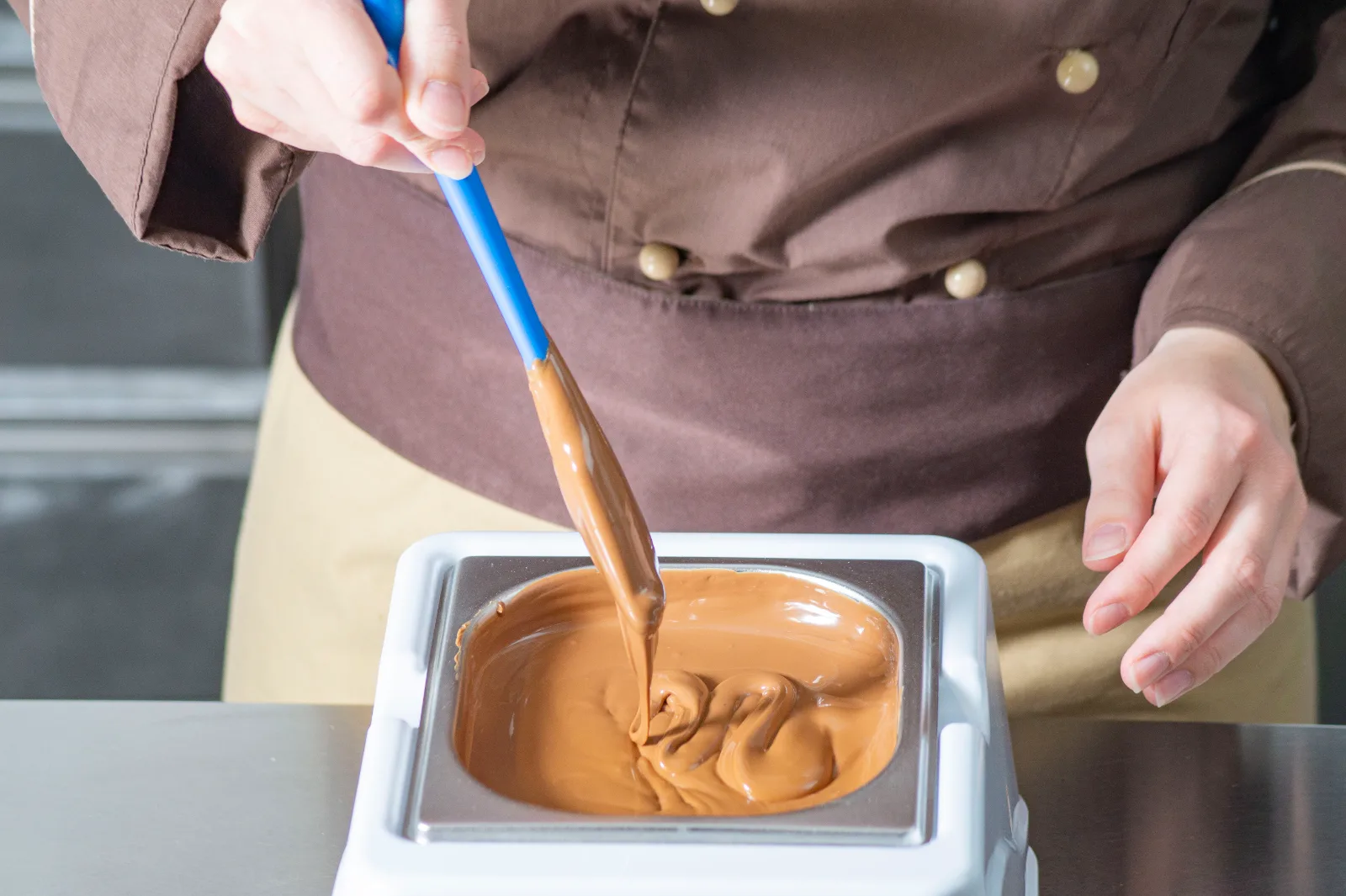
Break it into pieces and pack it airtight. Don't use it for seeding, but melt it in the tempering device or over a bain-marie and seed it with fresh pieces of couverture.
Pro tip
The couverture can also stay in the tempering device. As one whole block, though, it takes considerably longer to melt next time – thinly spread pieces are quicker.
4How long does chocolate keep?
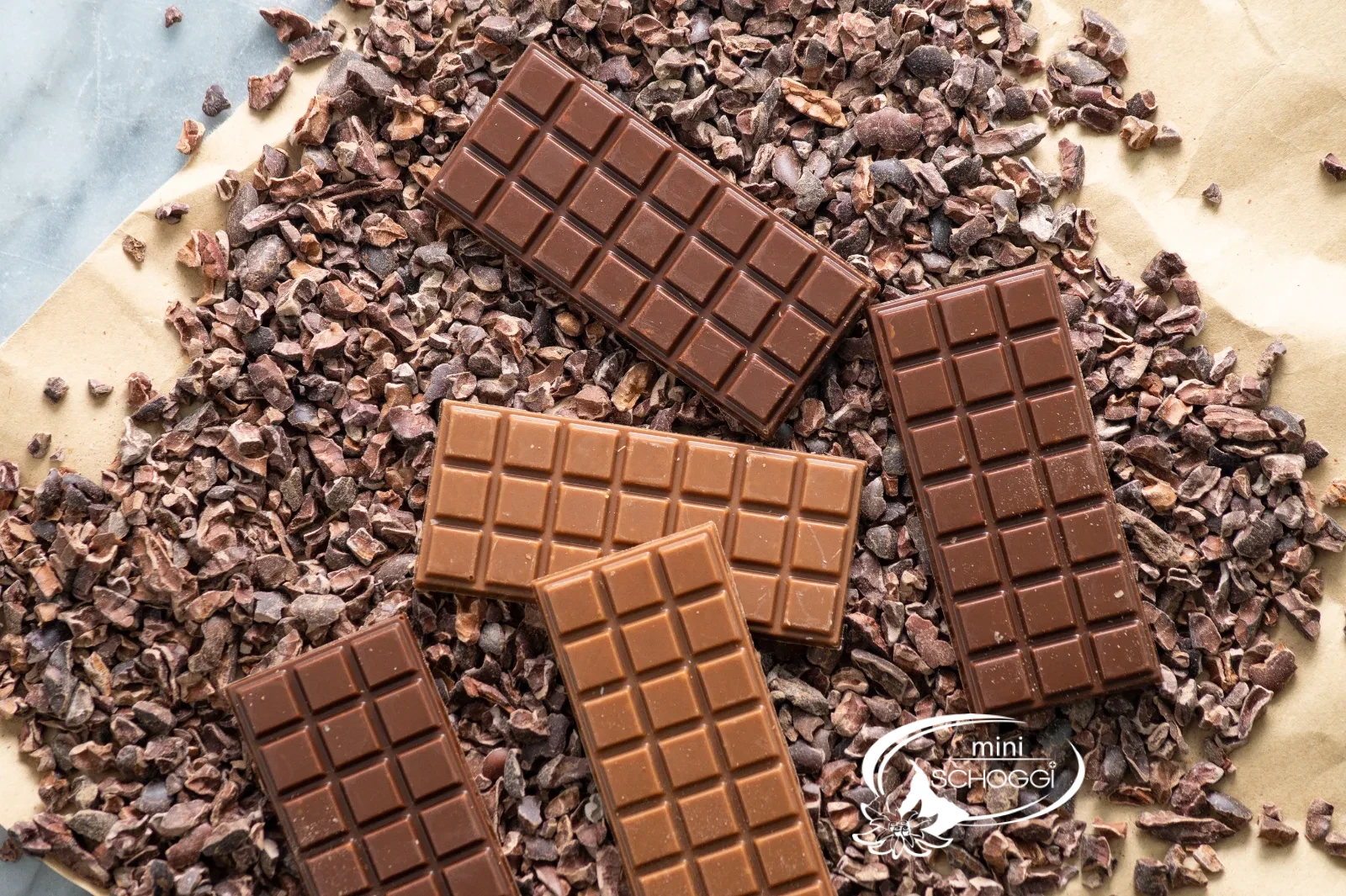
Stored airtight, protected from light and at a constant 18 °C, chocolate keeps for a very long time – varying by type.
Dark chocolate
Keeps longest: usually at least 2 years.
Milk chocolate
Its high proportion of milk powder makes it enjoyable for a little less time – normally 1 to 1½ years.
White chocolate
Keeps the least well: depending on the producer, between six months and a year.
Common mistake
Applying the shelf life of the plain bar to filled chocolate: every additional ingredient shortens it. A milk chocolate with hazelnuts only keeps for about six months, because nuts can turn rancid.
Ingredients that keep for a long time
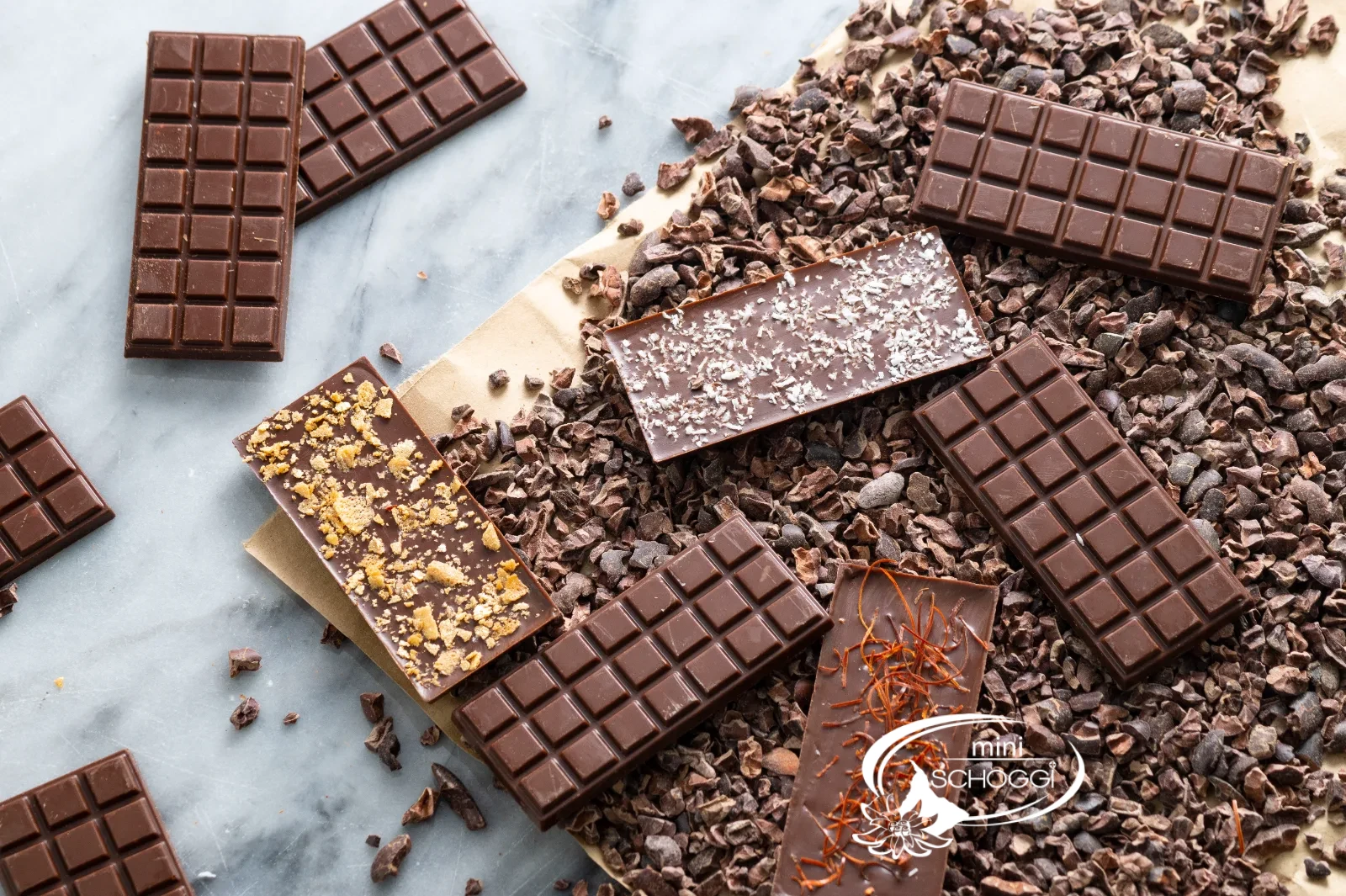
Freeze-dried fruits (raspberries, strawberries, bananas, pineapple, mango), nuts (hazelnuts, almonds, coconut, pistachios), dried fruits (cranberries, apricots, apples, berries), caramel pieces, Nougat (Montélimar nibs), Granules (passion fruit, wild berry, caramel, blood orange) and spices (chilli, pink pepper, fleur de sel).
With every new ingredient, check its own shelf life first – the weakest ingredient sets the date.
5What you'll need
What we work with in the bakery – and how we store it.
Leave a comment