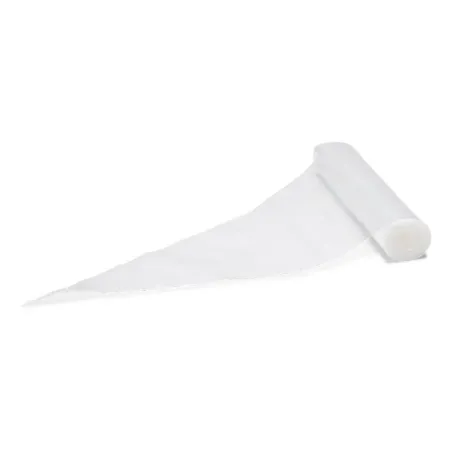
Disposable piping bag 41 cm, 24 pieces
CHF 7.50
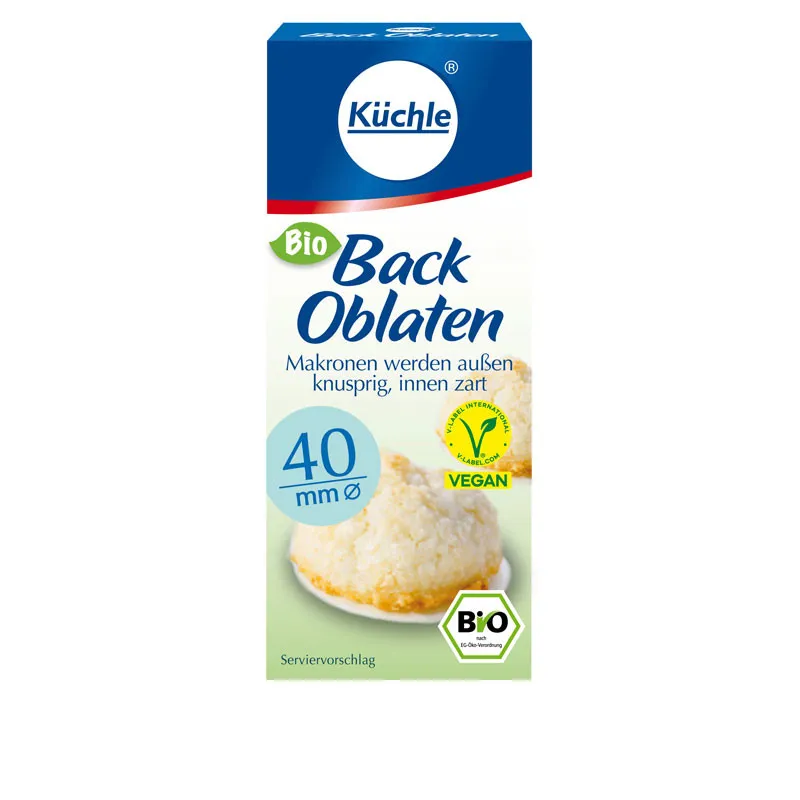
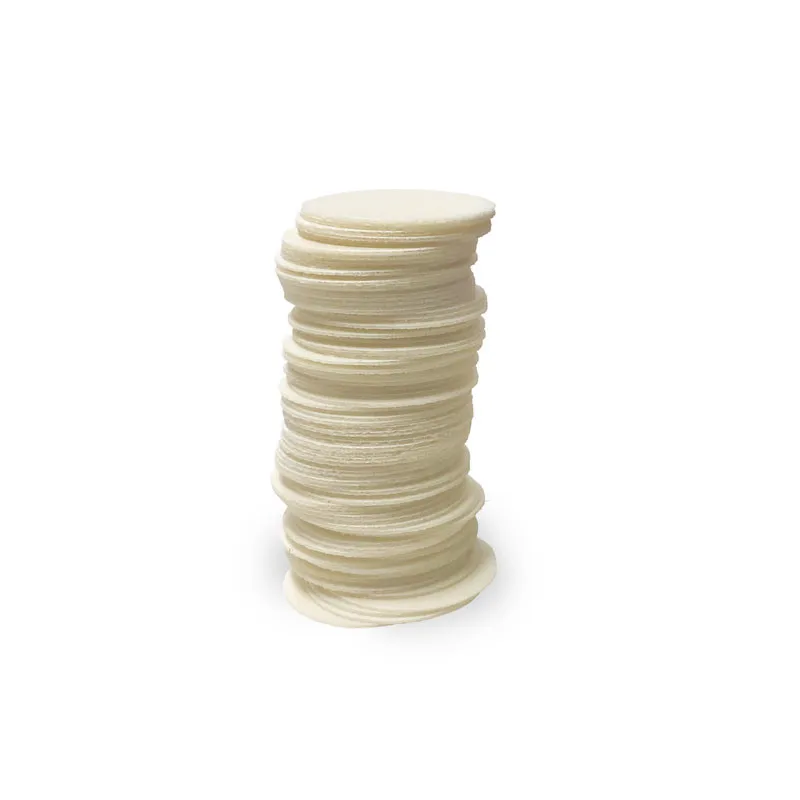
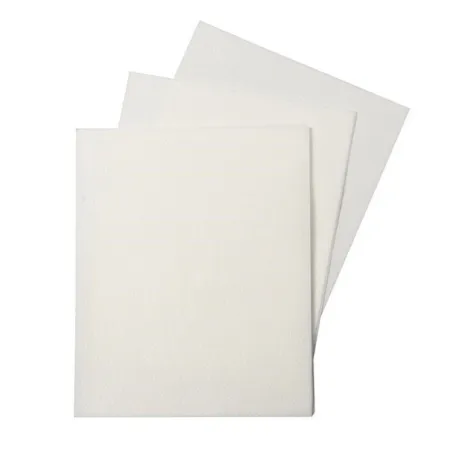
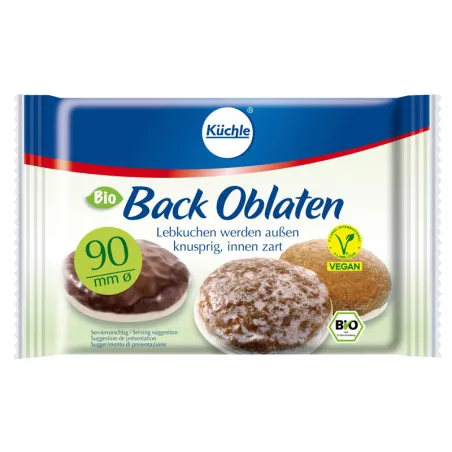
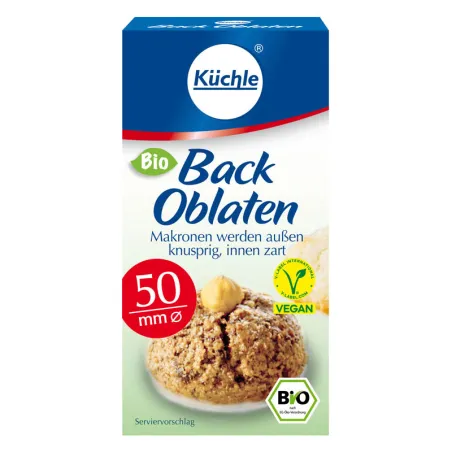
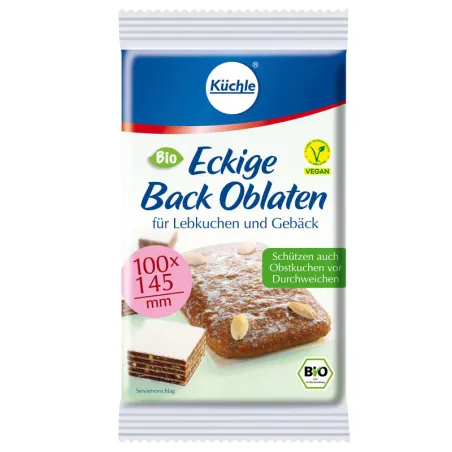
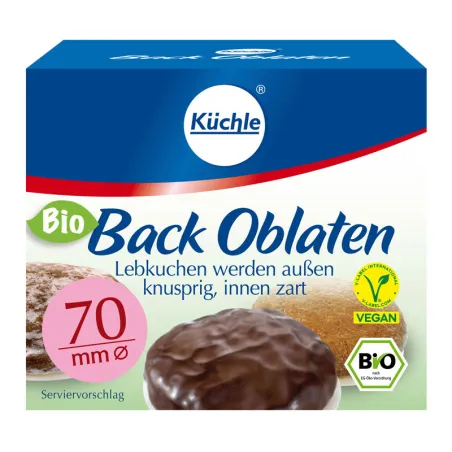
Ohne Oblate kein echter Lebkuchen: Die Küchle Bio Back-Oblaten sind die hauchzarten, essbaren Waffelplättchen, auf denen die Weihnachtsbäckerei seit Jahrhunderten ruht. Die ca. 90 geschmacksneutralen runden Oblaten mit Ø 40 mm geben Deinen Lebkuchen, Nuss- und Kokosmakronen, feinen Plätzchen und Fruchttaler die feste Basis, die sie brauchen. Einfach die Teigmasse direkt auf die Oblate geben und mitbacken: Nichts klebt am Blech fest, saftige Teige behalten ihre Form und das Gebäck bleibt länger frisch. Eine Tradition, die schon die Mönche in mittelalterlichen Klosterbäckereien zu schätzen wussten und die heute noch jedem Gebäck den authentischen Charakter gibt!
| Ingredients | WEIZENmehl, Kartoffelstärke. |
|---|---|
| Size | Ø 40 mm |
| Weight | 23 g |
| Quantity | ca. 90 Stück |
| Storage note | Die Oblaten sind empfindlich gegenüber Feuchtigkeit. Daher möglichst bei ca. 18°C und 50-60 % relativer Luftfeuchtigkeit lagern. Nicht in der Nähe von Heizkörpern und nicht an feuchten Stellen. |
| Country of production | Germany |
| Product Lactose Free | Yes |
| Product suitable for vegetarians | Yes |
| Product Gluten Free | No |
| Product Vegan | Yes |
| Product is kosher certified | No |
| Product is halal certified | No |
Die Küchle Bio Backoblaten sind dünne, essbare Waffelplättchen: You put the dough directly on them and bake everything together. So nothing sticks to the tray, soft doughs don't spread, and the guetzli stay moist longer. The wafer is simply eaten along with it and is barely noticeable in taste. With approx. 90 pieces in the handy 40 mm size, one pack is enough for several trays of Christmas guetzli.
Tipp: Seal opened packs well. Wafers absorb moisture and otherwise become soft.
Macarons turn out particularly nicely on wafers. Coconut macarons, hazelnut macarons and almond macarons keep their shape, get an even base and can be easily removed from the tray after baking. The small format fits exactly for macarons in guetzli size, for example for the Christmas plate or a gift tin. For almond macarons, our almond flour is suitable.
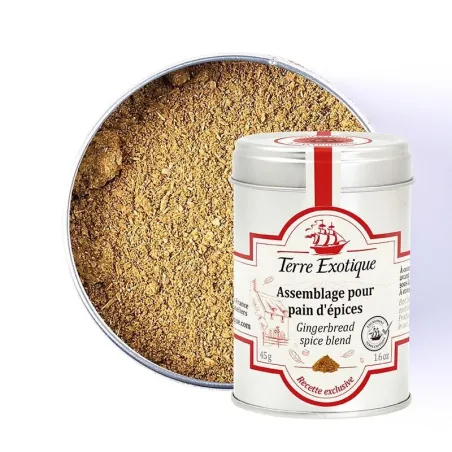
Elisenlebkuchen are considered the finest wafer gingerbread. Their dough is so soft and nutty that it would spread out on the tray without a wafer. Classically they are baked on large wafers. With the 40 mm wafers they become small gingerbread bites that fit well on any guetzli plate. The typical flavour comes from our Gingerbread spice.
Wafers are practical outside of the Christmas season too. Place a wafer under and over a sticky mixture of dates, figs or nuts, and nothing sticks to your fingers. The round format creates small fruit discs to take along.
In Italy, wafers are an essential part of specialities such as Torrone, a white Nougat, and Panforte, the Tuscan fruit bread. There the wafer lies as a thin layer on top and bottom and holds the confection together. With the round 40 mm wafers you can make small versions in bite-sized format, a lovely gift from your own kitchen.
Already in the Middle Ages, monks in monastery bakeries are said to have used unconsecrated communion wafers as a base for their honey and spice cakes. From these came the wafer gingerbread that still belongs to Christmas baking today.
Ja. Die Oblate ist vollständig essbar und schmeckt fast nach nichts. Sie bleibt einfach unter dem Gebäck.
Nein. Die Masse kommt direkt auf die trockene Oblate.
Für Makrönli, Mini-Lebkuchen und Konfekt passen 40 mm. Für klassische Elisen- oder Nürnberger Lebkuchen nimmt man grössere Oblaten mit 70 oder 90 mm.
Etwa ein gehäufter Teelöffel. Lass rundherum einen schmalen Rand frei.
| Cereals and cereal products containing gluten | Contains |
|---|---|
| Crustaceans and crustacean products | Does not contain |
| Eggs and egg products | Does not contain |
| Fish and fish products | Does not contain |
| Peanuts and peanut products | Does not contain |
| Soy and soy products | Does not contain |
| Nuts and nut products | Does not contain |
| Milk and dairy products | Does not contain |
| Celery and celery products | Does not contain |
| Mustard and mustard products | Does not contain |
| Sesame seeds and sesame seed products | Does not contain |
| Sulphur dioxide and sulphites | Does not contain |
| Lupine and lupine products | Does not contain |
| Molluscs and mollusc products | Does not contain |
| Milk sugar (lactose) | Does not contain |
| Energy value in kJ | 1538 kJ |
|---|---|
| Energy value in kcal | 363 kcal |
| Fat | 1.10 g |
| of which saturated fatty acids | 0.50 g |
| Protein | 9.00 g |
| Salt | 0.01 g |
| Carbohydrates | 78.00 g |
| of which sugars | 2.00 g |
| Fiber | 2.30 g |