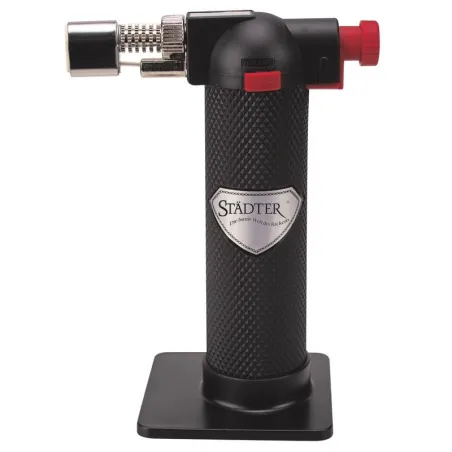
Bunsen burner with safety ignition
CHF39.50


For perfect puddings and creams, carefully halve a pod and soak it in milk or add it to your sugar to flavor it wonderfully. With these vanilla pods from Madagascar, you can give pastries, creams and fillings a deliciously natural taste and delicate coloring. Their aroma is wonderfully authentic and fruity with a hint of aniseed and cherry. The valuable seeds are evenly distributed and do not affect the consistency of your delicacies at all.
| Ingredients | Vanilla pods (100%) |
|---|---|
| Weight | 8 g |
| Quantity | 2 piece |
| Storage note | Store in a cool and dry place, protect from sunlight |
| Country of production | Australia |
| Product Lactose Free | Yes |
| Product suitable for vegetarians | Yes |
| Product Gluten Free | Yes |
| Product Vegan | Yes |
| Product is kosher certified | No |
| Product is halal certified | No |
| Growing region | Madagascar |
Deliciously aromatic Bourbon vanilla is grown and harvested by hand in Madagascar. Its completely natural processing gives it a particularly intense aroma. Two pods are often enough to refine a large quantity of desserts. The fine vanilla pods are true all-rounders in the kitchen. If you want to get the best out of them, it's best to start with the fine seeds inside. To do this, flatten the pods slightly with the flat side of a knife and cut them open lengthwise. Then simply scrape out the small, black seeds with a sharp knife. You can use these vanilla dots to flavor butter, for example - perfect for adding a sweet, exotic note to fish or seafood. Or you can add them to a praline filling for a particularly fine taste experience. You don't have to throw away the scraped-out pods! Simply place them in a tall jam jar and cover them with fine sugar. This is how you make your own vanilla sugar. It will keep for a long time and is a fragrant enhancer for pastries and desserts. Once the pods have released most of their flavor into the sugar, you can still use them: Simply boil them in a little milk. This vanilla milk is a great base for a homemade vanilla cream, or you can enjoy it on its own, perhaps refined with a spoonful of honey.
The Vanillia planifolia is an orchid that requires constant attention and care to grow. It is the only known edible orchid in botany. The white flower grows at the end of a liana, which is carried by a tree, usually a mango or avocado tree. The plant only blooms for the first time three years after germination and is carefully pollinated by hand on plantations. Depending on the location, the vanilla pods take between six months and a year to fully ripen. They are still green and resemble beans. It is only through drying, cooking and steaming that they acquire their black color, wrinkles and delicious aroma.
There are fewer than ten known varieties of vanilla in the world. They are found in Mexico, Uganda, Tanzania, Madagascar and Tahiti and all differ in taste. The latter also has a slightly different growth habit and its pods are the only ones that do not split. Bourbon vanilla comes from a high-quality harvest. Bourbon vanilla is probably the best known and most popular variety thanks to its strong flavor. The aroma of the beans comes from vanillin, an aromatic aldehyde that appears as a white crystal. The higher the vanillin content, the stronger the flavor and aroma of the pod. Bourbon vanilla, also known as Madagascar vanilla, is characterized by its milky chocolate aroma. It has floral and light roasted aromas and therefore offers a variety of flavors.
To keep the vanilla pods under the best conditions:
- Before opening: store in a dry place.
- After opening: Place the pods in the fridge to prevent them from drying out.
Vanilla originally comes from Mexico, where the Aztecs used it to soften the bitterness of chocolate. This "black flower" was introduced by Cortes in 1521. Louis XIV later fell in love with it and wanted to cultivate it on the island of Bourbon, or La Réunion as it is known today. Although the vine flowered, it did not bear fruit as it had to be fertilized by a wasp that only existed in Mexico.
No one knew how to pollinate them. It was not until 1850 that Edmond, a young slave from Bourbon Island, discovered the process by pricking and shaking the flower. In gratitude, he was set free, and the young man took the name "Albius" for his freedom, in reference to the white color of the orchid. The cultivation of Bourbon vanilla became possible!
| Description | Vanilla beans |
|---|---|
| Cereals and cereal products containing gluten | Does not contain |
| Crustaceans and crustacean products | Does not contain |
| Eggs and egg products | Does not contain |
| Fish and fish products | Does not contain |
| Peanuts and peanut products | Does not contain |
| Soy and soy products | Does not contain |
| Nuts and nut products | Does not contain |
| Milk and dairy products | Does not contain |
| Celery and celery products | Does not contain |
| Mustard and mustard products | Does not contain |
| Sesame seeds and sesame seed products | Does not contain |
| Sulphur dioxide and sulphites | Does not contain |
| Lupine and lupine products | Does not contain |
| Molluscs and mollusc products | Does not contain |
| Milk sugar (lactose) | Does not contain |
| Energy value in kJ | 0 kJ |
|---|---|
| Energy value in kcal | 0 kcal |
| Fat | 0.00 g |
| of which saturated fatty acids | 0.00 g |
| Protein | 0.00 g |
| Salt | 0.00 g |
| Carbohydrates | 0.00 g |
| of which sugars | 0.00 g |