
Butter Cake with Almonds — Moist Traybake
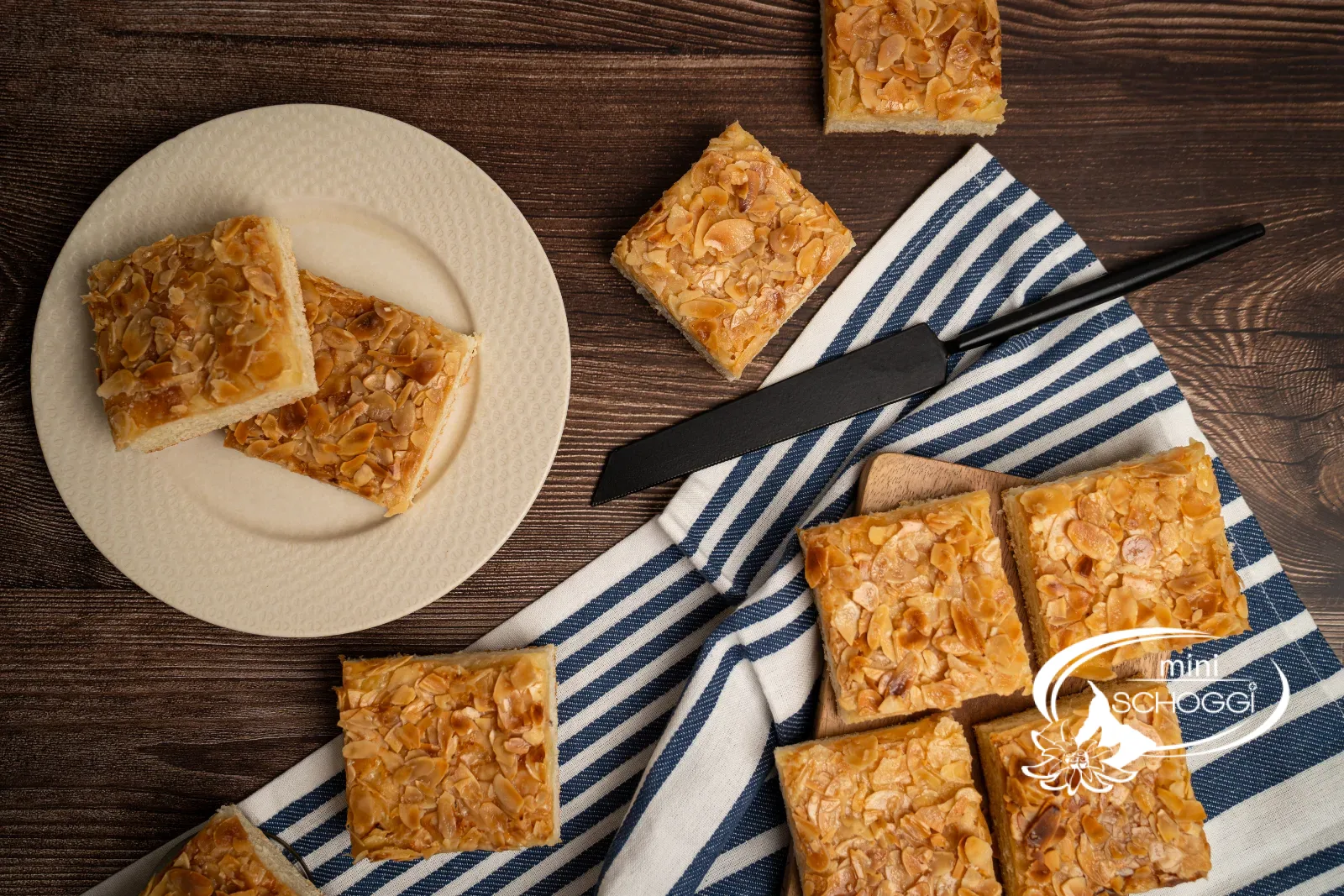
Yeast dough, little butter flakes, almonds — and cream added while hot
Quantity 1 tray, approx. 24 pieces
Active timeapprox. 30 min.
Total timeapprox. 2 hrs 30 min. (incl. 1 hr proving and cooling)
contains glutencontains milkcontains eggcontains almonds
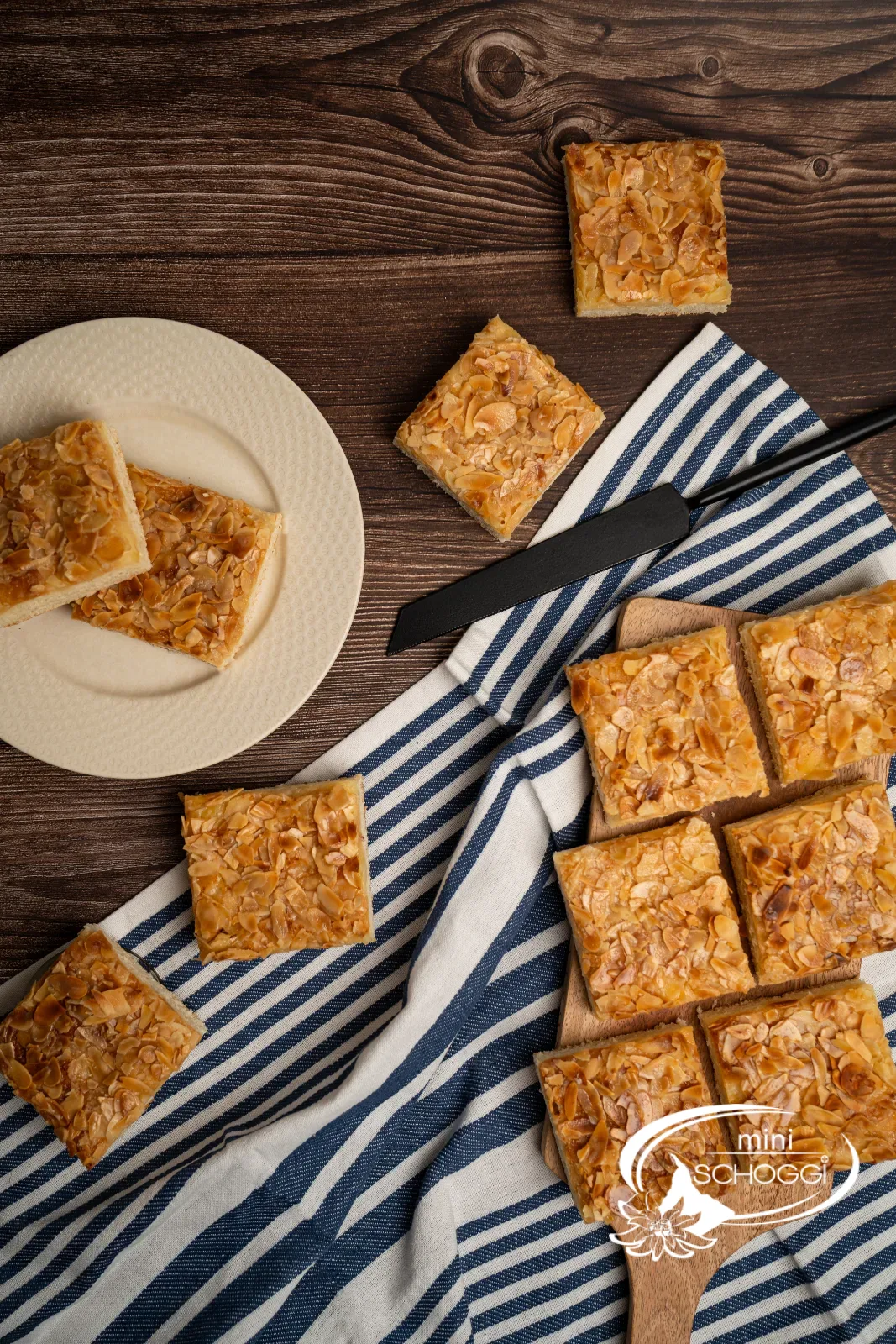
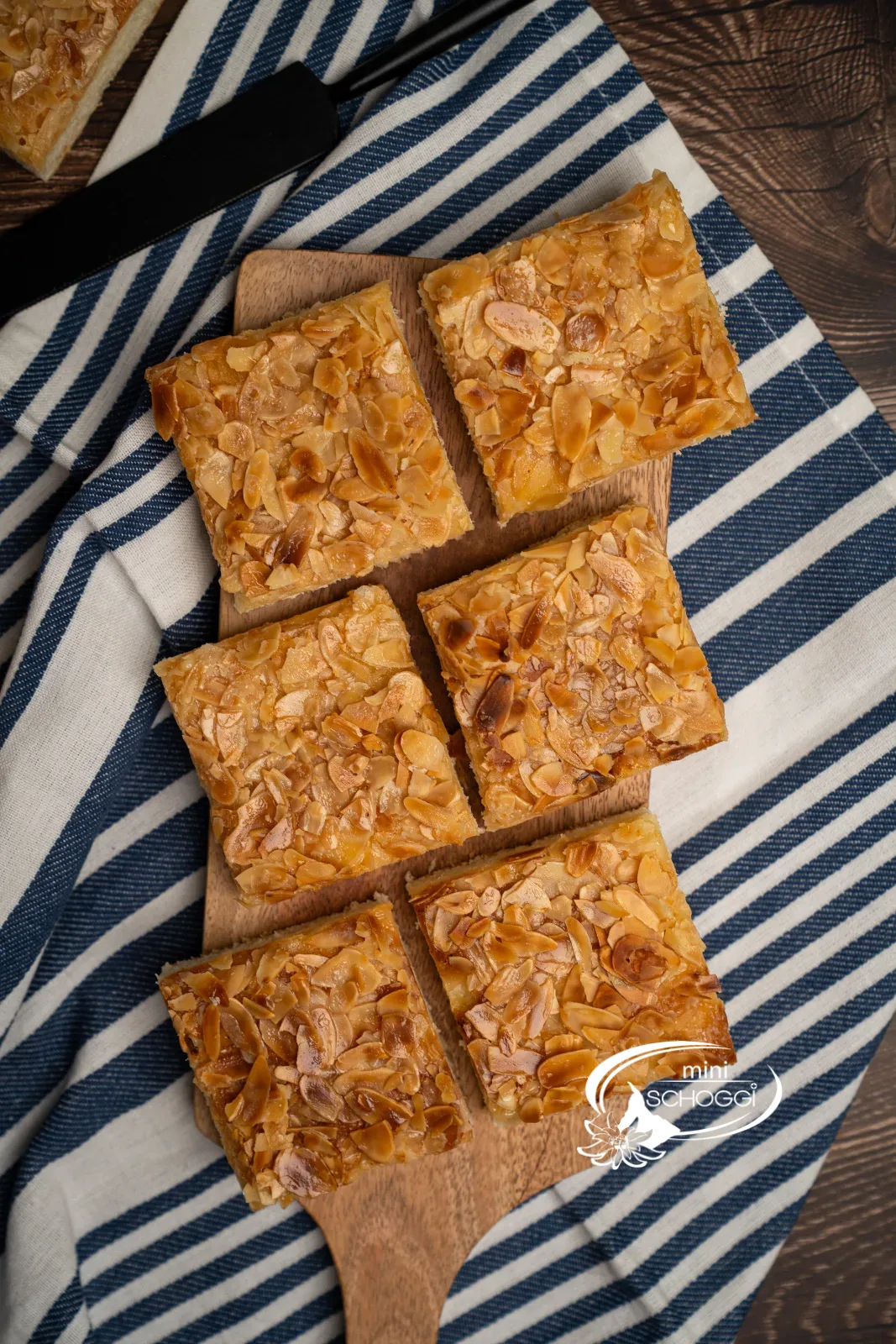
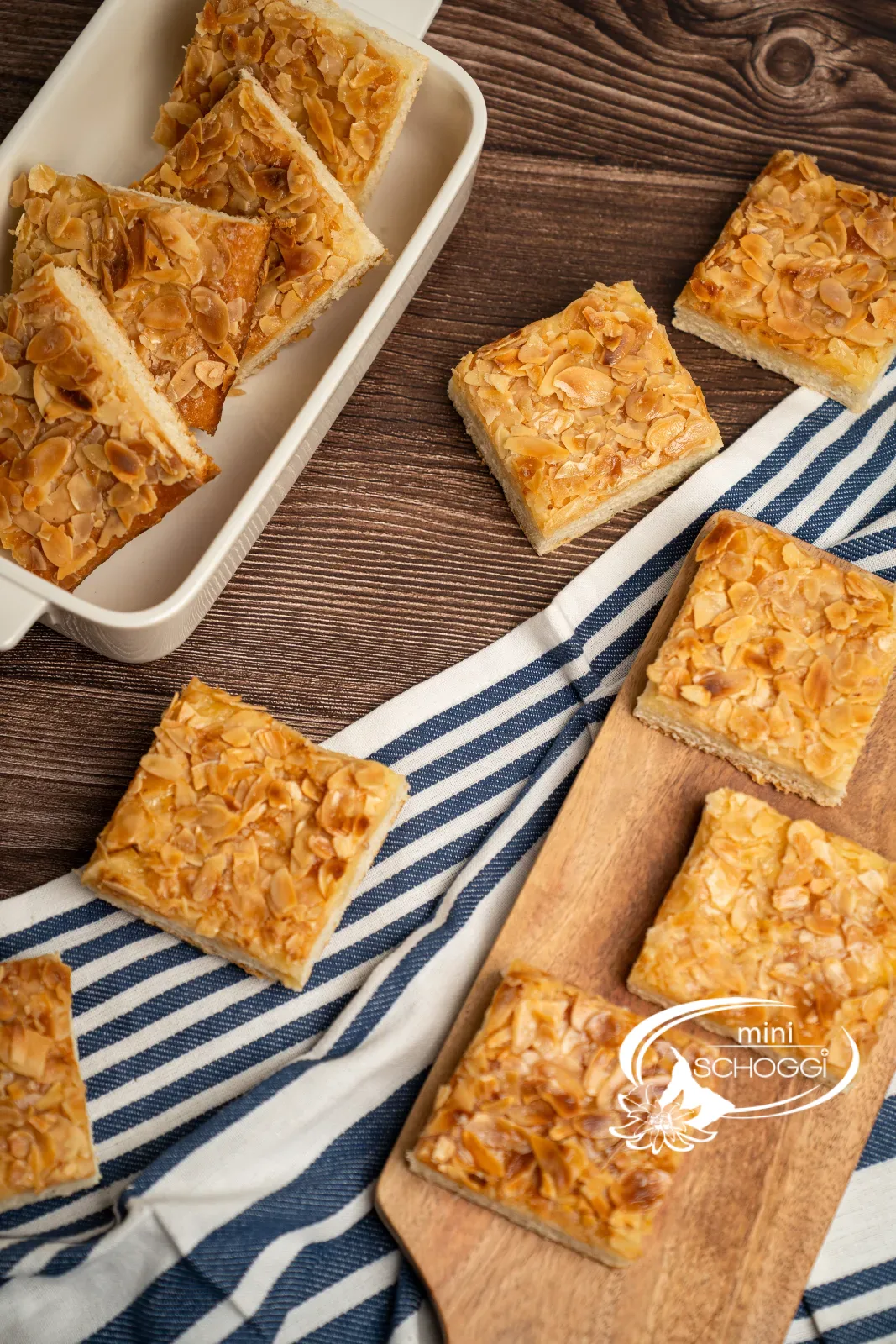
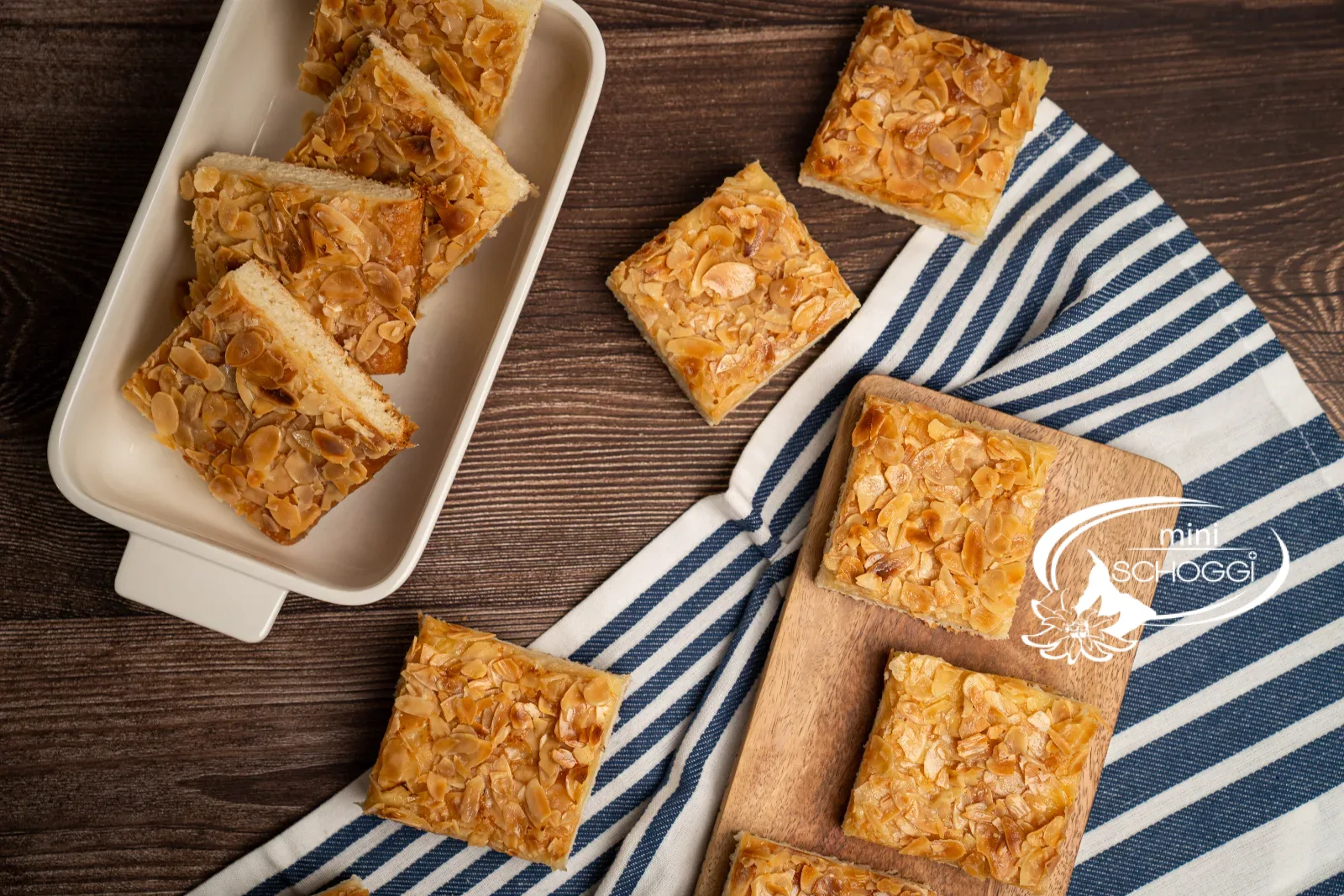
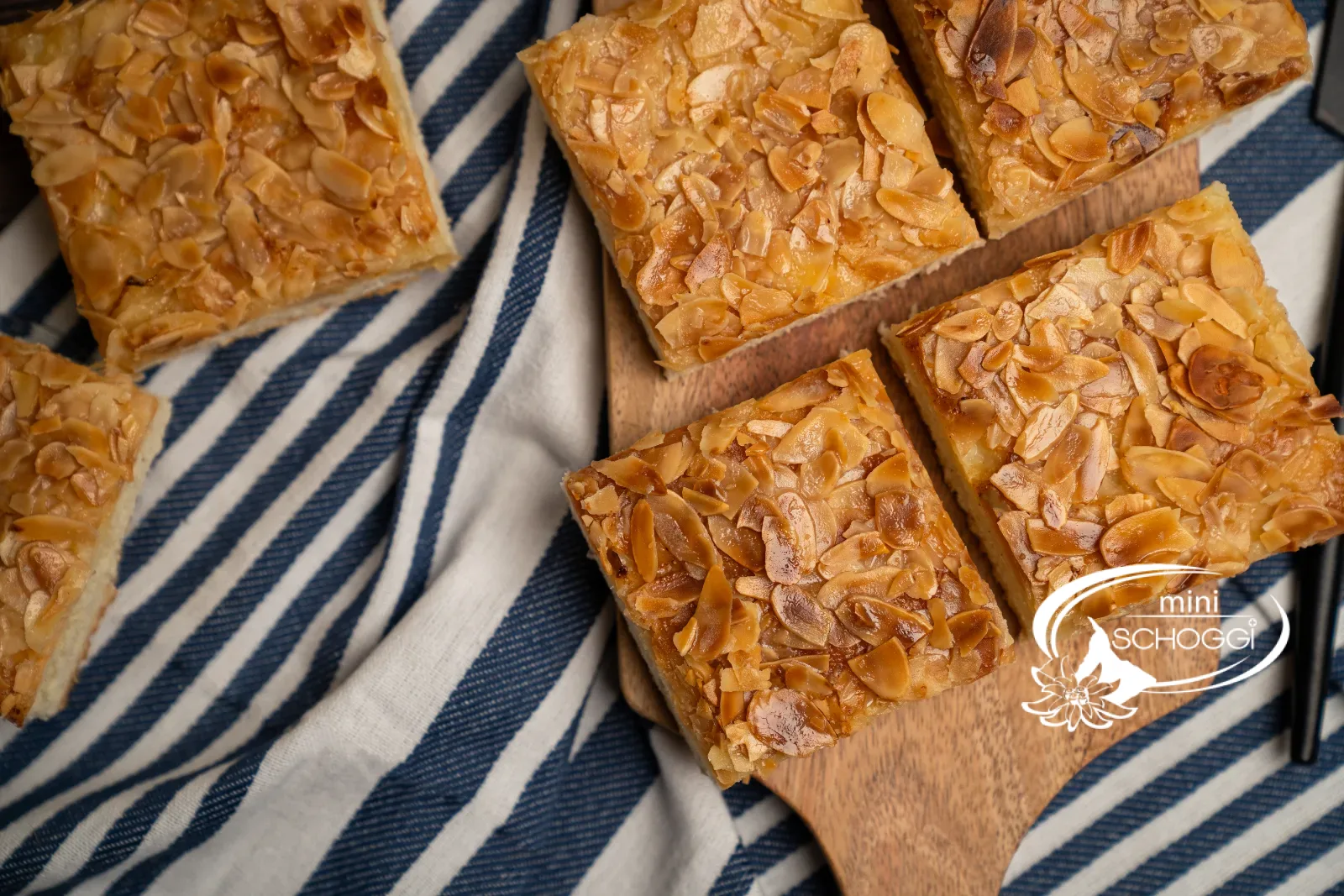
Butter cake is the cake you don't need any skill for and yet should know a thing or two about. It consists of three things: a yeast dough, butter in little hollows and almonds on top. What makes it moist comes right at the very end — the cream you drizzle over the still-hot cake. It soaks into the warm crumb, and that is exactly the difference between a dry tray bake and one that still tastes good on the third day. When butter and cake come together like this, the result stays wonderfully tender.
Two points decide the outcome. The first is the milk: it must be lukewarm, not hot. Above 45 °C the yeast dies, and the dough never rises properly. The second are the hollows. Press them too shallow and the butter runs off while baking and collects at the edge; press them properly deep and it stays where it belongs and melts into the dough.
The rest is waiting. The dough proves for an hour, the cake bakes for just under half an hour — and it also has to be cooled, otherwise it tears when you cut it.
Ingredients
Quantity:
Yeast dough
500 gWhite flour
42 gfresh yeast (1 cube)
200 gmilk, lukewarm
70 gsugar
1 packvanilla sugar
½ tspsalt
100 gsoft butter
1 pcegg
butter for the tray
flour for the work surface
Topping
150 gcold butter
80 gsugar
200 gflaked almonds
200 gcream
Step by step
If you're in a hurry: the compact recipe card further down sums everything up.
Yeast dough
1
Knead the dough vigorously
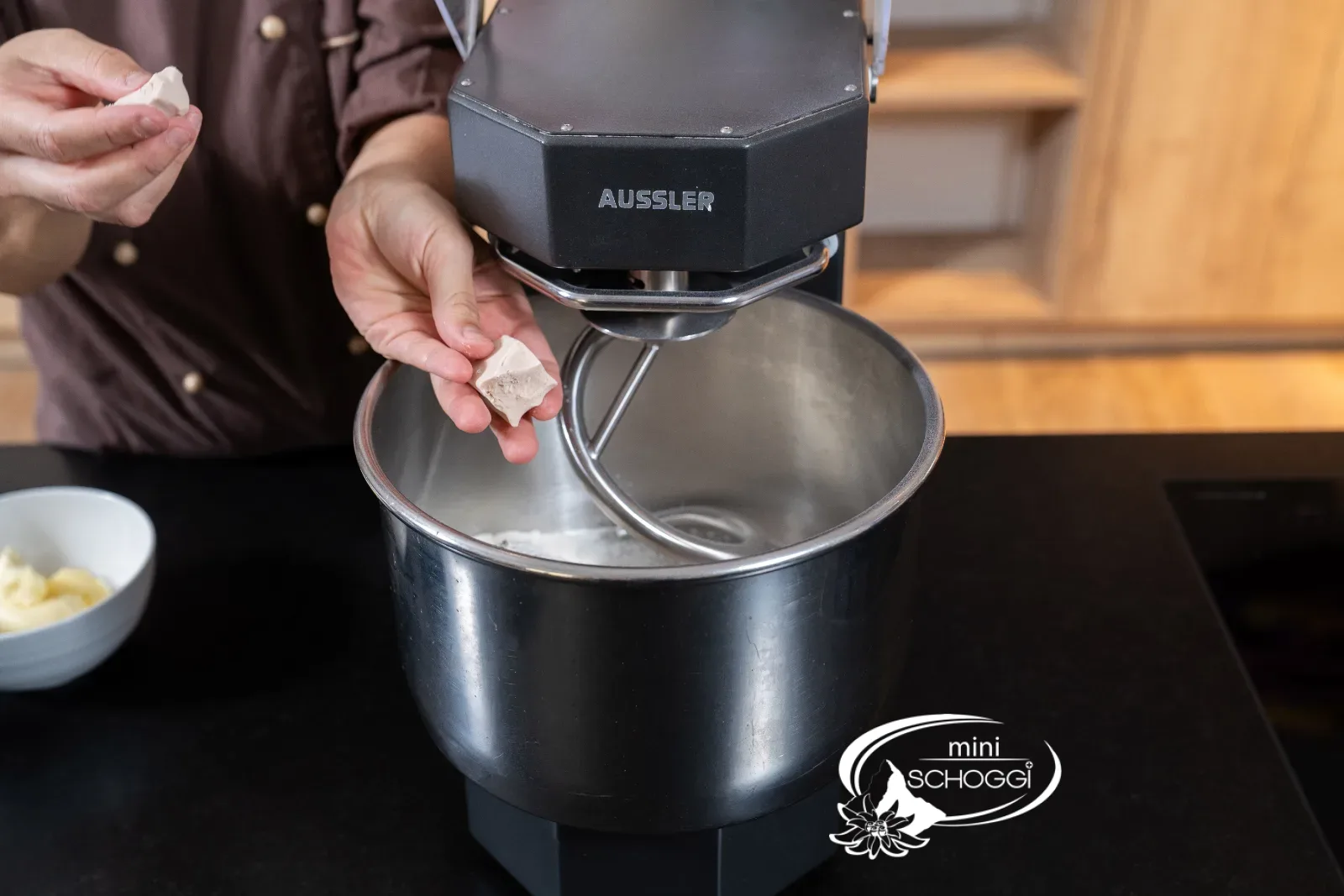
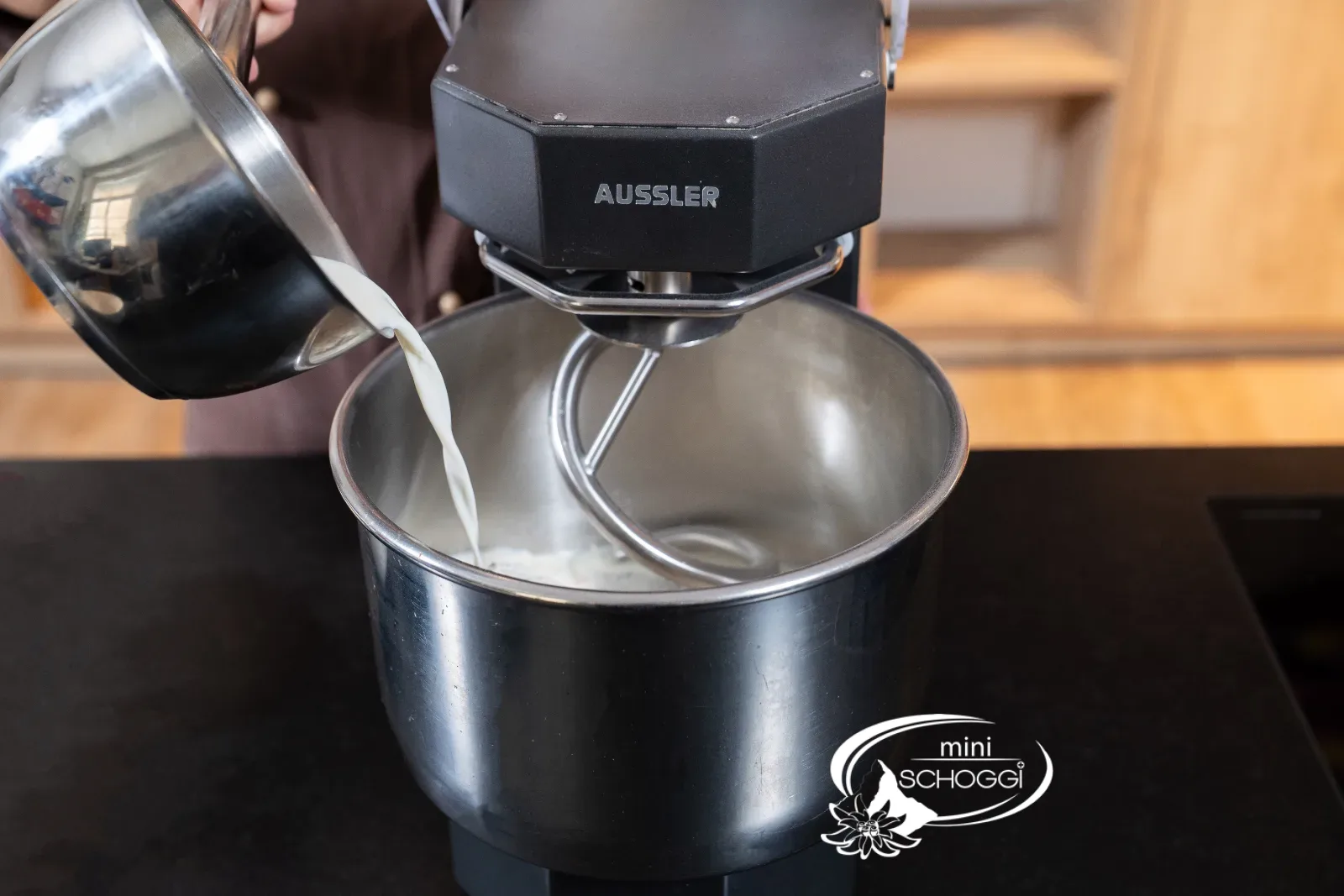
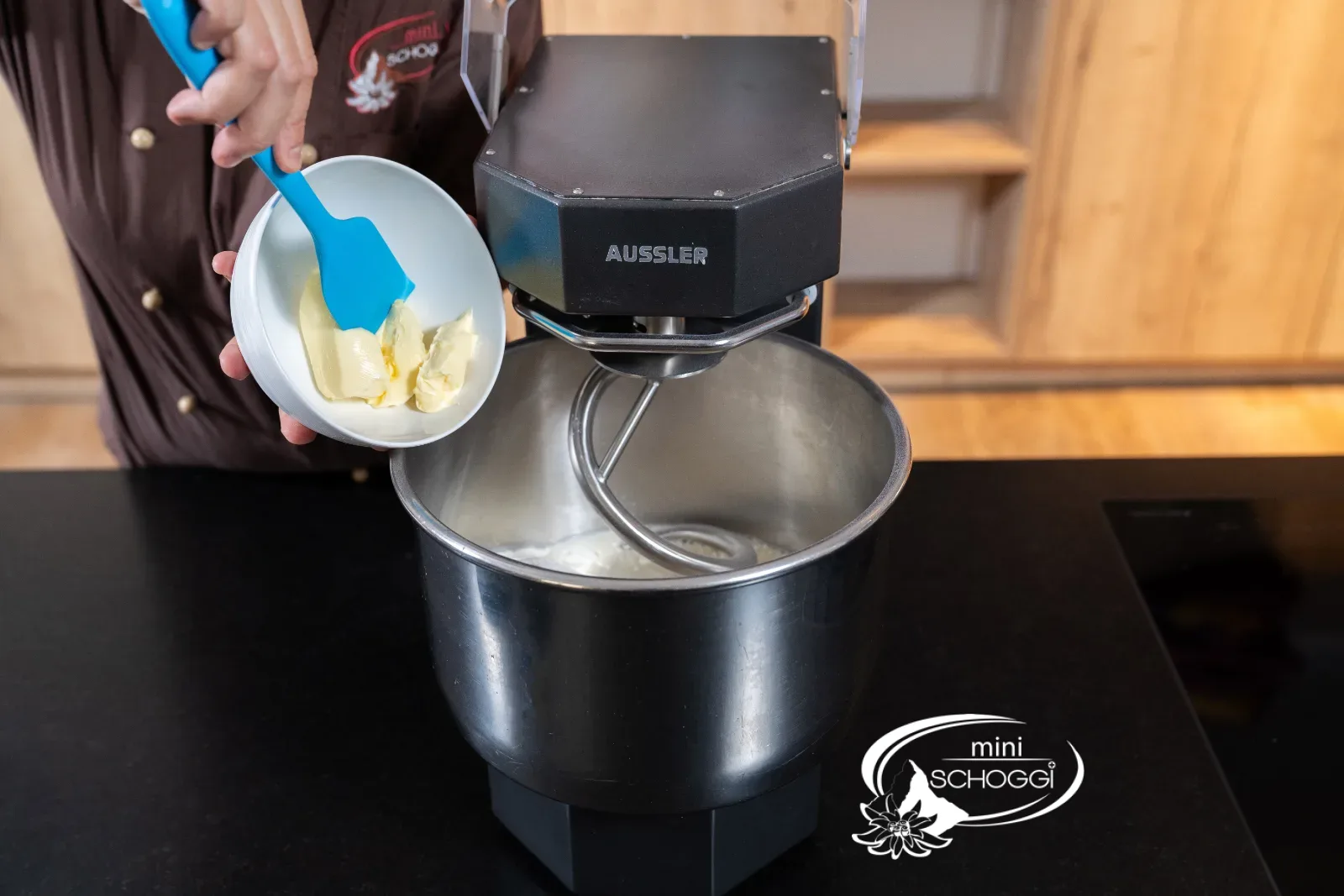
Put the flour into a Bowl and crumble in the yeast. Warm the milk until lukewarm — it should feel warm on your wrist, but not hot — and add it. Add the sugar, vanilla sugar, salt, the soft butter and the egg. Knead everything vigorously with the Dough hook for at least 5 minutes. Any shorter won't do: only then has the gluten structure formed that later makes the dough light and fluffy.
2
Let it rise for an hour
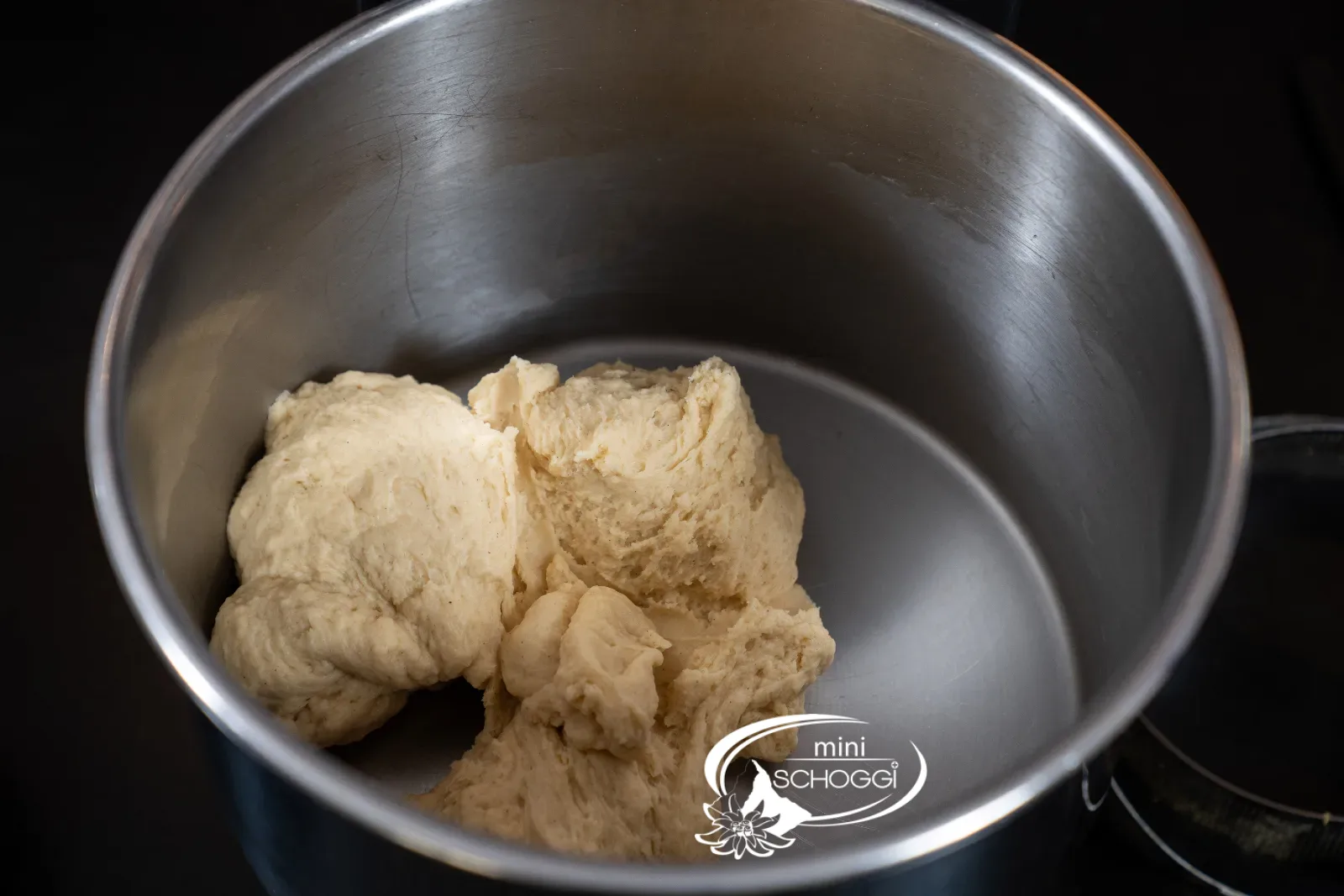
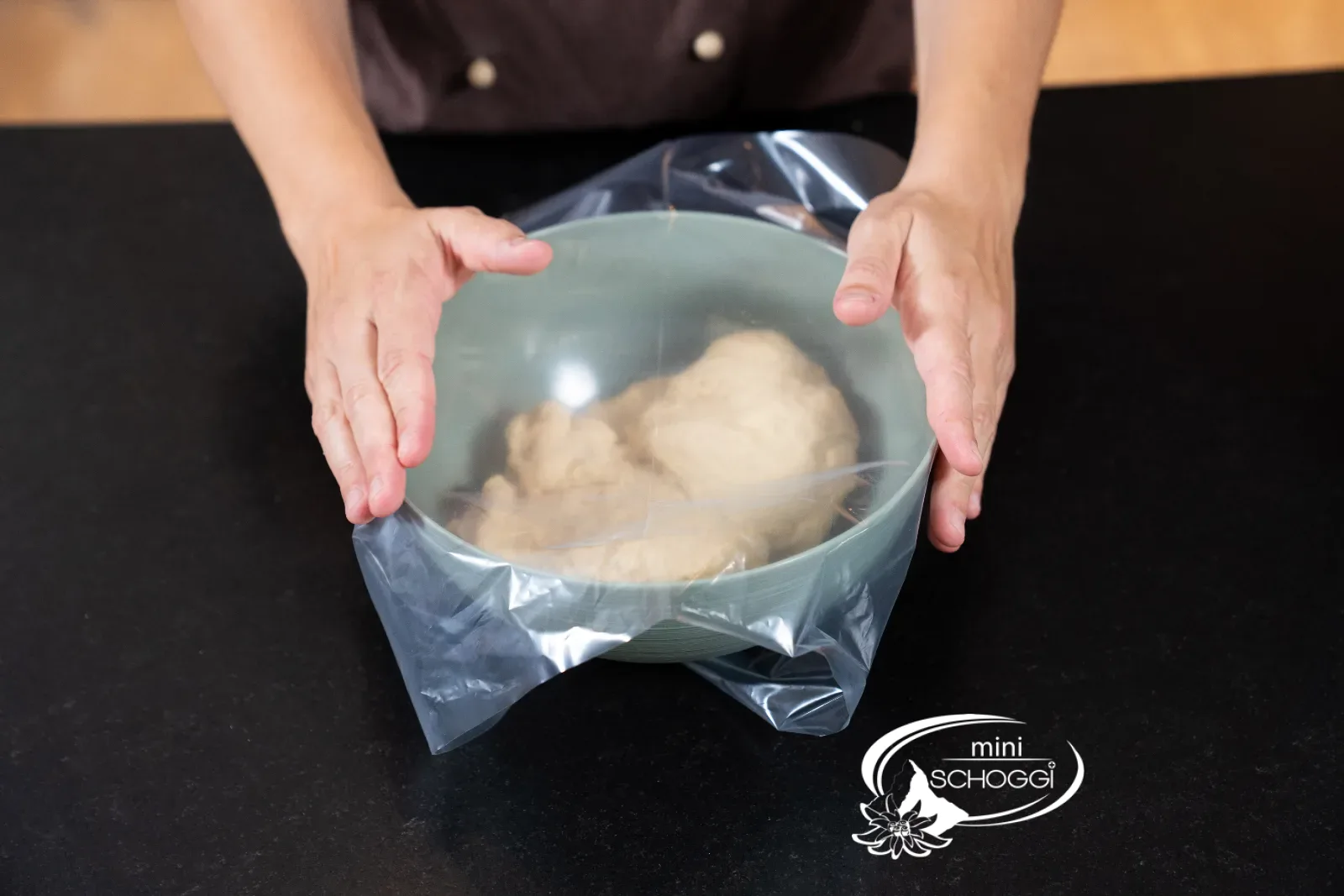
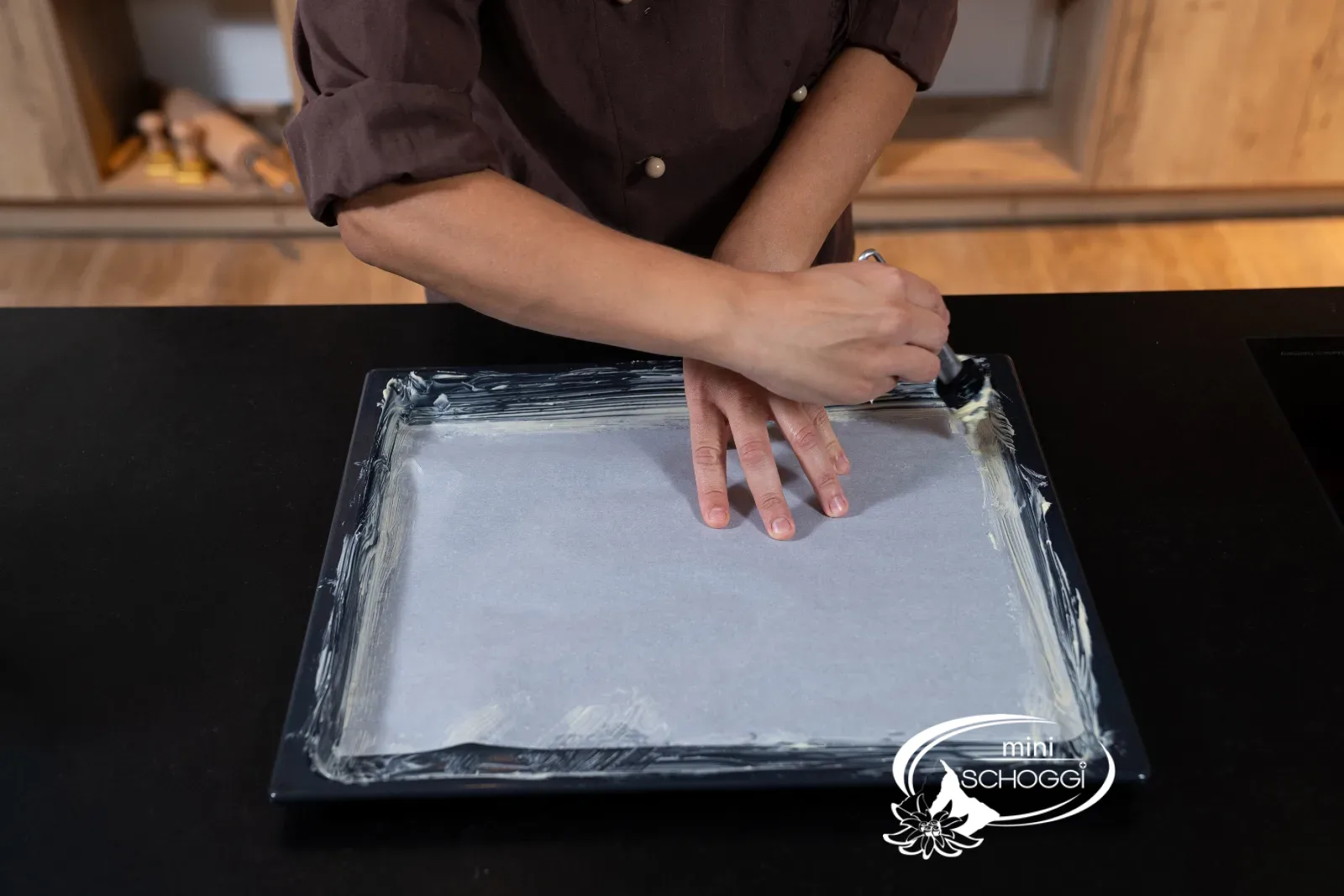
Cover the Bowl and let the dough rise in a warm place for about 60 minutes, until it has clearly increased in volume. During this time, grease the Baking tray. Covered really does mean covered: if the surface dries out, the dough forms a skin, and that later remains as a tough layer in the cake.
Topping and Baking
1
Roll out to fit the tray
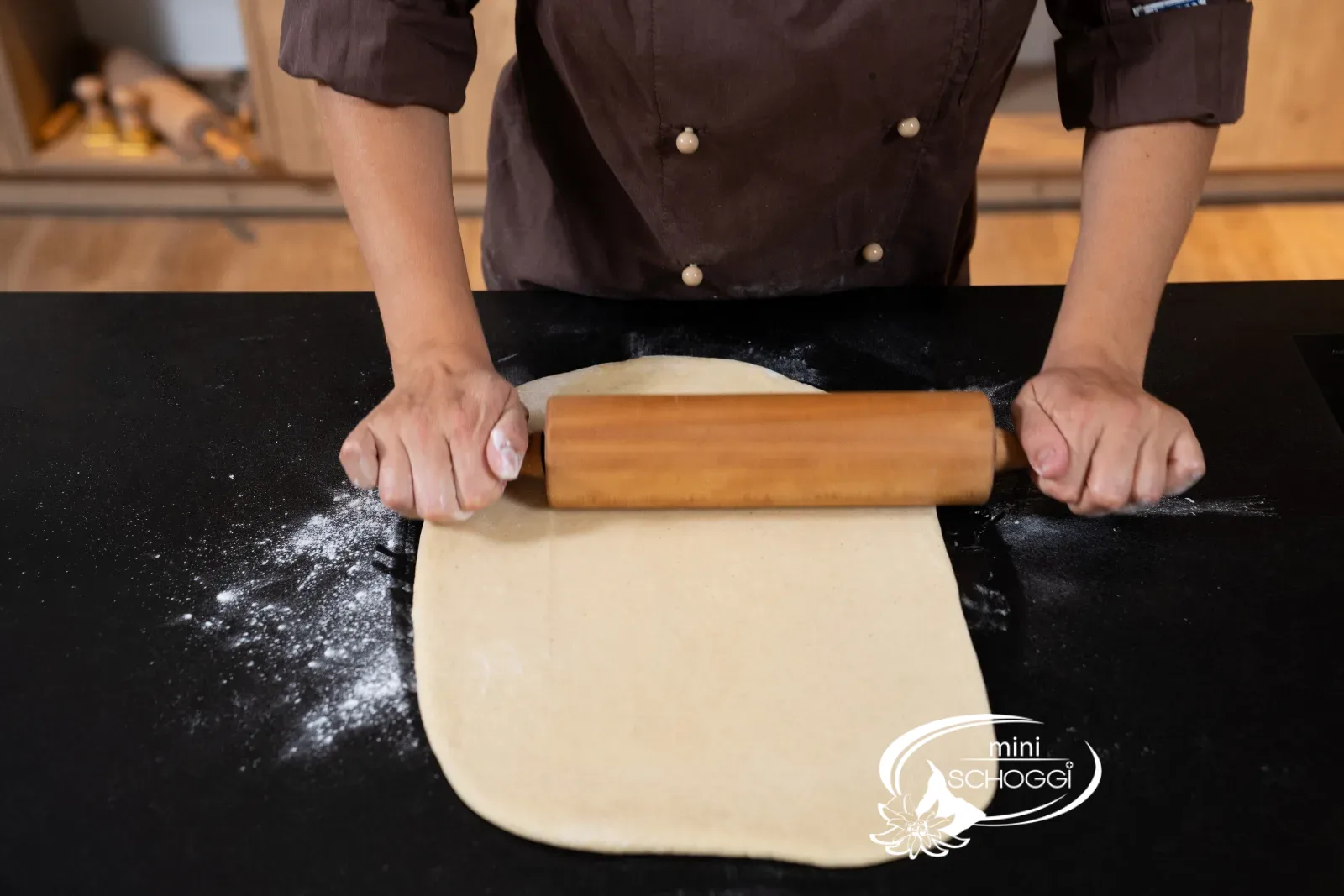
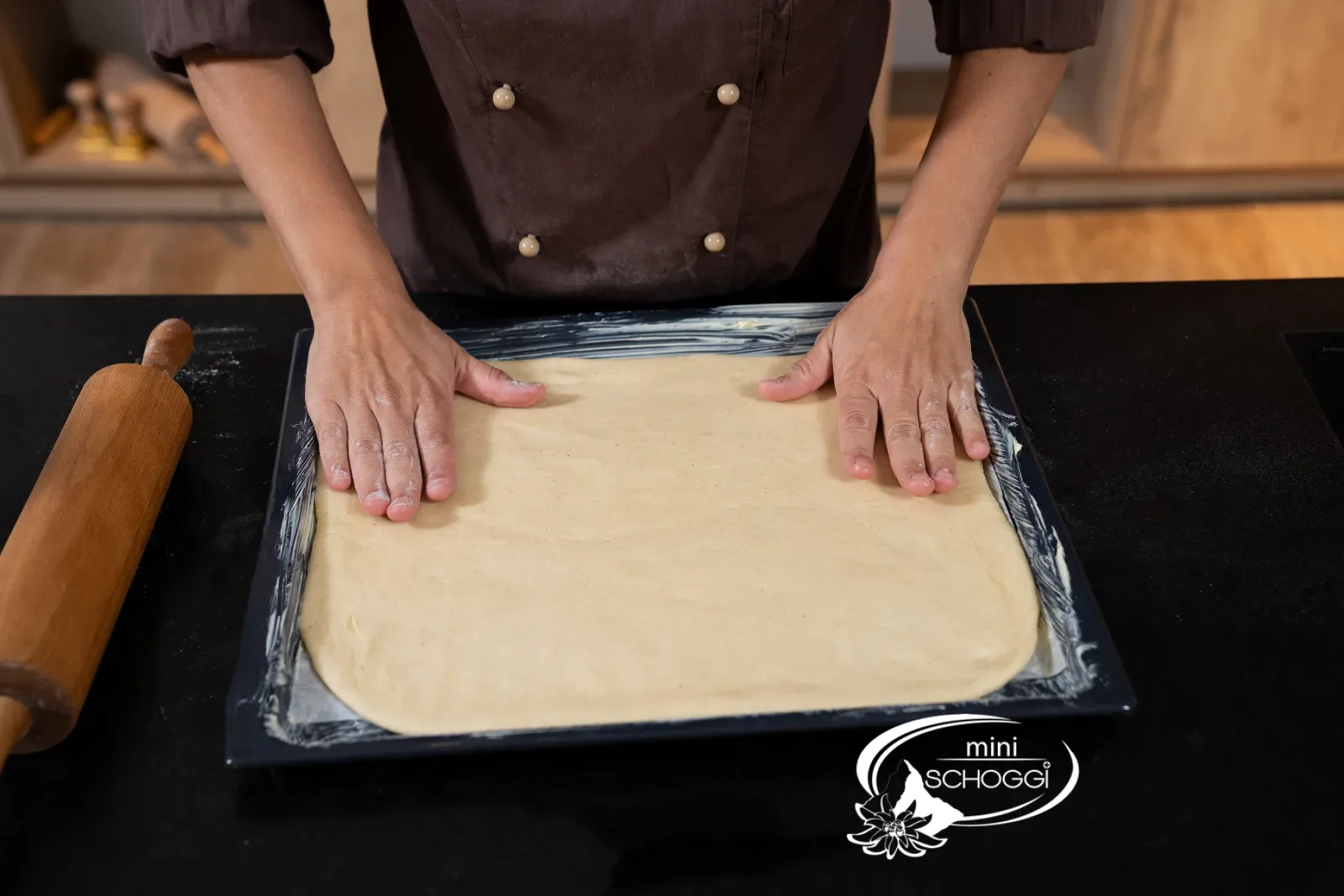
Knead the risen dough firmly once more and roll it out on a lightly floured work surface to the size of the tray. Line the tray with baking paper, place the dough on top and push it into the corners with your hands.
2
Press hollows and distribute the butter
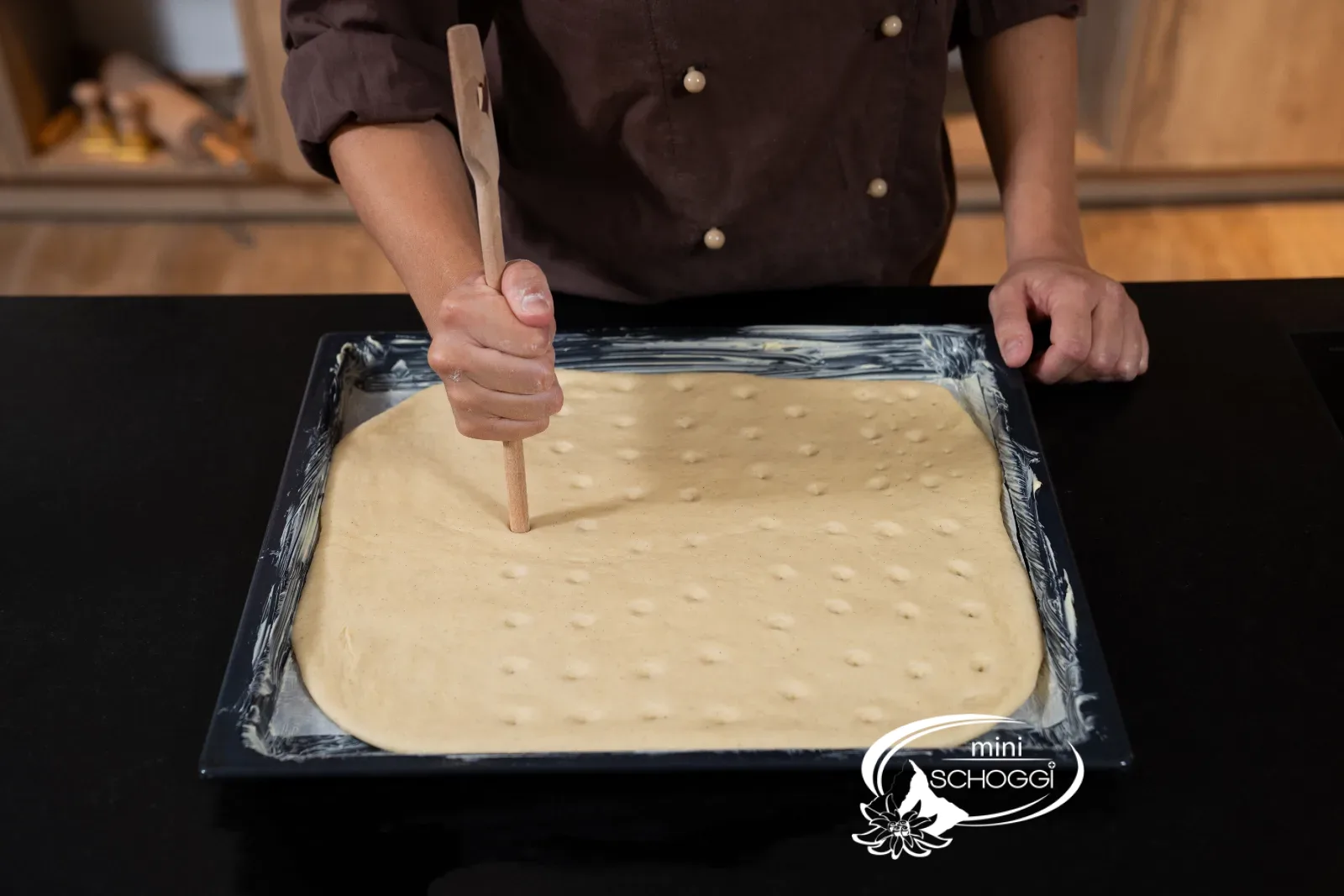
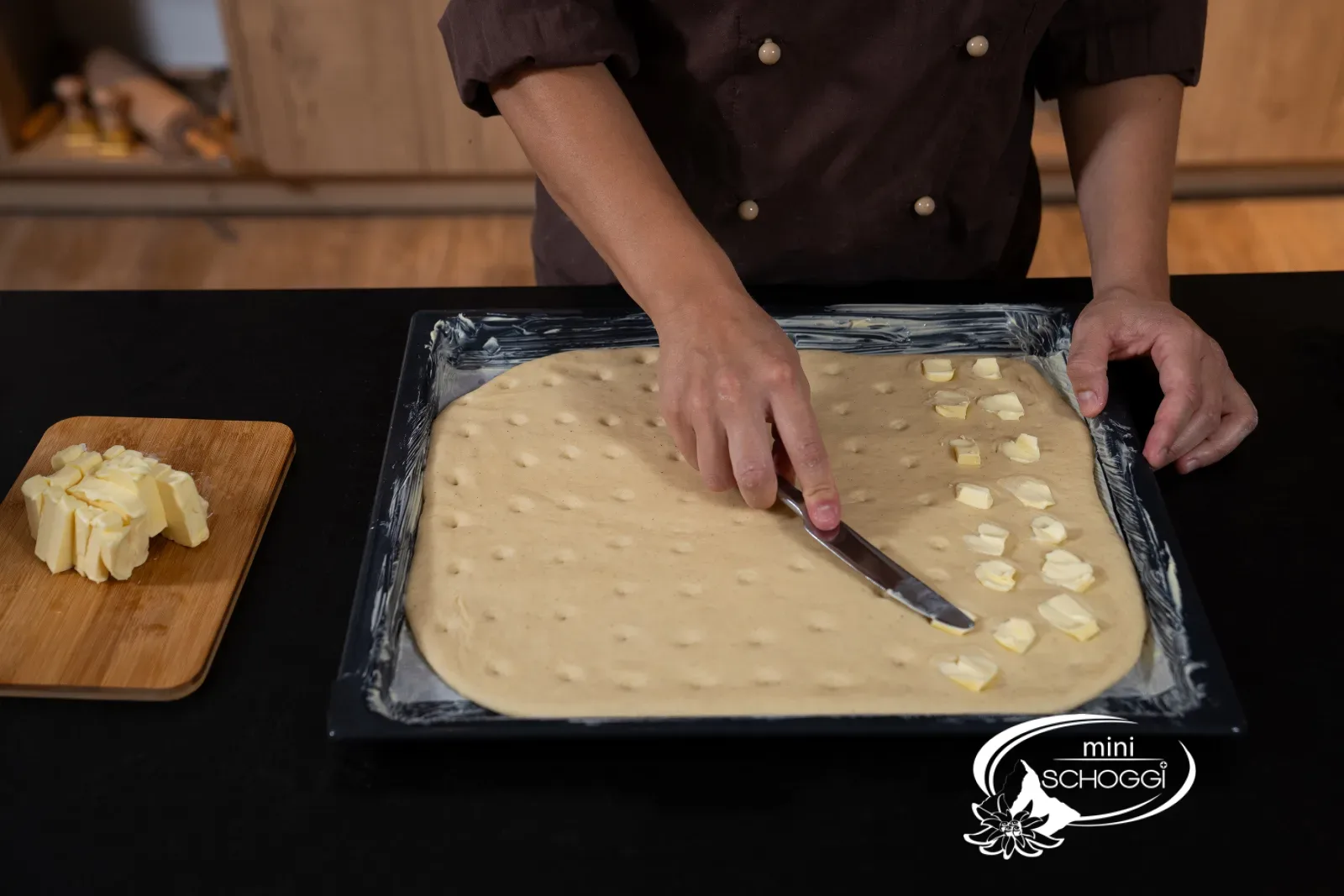
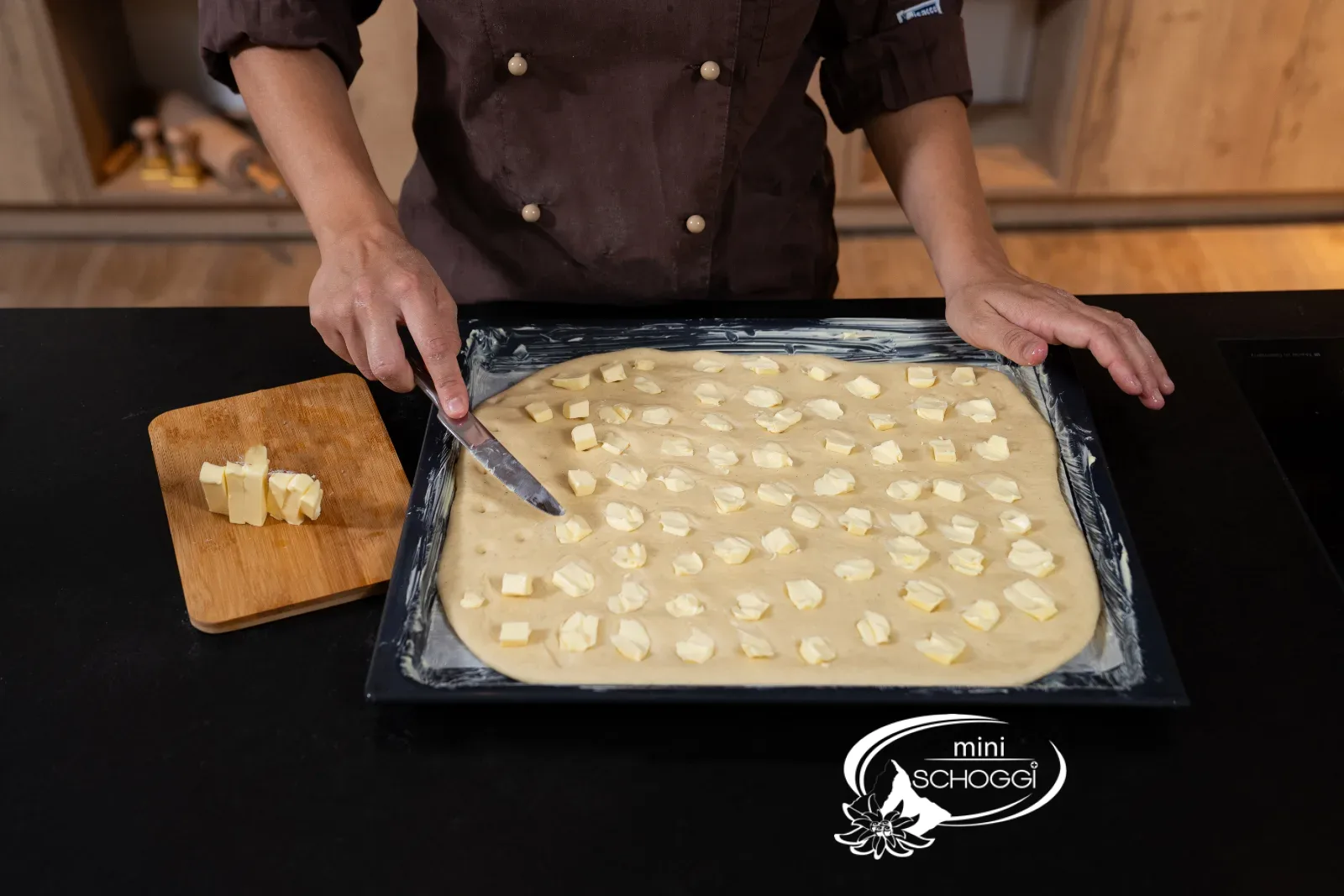
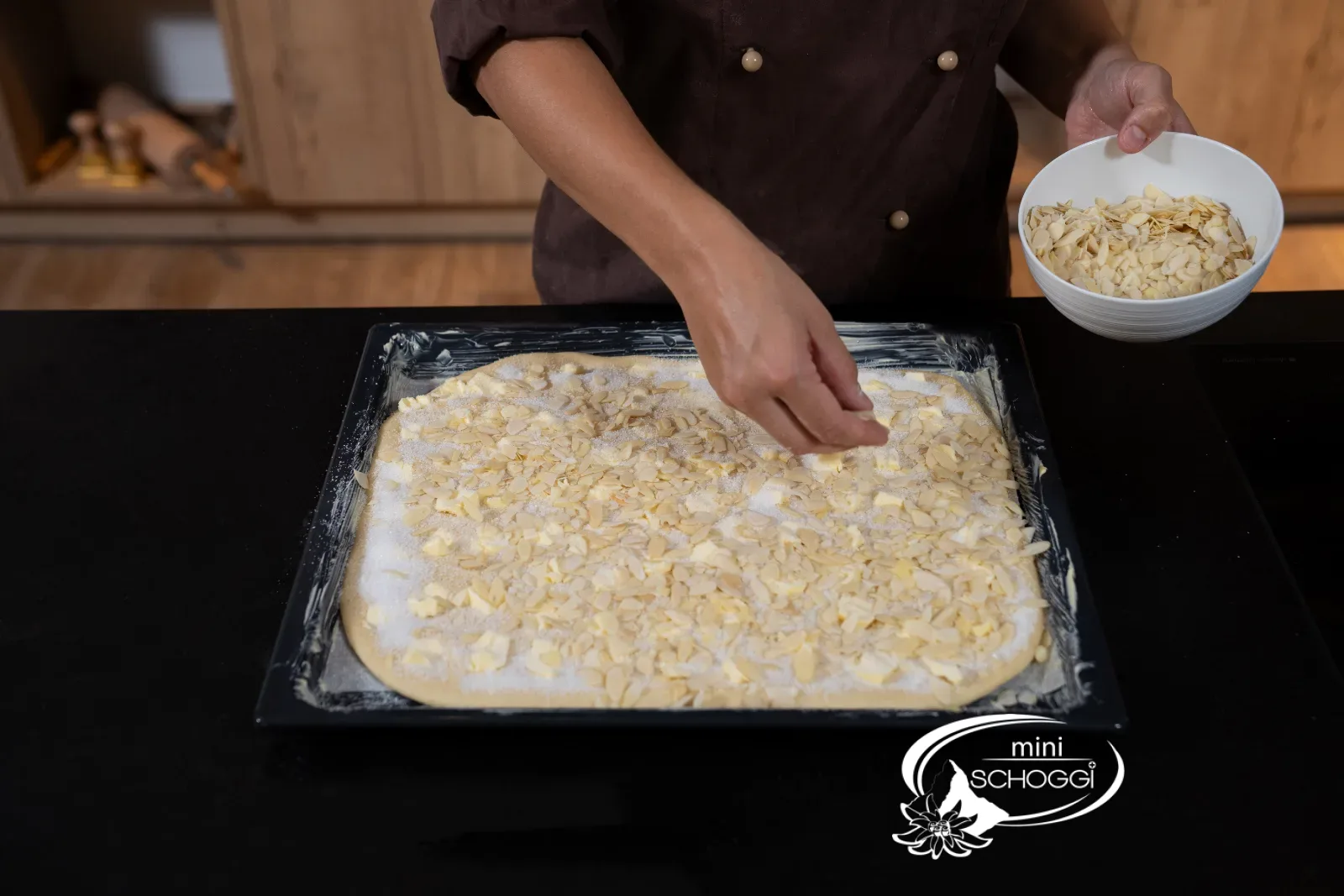
Using the handle of a wooden spoon, press light hollows into the dough — evenly across the whole surface. Cut the cold butter into small cubes and place a piece into each hollow, until the entire dough is covered. The butter must be cold: soft cubes will already melt while you distribute them, and then the butter no longer sits where it belongs.
3
Sugar, almonds — and into the oven
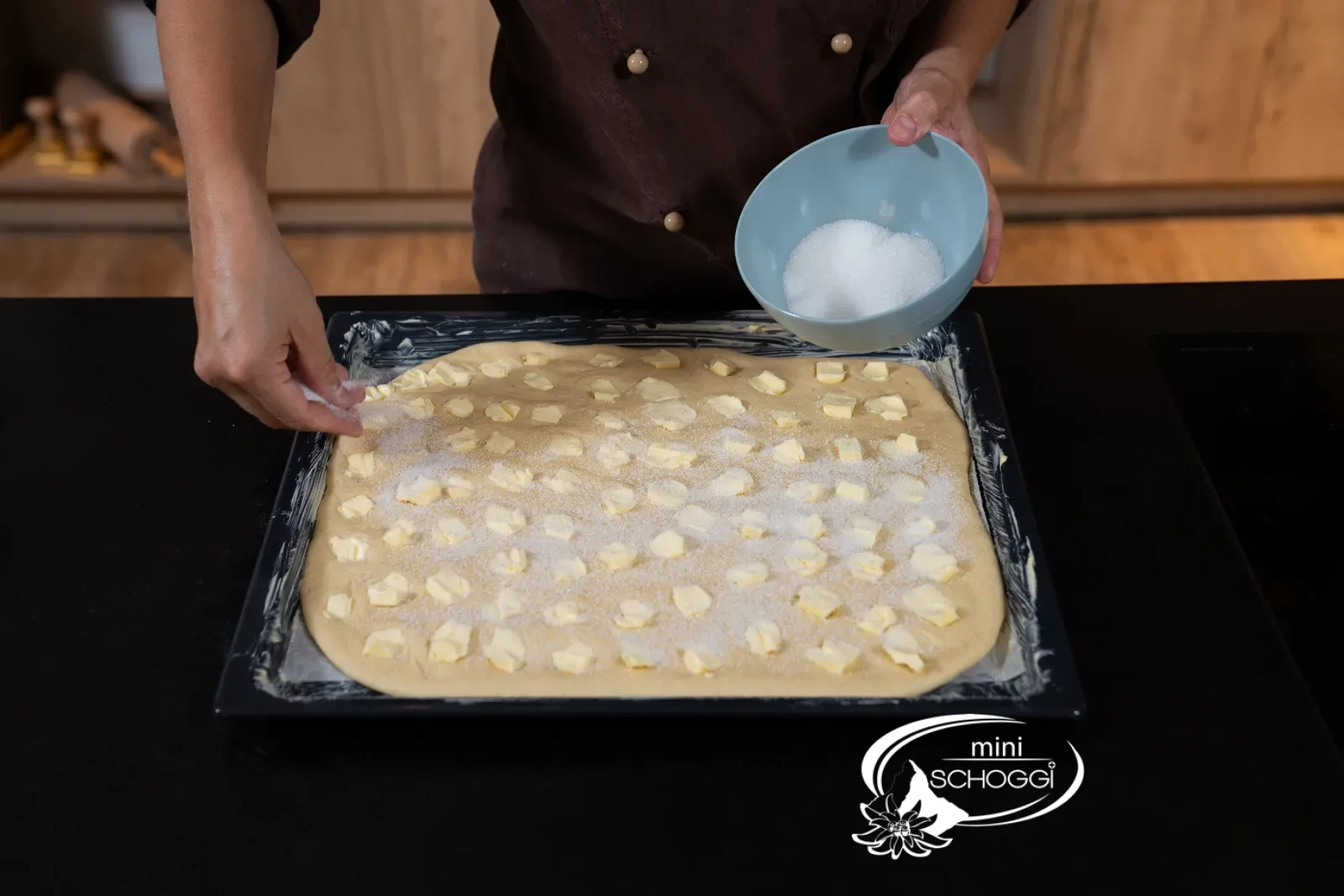
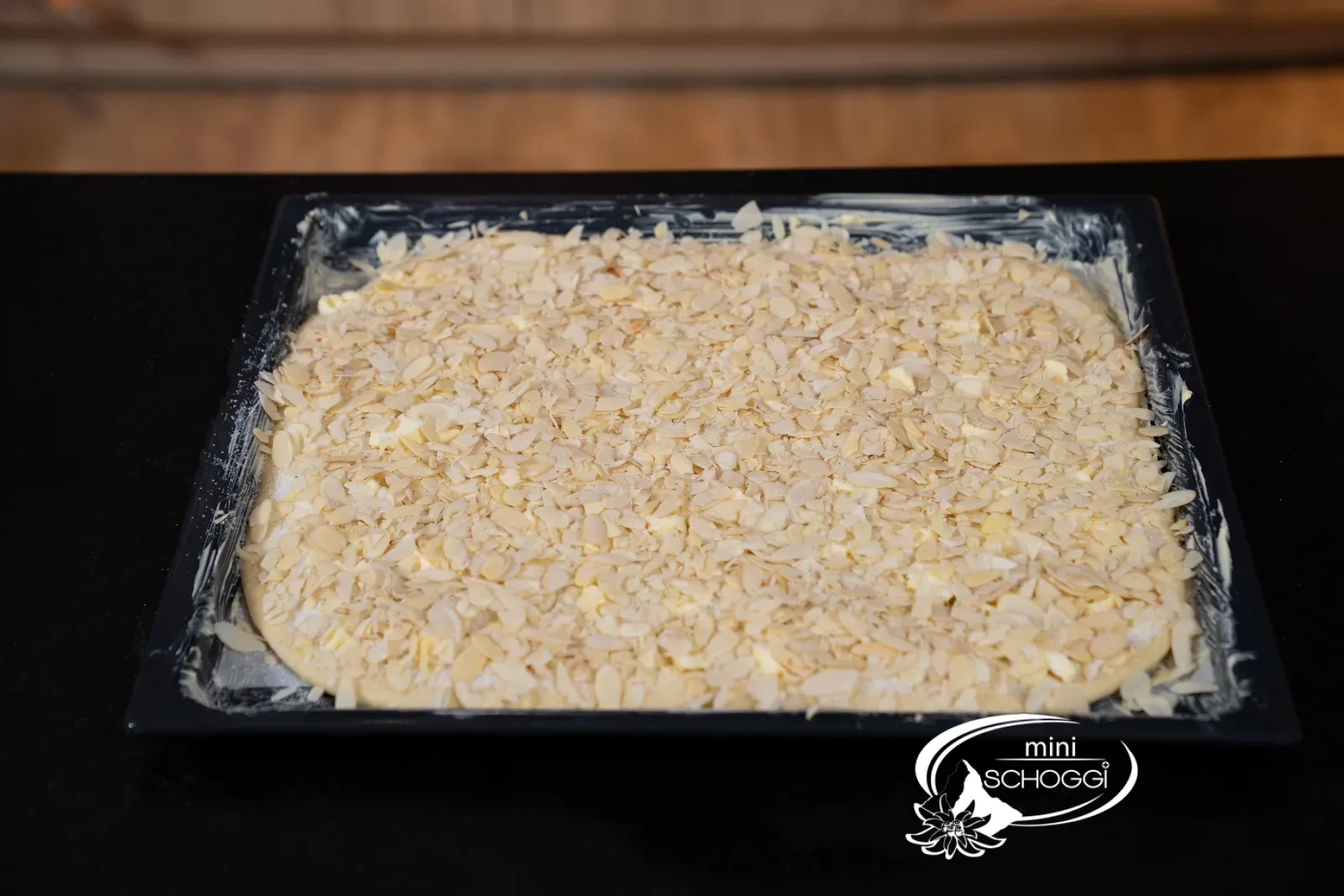
Preheat the oven to 180 °C top/bottom heat (fan 160 °C). Sprinkle the sugar evenly over the whole cake, then the flaked almonds — generously, they may cover the dough completely. Now the cake is ready for the oven.
4
Baking and the cream at the end
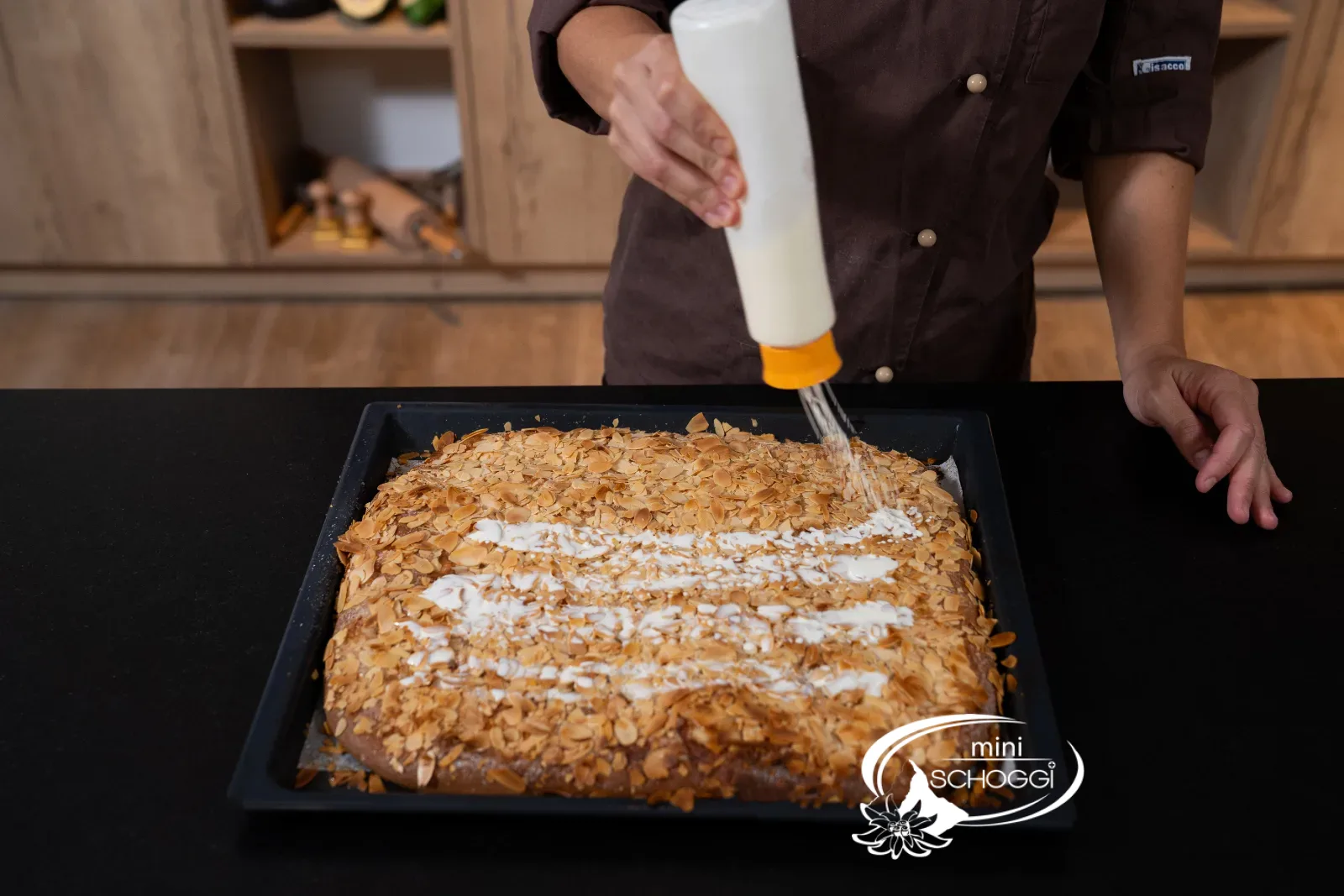
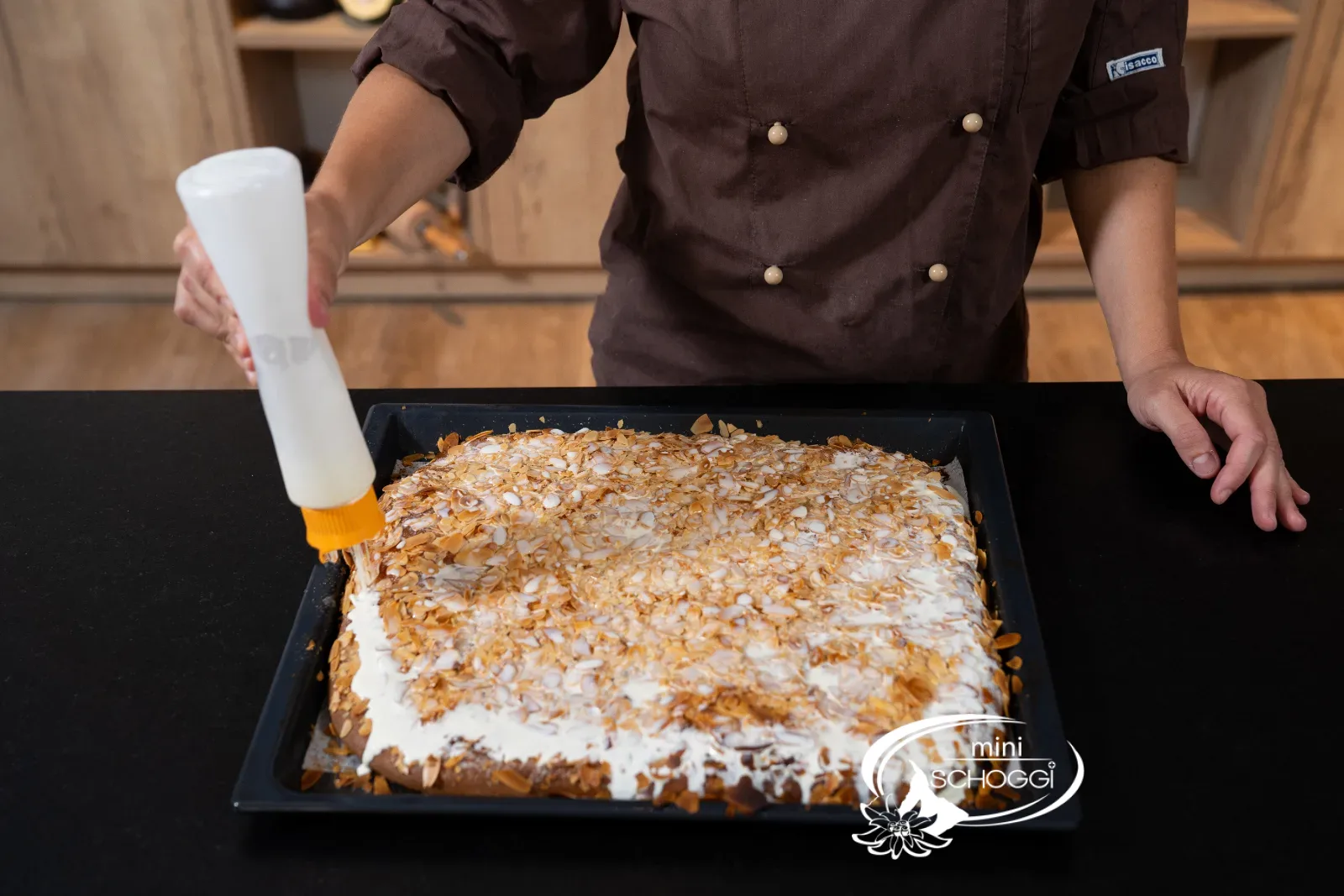
Bake the cake for 25 to 30 minutes, until the almonds are golden brown. From minute 25 it's worth keeping an eye on it: almonds quickly turn from golden brown to bitter. Pour the cream over the whole cake while it is still hot. It soaks straight into the warm crumb and makes the cake moist and soft — this is the step that makes this butter cake what it is. Then let it cool, cut into pieces and enjoy.
Compact · printable
Butter cake with almonds
Ingredients
Quantity:
Yeast dough
Topping
Preparation
- Dough: Knead flour, yeast, lukewarm milk, sugar, vanilla sugar, salt, soft butter and egg for at least 5 min.
- Proving: Cover and leave to rise for approx. 60 min., line the tray with baking paper.
- Rolling out: Knead through, roll out to the size of the tray, place on the tray and push into the corners.
- Dimples: Press light dimples, place a small piece of cold butter in each one.
- Scatter: Scatter sugar and flaked almonds on top, preheat the oven to 180 °C.
- Bake: Bake for 25–30 min. until the almonds are golden brown.
- Cream: While still hot, pour over the whole cake and let it soak in.
- Cool: Leave to cool, then cut into approx. 24 pieces.
Nutritional values per 100 g
412kcal
25.8 gfat
39.4 gcarbohydrates
7 gprotein
Storage & shelf life
Covered at room temperature, the butter cake keeps for two to three days and stays moist thanks to the cream. Do not put it in the fridge — there the crumb becomes dry and firm. It freezes well: in pieces, well wrapped, for up to three months. To thaw, leave at room temperature and briefly warm in the oven at 150 °C, then the almonds are crunchy again.
Everything for this recipe
Recommended from our bakery — exactly the sizes the recipe was tested with.
Ingredients
White flour, 1 kg
Dry yeast 6 x 11 g
Accessories
Baking paper 42 x 33 cm, 25 pieces
Plastic dough cloths
Baking tray aluminium 44 x 35
Rolling pin 28 cm
Wooden spoon set heart
Delivery in 1–2 working days · Free shipping from CHF 100
So it turns out perfectly every time
Lukewarm means hand-warm at most
Above 45 °C the yeast dies, and the dough never rises properly afterwards — you only notice after an hour of waiting. If you don't use a Thermometer: the milk should feel warm on your wrist, not hot. Cold milk, by the way, is no problem; the dough just takes longer.
The butter belongs across the whole surface
What matters isn't how deep the dents are, but that they are spread evenly across the whole dough and that a little piece of butter sits in each one. Where there's no butter, the cake stays dry. And take it straight from the fridge cold: soft cubes melt away as you spread them.
The cream belongs on the hot cake
This is the step that makes this cake. As long as the crumb is hot, the cream soaks in and stays there. If you wait until the cake is lukewarm, it sits on top, softens the almonds and dries into a film. So: tray out of the oven, cream over it, done.
Frequently asked questions
Yes. One cube of fresh yeast (42 g) corresponds to about 7 g of dry yeast. The dry yeast is not crumbled into the milk but mixed dry into the flour; the lukewarm milk is added afterwards. The rising time stays the same.
Yes, and it makes the cake more flavourful. Just use a quarter of the yeast, knead the dough as described and put it covered in the fridge overnight. The next morning, let it acclimatise at room temperature for a good hour, then continue as usual.
Usually the oven was too hot or the cake was in too long. It's baked as soon as the almonds are golden brown — depending on your oven, that can be after just 25 minutes. The second cause is dough rolled out too thin on a large tray: then it lacks the crumb that keeps it soft.
Print recipe
Choose what should appear on the printout.
Related products
Plastic dough towels
Price: CHF19.90
Rated out of 5 stars based on
review(s)
bitte einloggen
Are you tired of constantly having to scrape your dough pieces off the...
White flour, 1 kg
Price: CHF4.50
Rated out of 5 stars based on
review(s)
bitte einloggen
White flour is suitable for pastries of all kinds, from bread to cakes to...

Wooden cellar set heart
Price: CHF19.90
Rated out of 5 stars based on
review(s)
bitte einloggen
Wooden ladles belong in every kitchen! With them you can prepare delicious...
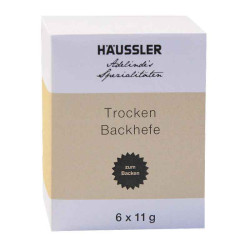
Dry yeast 6 x 11 g
Price: CHF6.90
Rated out of 5 stars based on
review(s)
bitte einloggen
With dry yeast you create wonderfully airy breads, cookies and sweet...
Baking tray aluminum 44 x 35
Price: CHF25.90
Rated out of 5 stars based on
review(s)
bitte einloggen
Baking tray is baking tray? Wrong! There are huge differences in baking...

Baking paper 42 x 33 cm, 25 pieces
Price: CHF4.95
Rated out of 5 stars based on
review(s)
bitte einloggen
With these baking paper sheets your pastries rise evenly and are baked...
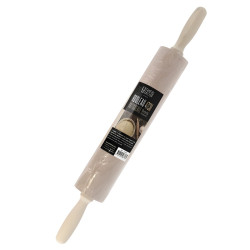
Rolling pin 28 cm
Price: CHF11.90
Rated out of 5 stars based on
review(s)
bitte einloggen
The rolling pin must not be missing in any kitchen. Because rolling out a...
Bewertungen
Leave a comment
Related posts
 Make your own chocolate Easter bunnies
You can easily make your own Easter bunnies at home! You can find out how to do it and what you need here. A sweet...
Read more
Make your own decorative Swiss roll
Make your own decor roulade - we'll explain exactly how in this blog, with lots of tips and tricks from our...
Read more
Cinnamon Star Biscuits Recipe
Make your own cinnamon stars with the help of our professionals, with lots of tips & tricks to bake the best...
Read more
How can I convert a cake recipe?
Converting a cake recipe, whether a sponge or a cake filling, is easy with our conversion table.
Read more
Chocolates with mulled wine jelly
A wonderfully wintry Christmas jelly, which is ideal as a praline or macaron filling.
Read more